
News
India rejects claim that missed phone call derailed US trade deal talks

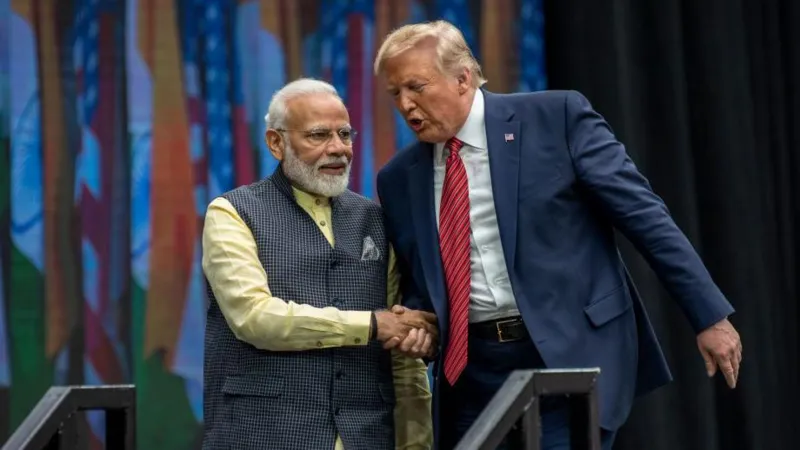
India has firmly rejected claims by a senior US official that stalled trade negotiations between New Delhi and Washington were the result of a failure by Prime Minister Narendra Modi to personally contact President Donald Trump, as both sides cautiously resume talks amid lingering tensions.
The response came after US Commerce Secretary Howard Lutnick suggested that negotiations broke down because Modi did not make a direct call to Trump at a critical moment. Indian officials pushed back strongly, saying trade negotiations between two major economies cannot hinge on personal phone calls and are instead shaped by complex policy differences and national interests.
India’s government said discussions slowed due to substantive disagreements, not diplomatic protocol. Officials stressed that engagement between the two countries has continued at multiple levels, including through trade representatives and senior officials, even during periods of strain.
Trade relations deteriorated sharply in August when the United States imposed 50 per cent tariffs on a range of Indian exports. The measures included an additional penalty tied to India’s continued purchases of Russian oil, a move Washington said was aimed at pressuring Moscow but which New Delhi viewed as an infringement on its strategic autonomy.
India responded by criticising the tariffs as excessive and counterproductive, warning that they would harm businesses and consumers on both sides. Despite the escalation, neither country formally walked away from negotiations, and recent weeks have seen renewed efforts to revive talks.
Both governments have confirmed that negotiations are back on track, but there is little clarity on when a deal might be finalised. Several informal deadlines have already passed without agreement, reflecting the depth of unresolved issues.
Agriculture remains one of the most sensitive sticking points. The United States has been pressing for greater access to India’s vast farm sector, arguing that American producers face unfair barriers. India, however, has consistently resisted such demands, citing the need to protect millions of small farmers and ensure food security.
Indian officials say opening the sector too quickly could destabilise rural livelihoods and provoke political backlash. Agriculture is not only an economic issue in India but also a deeply social and electoral one, making concessions particularly difficult.
Other areas of disagreement include digital trade, tariffs on industrial goods and market access for services. While there has been progress on some technical issues, officials on both sides acknowledge that bridging core differences will require political will and compromise.
The episode also highlights the personalised nature of diplomacy under Donald Trump, whose administration often emphasises direct leader to leader engagement. Indian officials, however, argue that institutional channels remain the foundation of bilateral relations and should not be overshadowed by public remarks.
Narendra Modi has maintained a cautious tone, avoiding public escalation while reaffirming India’s commitment to a balanced and mutually beneficial trade relationship. New Delhi continues to frame the talks as part of a broader strategic partnership that includes defence, technology and regional security.
Analysts say both sides have incentives to reach an agreement. The United States sees India as a key economic and geopolitical partner in Asia, while India values access to the US market and advanced technology. However, domestic political pressures in both countries complicate compromise.
For now, officials on both sides are downplaying the latest exchange of words and focusing on substance rather than rhetoric. Negotiators are expected to continue working through differences, even as expectations are tempered.
The path to a deal remains uncertain, but India’s rejection of the phone call narrative underscores its message that trade talks will be decided by policy choices, not personal gestures.



