
News
Grenfell Families Call for Preservation of Tower Walls Bearing Handprints

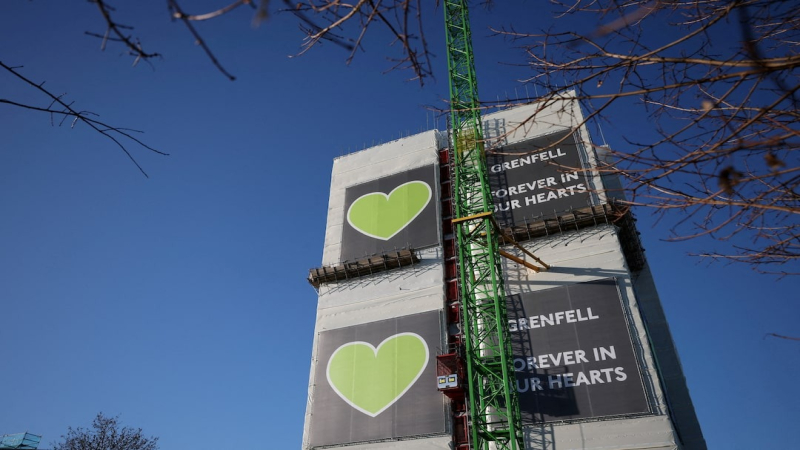
Families of victims of the Grenfell Tower fire have urged the UK government to preserve sections of the building’s stairwell walls bearing visible handprints, as demolition work on the tower continues in west London.
The 24 storey social housing block was devastated by a fire on 14 June 2017, killing 72 people and leaving deep scars on the local community. Work to dismantle the tower began in September 2025 and is expected to take around two years. As part of the process, campaigners say important physical traces of that night risk being lost.
Relatives who recently visited parts of the structure discovered smoke blackened walls marked with what appear to be handprints. Some families believe the prints may belong to victims or survivors who tried to escape the blaze. An Arabic phrase meaning God is greatest was also found on one of the upper floors.
Campaigners argue that these markings carry powerful emotional and historical significance. They say the walls represent final moments of fear, faith, and survival, and should be preserved as part of any future Grenfell memorial. A pre-action letter has been sent to the government seeking to challenge the decision not to retain sections above the ninth floor, where the handprints were discovered.
Lawyers representing the families say previous assurances were given that parts of the tower could be preserved if the community supported such a move. They contend that removing these sections would undermine trust and erase meaningful evidence of what happened inside the building during the disaster.
The Ministry of Housing, Communities and Local Government has said it remains committed to ensuring that the tragedy is remembered with the community at the centre of decision making. Officials have also stated that the removal of upper floors reflects the extreme sensitivity surrounding areas where significant loss of life occurred.
Grenfell Tower remains one of the most devastating peacetime disasters in modern British history. The public inquiry into the fire has examined failures in building safety, regulation and emergency response, while wider reforms to fire safety laws and cladding regulations have followed.
For many families, the physical remains of the tower are more than structural elements. They are symbols of memory, grief and accountability. The debate over whether to preserve the marked walls highlights the continuing tensions between practical demolition plans and the emotional needs of those directly affected.
As dismantling progresses, the question of how best to commemorate the victims while respecting the sensitivities of the site remains a deeply personal and nationally significant issue.



