News
Greens Escalate Left Wing Challenge to Labour After Manchester By Election Upset

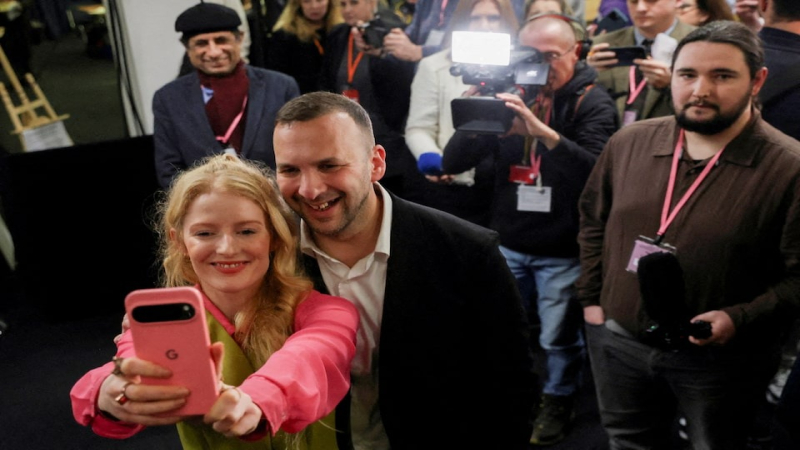
The Green Party has intensified pressure on Prime Minister Keir Starmer after securing a decisive by election victory in Greater Manchester, a result that has exposed fresh tensions inside the governing Labour Party and sharpened debate over its political direction.
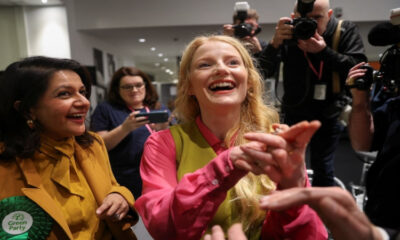
Hannah Spencer’s win in the Gorton and Denton constituency takes the Greens to five seats in the House of Commons and marks a significant breakthrough in an area long associated with Labour dominance. The Greens secured 40.7 percent of the vote, while Reform UK came second on 28.7 percent and Labour fell into third place, a striking reversal in what was once considered a safe seat.
In her victory speech, Spencer shifted the focus away from traditional environmental themes and delivered a pointed critique of economic inequality. She accused billionaires of profiting from working people and pledged to stand with communities that feel left behind. Her remarks were widely interpreted as a direct appeal to disillusioned Labour voters who believe the party has drifted from its socialist roots.
The result has emboldened critics within Labour who argue that Starmer’s strategy of moving toward the political centre to counter Nigel Farage’s Reform UK is alienating core supporters. Several union leaders voiced frustration in the aftermath. UNISON general secretary Andrea Egan said Labour was facing the electoral consequences of its approach and warned that the party must stand up more firmly for workers, migrants and refugees. Unite leader Sharon Graham described the outcome as a wake up call and urged Labour to return to what she called real Labour values.
Left wing Labour MP Richard Burgon said the defeat showed the dangers of attempting to mirror Reform UK’s rhetoric while sidelining the party’s progressive wing. Some Labour lawmakers privately acknowledged that the Greens’ surge complicates their ability to present themselves as the most effective force against right wing populism.
The campaign also highlighted divisions over the war in Gaza. The Greens pledged stronger support for Palestinians, a message that appeared to resonate with parts of the diverse local electorate, including a significant Muslim community. Some Labour campaigners reported facing anger over the party’s stance, while the government has maintained that international courts must determine whether genocide has occurred and has described the situation as a humanitarian catastrophe. Israel strongly denies accusations of genocide.
Green Party co leader Zack Polanski rejected suggestions that the party exploited community tensions, stating that the campaign focused on holding the prime minister accountable for policy decisions rather than targeting specific groups.
The by election was triggered by the resignation of former Labour MP Andrew Gwynne. As Britain moves closer to the next general election, which must take place by August 2029, the Manchester result underscores the growing volatility of UK politics and the increasing challenge Labour faces from both its left flank and right wing rivals.