Business
George Osborne Joins OpenAI in High Profile Shift to Artificial Intelligence

From British Politics to Global Technology
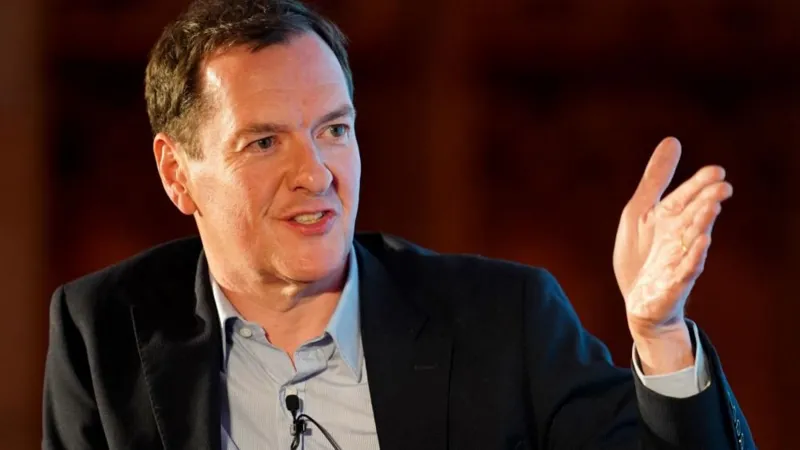
Former UK chancellor George Osborne has taken a significant step into the world of artificial intelligence by joining OpenAI, one of the most influential AI companies globally. The move marks a notable transition from frontline politics and public policy into a sector that is rapidly reshaping economies, governance, and daily life. Osborne will be based in London and take on a leadership role focused on helping governments adapt to the accelerating impact of artificial intelligence.
Leading the OpenAI for Countries Programme
Osborne will head OpenAI for Countries, a programme designed to support governments as they seek to build national AI capabilities. The initiative aims to help public institutions understand, deploy, and regulate advanced AI tools more effectively. As governments around the world grapple with how to integrate artificial intelligence into public services, defence, healthcare, and economic planning, OpenAI appears to be positioning itself as a strategic partner rather than just a technology provider.
Why Governments Are Turning to AI Expertise
Artificial intelligence is increasingly seen as a critical national capability, comparable to infrastructure or energy security. Governments face pressure to boost productivity, improve public services, and remain competitive in a global economy shaped by automation and data. At the same time, they must address concerns around ethics, security, and workforce disruption. OpenAI for Countries is intended to help governments navigate these competing demands by providing technical insight alongside policy engagement.
Osborne’s Perspective on OpenAI’s Influence
Announcing his appointment, Osborne described joining OpenAI as a privilege and framed the decision as a response to the company’s global significance. He said that when he recently asked himself which company he believed to be the most exciting and promising in the world, OpenAI stood out clearly. His remarks reflect the growing perception that AI firms now play a role comparable to major financial or industrial institutions in shaping the future.
A Background in Economic Strategy and Policy
As chancellor, Osborne was closely involved in shaping Britain’s economic policy during a period marked by financial recovery efforts and structural reform. That experience is likely to be central to his new role, which sits at the intersection of technology, regulation, and national strategy. His understanding of government decision making and international economic coordination may help OpenAI communicate more effectively with policymakers who are cautious about the speed and scale of AI adoption.
OpenAI’s Expanding Global Engagement
Osborne’s appointment highlights how OpenAI is broadening its engagement beyond research and product development. By building programmes focused specifically on national governments, the company is acknowledging that AI deployment is no longer limited to the private sector. Public institutions are becoming major users and regulators of AI systems, and their choices will influence everything from education and healthcare to security and economic competitiveness.
Debate Over Tech Firms and Political Influence
The move may also prompt debate about the growing overlap between political leadership and major technology companies. Critics often raise concerns about accountability, transparency, and the concentration of influence when former senior politicians join powerful tech firms. Supporters, however, argue that such appointments can improve dialogue between governments and technology developers at a time when understanding is often limited on both sides.
A Signal of AI’s Strategic Importance
Osborne’s transition to OpenAI underscores how artificial intelligence has become a central issue for governments worldwide. The appointment reflects a broader trend in which AI is no longer treated as a niche technology but as a strategic force shaping national policy and global power dynamics. For OpenAI, bringing in a figure with deep political and economic experience signals its ambition to play a direct role in that evolving landscape.