Business
Fujitsu Defends Government Contracts Amid Ongoing Horizon Scandal Fallout

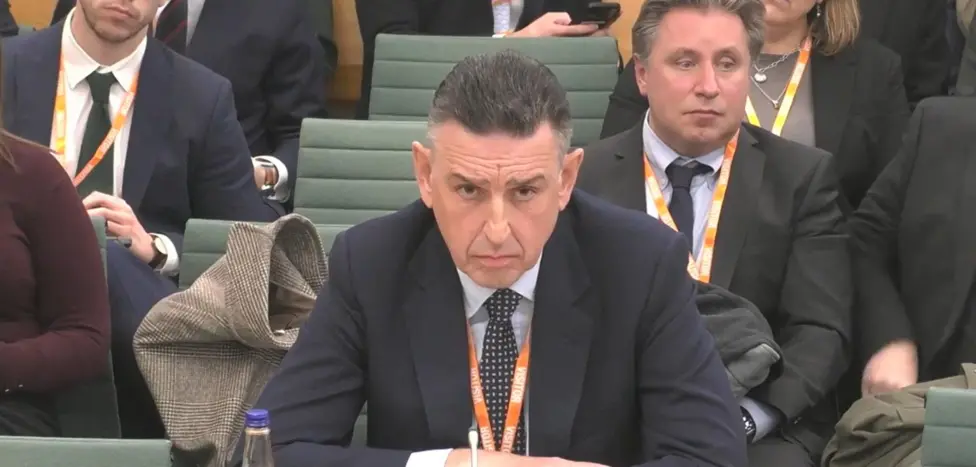
A heated appearance before MPs
Fujitsu has come under renewed scrutiny as its European chief executive defended the company’s continued role as a government contractor following the Post Office Horizon scandal. Appearing before MPs, Paul Patterson rejected accusations that Fujitsu was exploiting public sector work despite its software being central to one of the UK’s largest miscarriages of justice. His comments have reignited public debate over corporate responsibility, accountability, and the ethics of government procurement.
The legacy of the Horizon scandal
The Post Office Horizon scandal saw hundreds of sub postmasters wrongly accused, prosecuted, and financially ruined due to faulty accounting software supplied by Fujitsu. For years, discrepancies generated by the system were treated as evidence of theft or fraud, despite repeated warnings about errors. The scandal has since become a symbol of institutional failure, exposing weaknesses in oversight, justice, and the relationship between technology providers and the state.
Fujitsu’s defense of its role
Speaking to MPs, Patterson argued that Fujitsu should not be described as a parasite for continuing to receive public money. He pointed out that the government has discretion over whether to extend contracts and emphasized that Fujitsu has been awarded around £500 million in extensions rather than new deals. According to Patterson, the company is not actively seeking fresh government business, framing its current involvement as a matter of continuity rather than expansion.
Questions over accountability and compensation
One of the most contentious issues remains compensation for victims. While the government has committed £1.8 billion to a redress scheme funded by taxpayers, Fujitsu has so far declined to publicly state how much it will contribute. Patterson repeatedly refused to provide figures when questioned, citing ongoing discussions. This reluctance has frustrated MPs and campaigners, who argue that a company whose technology played a central role should take clear financial responsibility rather than leaving the burden on the public purse.
The government’s dilemma
The case places the government in a difficult position. On one hand, there is strong public pressure to hold Fujitsu accountable and limit its access to public contracts. On the other, Fujitsu remains deeply embedded in government IT systems, and replacing such infrastructure is complex, costly, and risky. Contract extensions may reflect practical necessity rather than endorsement, highlighting how dependency on large technology suppliers can constrain political and ethical choices.
Corporate responsibility in public technology
Beyond Fujitsu, the controversy raises broader questions about how accountability is enforced in public sector technology projects. Large scale systems often operate behind layers of complexity, making it difficult to assign blame when failures occur. Critics argue that without clearer rules on liability and transparency, companies may avoid meaningful consequences even when errors cause severe harm. Supporters of stricter oversight see the Horizon case as a warning about unchecked reliance on private contractors.
An unresolved chapter
Despite inquiries, apologies, and compensation schemes, the Horizon scandal remains unfinished. Victims continue to seek justice, clarity, and acknowledgment of responsibility from all parties involved. Fujitsu’s insistence that it is not a parasite may resonate with contractual logic, but for many affected families, moral accountability carries greater weight. As parliamentary scrutiny continues, the episode is likely to shape future debates on government procurement, technology ethics, and the balance between practicality and principle.