News
Former Chinese Envoy Says Europe’s Greatest Threat Comes From Within, Not Russia

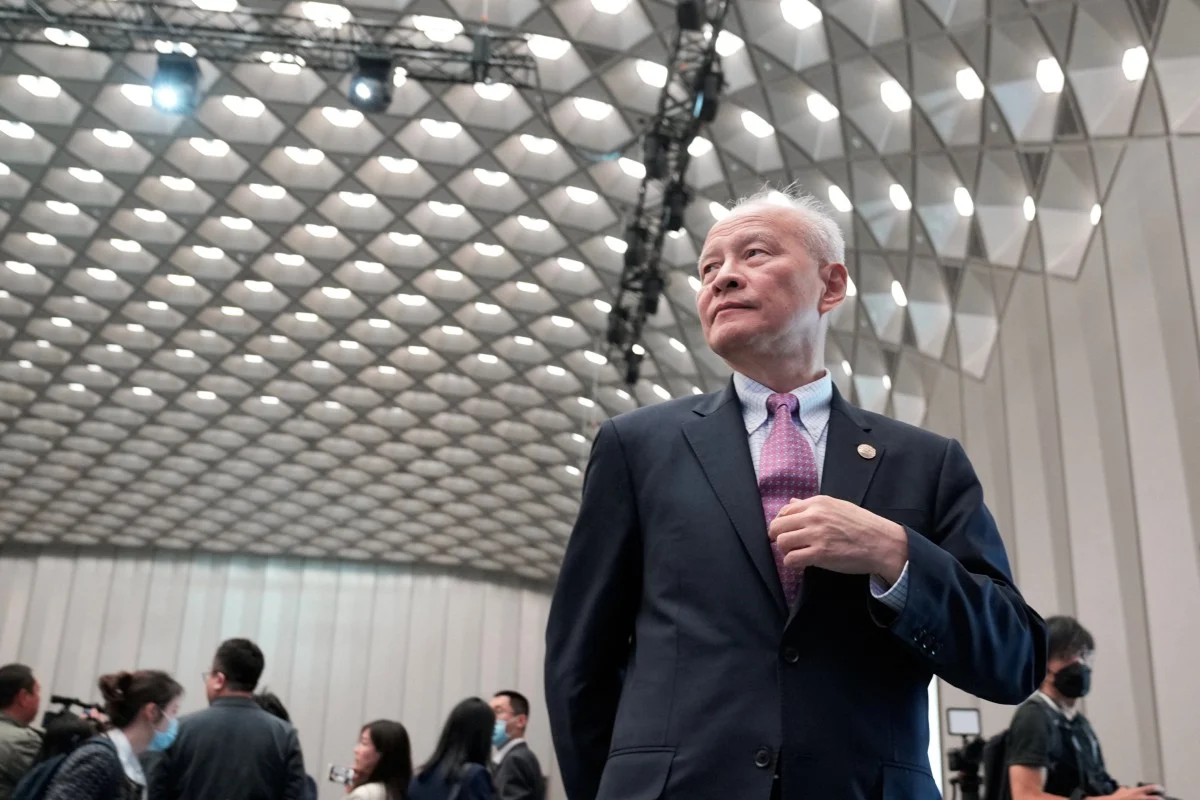
Europe’s most serious security challenge comes not from Russia but from its own internal divisions and misjudgements, according to Cui Tiankai, one of China’s most senior and experienced diplomats. Cui argued that European leaders have incorrectly identified Moscow as their primary threat, while overlooking deeper political, social and strategic problems inside Europe itself.
Speaking in recent remarks, Cui said Europe had made a fundamental misjudgement by framing Russia as its top security concern. In his view, this focus has distracted policymakers from addressing what he described as an inner “demon”, referring to internal fragmentation, declining strategic autonomy and a growing inability to define independent long term interests. He suggested that Europe’s repeated crises are rooted more in its internal governance challenges than in external military threats.
Cui, who also previously served as a Chinese vice foreign minister, criticised what he sees as Europe’s over reliance on security narratives shaped outside the continent. He argued that security decisions driven by fear and alliance politics have weakened Europe’s ability to act in its own interests. According to Cui, the result has been a cycle in which Europe responds to perceived threats without resolving the underlying causes of instability within its own political and economic systems.
The former envoy also questioned the relevance of North Atlantic Treaty Organization in the current global environment. He said Nato had effectively outlived its original purpose and no longer served the long term interests of its members. Created during the Cold War to counter a specific geopolitical rival, the alliance now struggles, in his view, to justify its expansion and continued centrality in European security planning.
Cui argued that Nato’s persistence has encouraged bloc based thinking and confrontation rather than dialogue. He suggested that the alliance’s eastward expansion has contributed to heightened tensions rather than stability, while locking Europe into security arrangements that reduce diplomatic flexibility. In this context, he said Europe risks becoming a stage for strategic competition rather than an independent actor shaping its own future.
His comments reflect a broader Chinese critique of Western security frameworks. Beijing has consistently argued that military alliances based on confrontation are outdated and ill suited to a multipolar world. Instead, Chinese officials often call for security models built around dialogue, mutual respect and economic cooperation.
European analysts note that Cui’s remarks come at a time of deep debate within Europe over defence spending, strategic autonomy and relations with both Russia and the United States. The war in Ukraine has intensified these discussions, pushing many European governments to strengthen Nato while others question the long term consequences of deeper militarisation.
Critics of Cui’s position argue that Russia’s actions have left Europe little choice but to treat Moscow as a major security threat. They say internal challenges do not negate the reality of external risks, and that alliances remain essential in deterring aggression. Supporters of a more independent European strategy, however, say his comments highlight uncomfortable questions about whether Europe is reacting to events or shaping them.
Cui’s intervention underscores the growing divergence between Chinese and Western views on global security. While Europe continues to prioritise collective defence through established alliances, China is increasingly framing instability as the result of rigid thinking and internal weaknesses rather than external enemies.
Whether or not European leaders agree with Cui’s assessment, his remarks add to the wider debate over how Europe defines security in a rapidly changing world. As geopolitical competition intensifies, the balance between internal resilience and external deterrence is likely to remain a central question for the continent.