
Tech
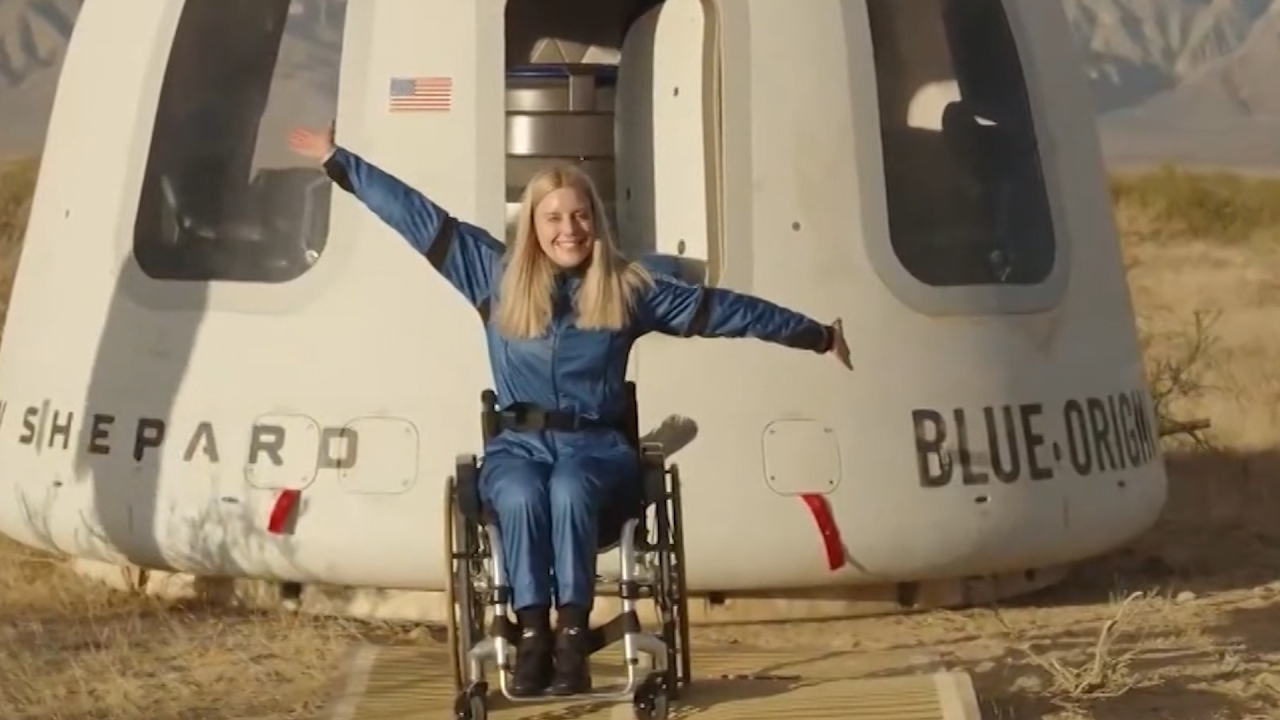
Engineer becomes first wheelchair user to travel into space

Breaking a barrier once thought impossible
An engineer from Germany has made history by becoming the first wheelchair user to travel into space, proving that physical disability does not have to define the limits of human ambition. Michaela Benthaus reached the edge of space aboard a suborbital flight, marking a landmark moment for inclusion in the rapidly evolving space industry.
Benthaus suffered a spinal cord injury seven years ago following a mountain biking accident. The injury changed her mobility but did not diminish her lifelong fascination with space. Like many people who experience sudden physical disability, she was forced to rethink what was possible. Yet instead of abandoning her dream, she chose to challenge the assumptions surrounding who can become an astronaut.
Turning a dream into a mission
Benthaus’s journey to space began with a simple question. She contacted a retired space engineer online to ask whether becoming an astronaut was still realistic after her injury. Rather than dismissing the idea, he encouraged her and began exploring practical ways to make it happen.
That conversation eventually led to the organization of a historic flight with Blue Origin, the private space firm founded by Jeff Bezos. Blue Origin has positioned itself at the forefront of commercial space tourism, offering short suborbital flights designed to make space more accessible beyond traditional astronaut programs.
The result was a ten minute mission that carried Benthaus and five other passengers beyond Earth’s atmosphere, turning a personal dream into a global milestone.
The flight and its significance
The launch took place in Texas, where Blue Origin conducts its New Shepard missions. On Saturday, the crew blasted off and ascended past the Kármán line, the internationally recognized boundary of space located about one hundred kilometers above Earth.
During the brief flight, passengers experienced weightlessness and saw the curvature of the planet against the darkness of space. While the journey was short, its impact was profound. For Benthaus, crossing the threshold into space was both a personal triumph and a statement to the world about accessibility and representation.
Her participation required careful planning, adaptations, and safety assessments. Blue Origin worked to ensure that the capsule environment could accommodate her needs without compromising mission integrity. The successful flight demonstrates how thoughtful design and inclusive thinking can expand opportunities in even the most demanding environments.
Redefining who belongs in space
Historically, space travel has been limited to a narrow group of individuals who meet strict physical and medical criteria. While these standards were shaped by safety concerns, they also reinforced the idea that space was only for a select few.
Benthaus’s flight challenges that narrative. It suggests that with the right technology and mindset, space can become accessible to a broader range of people. Disability advocates have welcomed the moment as a powerful symbol of inclusion, not only in space exploration but across science and engineering fields.
The achievement also highlights the role of private space companies in reshaping the future of human spaceflight. Unlike government programs bound by decades old frameworks, commercial operators can experiment with new approaches and redefine eligibility.
Inspiration beyond the stars
For Benthaus, the journey is about more than personal achievement. She has spoken about wanting her experience to inspire others with disabilities to pursue ambitious goals, whether in science, engineering, or entirely different fields.
Her story resonates because it combines determination, innovation, and human connection. A message sent online, a mentor willing to help, and a company open to adaptation all played a role in making the flight possible.
As space tourism continues to develop, her mission raises important questions about who future space travelers will be. It suggests that the next era of spaceflight may be defined not only by technology, but by inclusion.
A new chapter for space exploration
Michaela Benthaus’s journey into space marks a turning point. It shows that barriers long accepted as fixed can be challenged through creativity and persistence. While only a few minutes long, the flight carries lasting meaning.
As more private missions take shape, her achievement stands as a reminder that space is not just a destination for elite professionals, but a frontier that can reflect the diversity of humanity itself.



