News
Deadly Flash Floods Leave Dozens Dead as Torrential Rains Batter Morocco

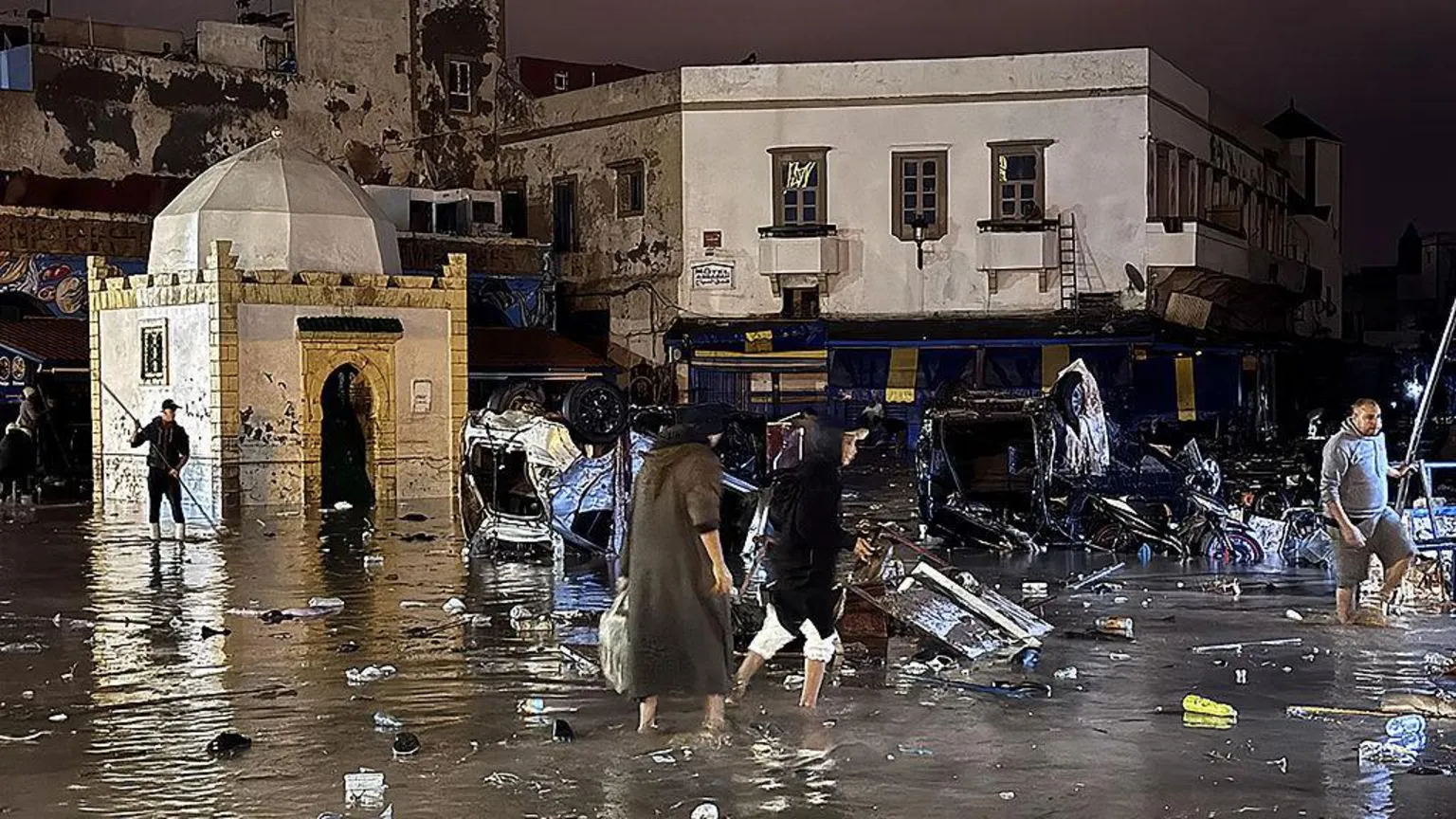
At least 37 people have been killed after devastating flash floods swept through Morocco’s coastal Safi region, turning streets into rivers and leaving widespread destruction in their wake, according to reports from state television and local authorities.
The floods followed torrential rainfall on Sunday that overwhelmed the port city of Safi, a key economic hub on Morocco’s Atlantic coast. Videos and images shared by residents showed cars, debris, and large piles of rubbish being dragged through streets by fast moving water, while homes and shops in the historic city centre were submerged within hours.
Local authorities said dozens of people were taken to hospital with injuries, and at least 70 homes were inundated, many of them in older neighbourhoods that are especially vulnerable to flooding. Emergency services have been working around the clock, but access to some parts of the city has been severely restricted due to damaged roads and accumulated debris blocking key routes in and out of Safi.
Residents described scenes of shock and despair as the floods hit with little warning. One survivor told the AFP news agency that the disaster had left him with nothing. He said he lost all his clothes and possessions and had to rely on a neighbour for something to wear. Another resident said he was desperately waiting for government trucks and emergency equipment to arrive to help pump out the water and clear flooded streets.
Moroccan authorities said search and rescue operations are still ongoing, with teams continuing to check affected neighbourhoods for survivors or people trapped in damaged buildings. Officials have urged residents to remain cautious as conditions remain dangerous, especially in low lying areas.
The flooding in Safi is part of a broader pattern of extreme weather affecting Morocco and the wider North African region. Climate experts say the country’s increasingly unpredictable weather is linked to the climate crisis. Morocco has endured seven consecutive years of drought, which has depleted water reservoirs and hardened the soil, reducing its ability to absorb sudden heavy rainfall. When intense downpours occur, water runs rapidly across the surface, increasing the risk of flash floods.
Last year was officially recorded as the hottest on record in Morocco, adding further strain to the country’s environment and infrastructure. Meteorological authorities have warned that the current unstable weather is not yet over. Morocco’s weather service has said heavy rain is expected to continue on Tuesday, along with snowfall across the Atlas Mountains, raising concerns about further flooding and disruption.
The disaster has once again highlighted the challenges facing countries already struggling with climate extremes. While Morocco has invested in water management and infrastructure, experts warn that more needs to be done to improve drainage systems, early warning mechanisms, and emergency preparedness, particularly in older urban areas.
As the country mourns the victims, calls are growing for stronger disaster response measures and long term climate adaptation strategies. For the residents of Safi, however, the immediate priority is recovery, as families begin to assess their losses and rebuild their lives after what many have described as one of the darkest days in the city’s recent history.