
Business
China’s BYD Pulls Ahead of Tesla as the Global EV Market Enters a New Phase

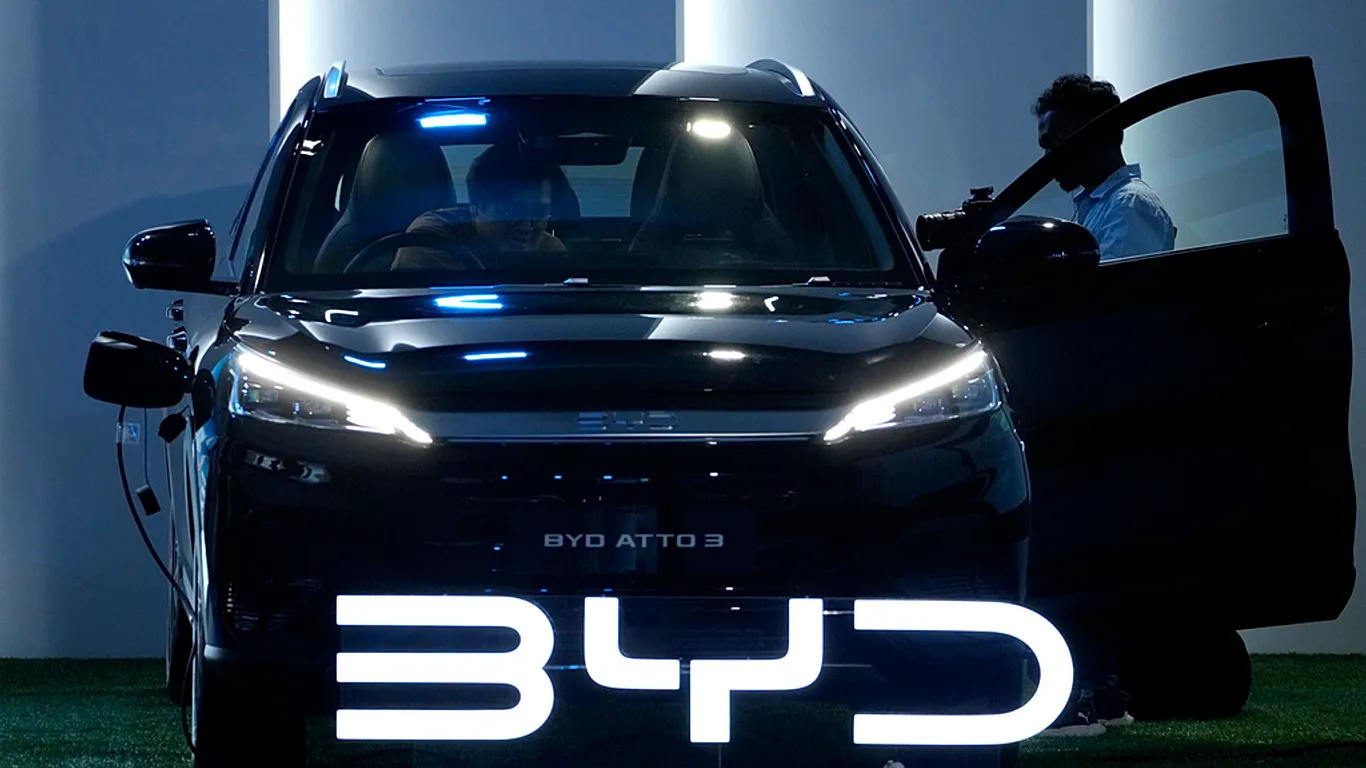
China’s electric vehicle industry is rapidly redrawing the global automotive map, with BYD emerging as the new pace setter while Tesla’s growth shows clear signs of strain. Once synonymous with electric mobility, Tesla now finds itself under pressure from a Chinese rival that combines scale, price competitiveness, and aggressive expansion across international markets.
The shift marks more than a change in sales rankings. It signals a structural transformation in the global EV race, where China’s manufacturing depth and cost efficiency are increasingly dictating outcomes.
Sales momentum tilts decisively toward BYD
Recent figures underline the scale of BYD’s advance. The Chinese automaker recorded a near 28 percent year to date sales increase in December, capping a year of strong momentum. In 2024, BYD sold roughly 1.7 million battery electric vehicles, followed by an estimated 2.25 million BEVs in 2025.
When plug in hybrids are included, BYD’s total vehicle deliveries reached approximately 4.6 million units in 2025, placing it firmly ahead of most global competitors. This scale advantage has allowed the company to lower costs, expand model ranges, and respond quickly to shifting consumer demand.
By contrast, Tesla’s trajectory has flattened. According to December estimates, Tesla sold around 480,000 Model 3 and Model Y vehicles in the third quarter, followed by about 400,000 in the fourth quarter. Total vehicle sales are projected to reach roughly 1.6 million units in 2026, down from about 1.79 million in 2024.
Price and product strategy reshape Europe
One of BYD’s most significant gains has been in Europe, where price sensitivity remains high amid slowing economic growth and tighter household budgets. BYD has leveraged its vertically integrated supply chain to offer competitively priced models that undercut Tesla and many European brands.
Lower entry prices, combined with increasingly refined vehicle design and battery technology, have helped BYD appeal to first time EV buyers as well as fleet operators. In markets where government incentives are being reduced or phased out, affordability has become a decisive factor.
Tesla, long positioned as a premium technology brand, has struggled to adjust pricing without compressing margins. While discounts and incentives have been introduced, they have not fully offset intensifying competition from Chinese manufacturers.
Scale and integration drive China’s advantage
BYD’s rise reflects broader structural strengths within China’s EV ecosystem. The company benefits from in house battery production, control over key components, and close alignment with domestic supply chains. This integration reduces exposure to price volatility and allows faster innovation cycles.
Tesla, despite its technological leadership and brand recognition, remains more exposed to global supply chain pressures. As Chinese manufacturers scale faster and innovate at lower cost, the competitive gap has narrowed in areas once dominated by US and European firms.
This dynamic is increasingly visible not only in sales volumes, but also in pricing power and regional market penetration.
Market implications for global automakers
The reversal in momentum between BYD and Tesla has implications far beyond the two companies. Traditional automakers now face a market where Chinese EV producers set benchmarks for cost efficiency and volume.
European manufacturers, already navigating the transition away from internal combustion engines, must contend with rivals that operate on thinner margins and faster product cycles. In the United States, policy debates over tariffs and subsidies reflect growing concern about China’s expanding automotive influence.
Investors are also recalibrating expectations. Growth narratives once centred on Tesla are increasingly shared across a broader group of Chinese manufacturers, reshaping how capital is allocated within the EV sector.
A turning point in the EV race
BYD overtaking Tesla represents a symbolic and practical turning point. The EV race is no longer defined by early innovation alone, but by scale, affordability, and execution. China’s automakers have moved from followers to leaders, challenging long held assumptions about who will dominate the future of electric mobility.
For Tesla, the challenge now is strategic adaptation rather than technological reinvention. For the global industry, the message is clear. The centre of gravity in electric vehicles is shifting, and markets are adjusting accordingly.



