
News
Children in Gaza Return to Classrooms After Years Without Formal Schooling

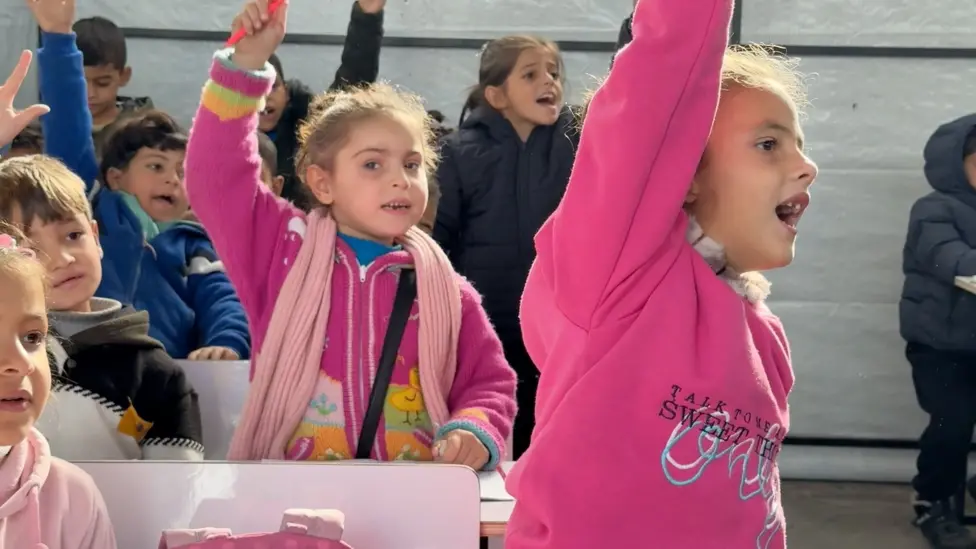
In Gaza City, the sound of children learning has begun to return after years of silence caused by conflict and displacement. Though the setting is far from ideal, the revival of lessons marks an important step for a generation whose education was abruptly interrupted by war.
In the Tel al Hawa neighbourhood in the south western part of Gaza City, tents have been set up where classrooms once stood. Inside, the atmosphere is noisy and imperfect, yet filled with energy. Teachers point to makeshift boards covered in English letters, while others ask pupils to come forward and carefully write simple Arabic words. The lessons are basic, but for many children this is their first structured learning environment in years.
The return to schooling follows the ceasefire agreed in October between Israel and Hamas, which brought a pause to intense fighting that had devastated large parts of Gaza. For children who have grown up amid air strikes, displacement and loss, the ceasefire has offered a fragile opportunity to reconnect with routines that once defined normal life.
The site now hosting the makeshift classrooms was once the Lulwa Abdel Wahab al Qatami School. It was badly damaged in January 2024, leaving its buildings unusable. For months after the attack, the grounds served as a shelter for displaced families fleeing other parts of the city. Tents, blankets and emergency supplies replaced desks and blackboards, and education was pushed aside by the immediate need to survive.
Today, that same space has been partially reclaimed for learning. The remains of the school still bear visible scars of the war, with damaged walls and rubble nearby. Yet among the ruins, children line up to attend classes, walking in straight lines with their arms resting on each other’s shoulders. Many smile as they enter the tents, their excitement reflecting how unfamiliar school has become.
Teachers say the goal is not to replicate a normal school day but to rebuild habits of learning and social interaction. After two years without formal education, many children struggle with concentration, basic literacy and emotional regulation. Educators are focusing on simple lessons, group activities and reassurance, trying to restore a sense of safety and belonging.
Parents watching from nearby describe mixed emotions. Relief that their children are learning again is tempered by anxiety about how much education has already been lost. Some worry that the long interruption will have lasting effects, particularly for older children who may never return to formal schooling if conditions worsen again.
Aid workers and education specialists say the challenges ahead are enormous. Thousands of schools across Gaza remain damaged or destroyed, and resources are scarce. Teachers themselves are often displaced or traumatised, working with limited materials and little certainty about the future.
Despite these obstacles, the reopening of even basic learning spaces carries deep symbolic weight. The hum of lessons and the chatter of classmates echoing through a shattered neighbourhood signal resilience in the face of prolonged hardship.
For Gaza’s children, these tents are more than classrooms. They represent a fragile restart, offering structure, hope and a reminder that education, even in its simplest form, can survive amid destruction.



