News
Britons Splash Out on Food but Rein in Gift Spending as Retailers Brace for Tough 2026

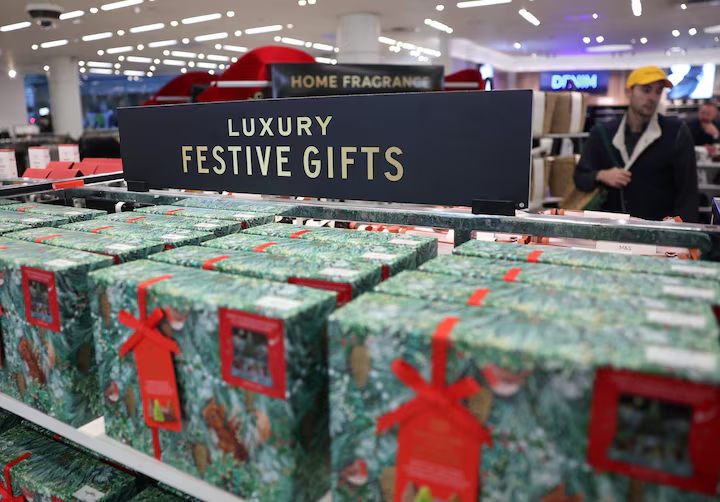
British shoppers prioritised food spending over Christmas while cutting back on gifts and clothing, according to trading updates that have reinforced warnings from retailers about a challenging year ahead.
Supermarket giant Tesco said customers were willing to spend more on festive meals and essential groceries, but remained cautious elsewhere, reflecting the continued pressure on household budgets despite easing inflation. The pattern points to a consumer mindset that remains defensive, even during traditionally strong trading periods.
Retailers reported that food sales held up well through December, driven by Christmas gatherings and a desire not to compromise on family celebrations. Premium ranges and seasonal staples performed strongly, suggesting that shoppers were prepared to treat themselves at the dinner table. However, discretionary categories such as clothing, homeware and gifts saw weaker demand, with many consumers opting to delay purchases or trade down.
The shift highlights how cost of living pressures are still shaping behaviour. While energy prices have stabilised compared with recent years, households continue to feel squeezed by higher mortgage rates, rent increases and lingering price rises across everyday essentials. As a result, spending decisions remain tightly controlled.
Tesco said customers were focused on value and promotions, making careful choices even as they spent more on food overall. The supermarket noted strong interest in loyalty discounts and own brand products, a trend that has become more pronounced over the past two years. Retail analysts say this suggests shoppers are not returning to pre crisis habits, but instead have recalibrated what they consider normal spending.
Non food retailers have been among the most cautious voices looking ahead to 2026. Several have warned that subdued consumer confidence could persist well into the year, limiting growth opportunities. With wages rising only modestly and borrowing costs still high, many households are expected to remain selective about non essential purchases.
The contrast between food and gift spending also reflects changing priorities. For many families, shared experiences and meals are seen as more important than material presents, particularly in uncertain times. Some retailers said customers chose fewer gifts but focused on practicality rather than indulgence.
Industry figures say the Christmas period underlined a broader structural shift in the UK retail landscape. Supermarkets and value led chains are better positioned to cope, while retailers dependent on discretionary spending face a tougher outlook. Competition is expected to intensify, with discounting likely to remain a key tool for attracting customers.
Retailers are also grappling with higher operating costs, including wages, business rates and supply chain pressures. These challenges limit how far prices can be reduced without eroding margins, adding to the difficulty of navigating a cautious consumer environment.
Looking ahead, many retailers are planning conservatively for 2026, focusing on efficiency, promotions and core product ranges. Few expect a rapid rebound in discretionary spending, even if inflation continues to ease.
The Christmas trading updates suggest that while Britons are still willing to spend on what matters most to them, confidence remains fragile. Food may be protected in household budgets, but gifts and non essentials are likely to stay under pressure, setting the tone for another testing year for the UK retail sector.