
Latest News
As Trump Targets Venezuela, Russia and China Offer Limited Support

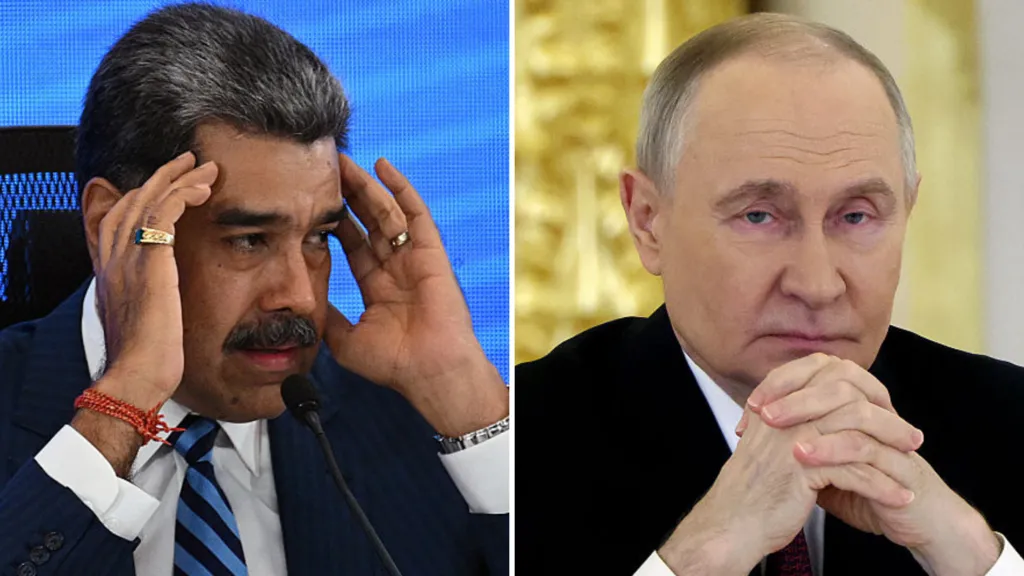
Venezuelan President Nicolás Maduro faces a growing sense of isolation as the United States intensifies its military and economic pressure on the country, while his long-time allies Russia and China offer little concrete support. Once considered rock-solid partners, both nations appear increasingly hesitant to intervene beyond issuing statements of political support.
For years, Russia and China provided Venezuela with political, financial, and military backing—a relationship rooted in the presidency of Hugo Chávez, Maduro’s mentor and predecessor. These alliances helped shield the socialist-led government from international pressure, bolstering Maduro’s position amid economic turmoil and domestic unrest. However, experts say that the current support is largely symbolic, with little evidence of tangible aid or coordinated military intervention.
The timing of this shift is striking. The United States has recently deployed a substantial military presence in the Caribbean, including a nuclear-powered submarine, spy planes, and 15,000 troops. Washington has also conducted strikes on vessels alleged to be smuggling drugs, which have resulted in the deaths of more than 80 people, and recently seized an oil tanker off Venezuela’s coast. The Trump administration maintains that these actions are part of an anti-drug trafficking campaign, and that the tanker had been sanctioned.
Nevertheless, both analysts and Maduro himself suspect that the U.S. strategy goes beyond counter-narcotics operations, aiming instead at regime change. This perception has deepened the Venezuelan leader’s reliance on his allies, only to find that China and Russia are offering little beyond public statements. While both nations continue to condemn U.S. actions rhetorically, they have not committed troops, financial aid, or material support to counter Washington’s moves.
Observers suggest several reasons for this cautious stance. China and Russia are wary of direct confrontation with the United States and its allies, especially in a region where Washington has long-standing strategic dominance. Additionally, both countries may be reassessing the cost-benefit of intervening in Venezuela, given its ongoing economic and political instability.
For Maduro, this moment represents perhaps the greatest test of his alliances. Facing heightened U.S. pressure with minimal tangible support from Beijing and Moscow, the Venezuelan president must navigate an increasingly precarious position. Analysts warn that if the U.S. continues its military build-up and targeted operations, the Venezuelan government could become further isolated, weakening Maduro’s grip on power.
The situation highlights a broader geopolitical shift in Latin America, where U.S. influence remains dominant and even historically reliable allies like Russia and China are reluctant to risk confrontation. As the standoff unfolds, the international community will be watching closely to see whether Beijing and Moscow maintain their symbolic support or take a more decisive role in backing Venezuela’s embattled leadership.



