Tech
Artificial Intelligence Takes Centre Stage in Indian Cinema

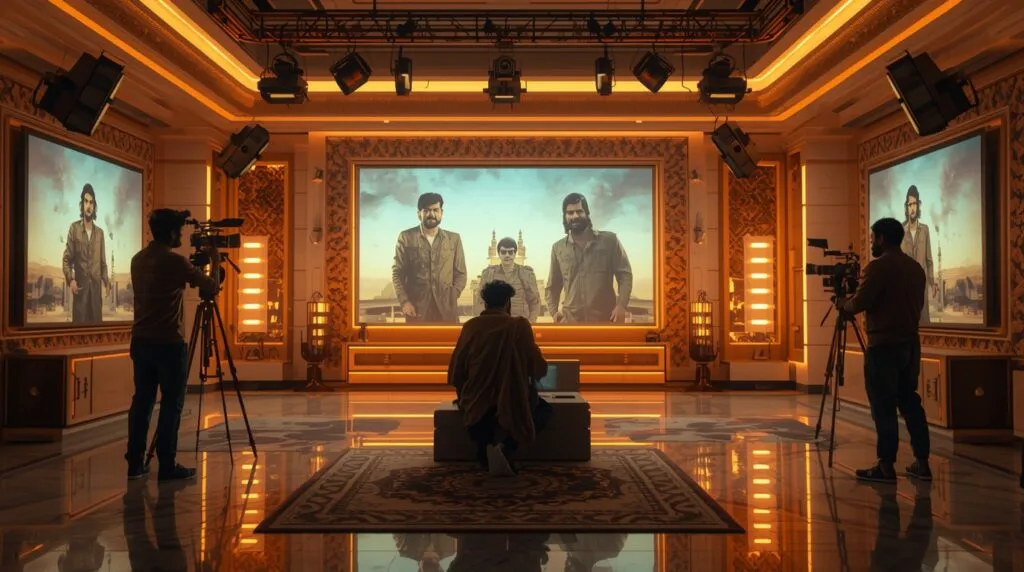
Artificial intelligence is rapidly becoming one of the most talked about forces in Indian cinema. In the world’s largest film industry, AI is no longer a futuristic experiment or a background tool. It is actively reshaping how films are written, visualised, produced, and even performed. While Hollywood continues to debate the boundaries of automation, Indian filmmakers are embracing AI at a pace that is surprising even industry veterans.
How One Filmmaker Found a New Creative Path
When screenwriter and director Vivek Anchalia struggled to gain interest from producers for his next project, he turned to an unconventional collaborator. Instead of waiting for studio backing, Anchalia began experimenting with AI tools to develop his film independently. Using AI image generation to visualise scenes and conversational AI as a creative sounding board, he was able to shape his project shot by shot.
Over the course of about a year, Anchalia refined his workflow, blending human creativity with machine assistance. The process allowed him to experiment freely, revise ideas quickly, and bring a complete creative vision to life without the traditional barriers of funding and studio approval.
AI as a Creative Partner Rather Than a Replacement
For Anchalia, AI did not replace imagination but amplified it. As a lyricist, he had a collection of unreleased romantic songs that lacked a cinematic framework. With AI helping to visualise characters and environments, a story naturally began to form. This ultimately led to Naisha, a romantic film built around music and emotion.
His experience reflects a broader shift in how creators view technology. Instead of seeing AI as a threat, many Indian filmmakers see it as a collaborator that lowers entry barriers and empowers individuals to tell stories on their own terms.
AI Moves Into Big Budget Productions
AI adoption in Indian cinema is not limited to independent creators. Major studios are integrating AI into everyday production workflows. Technologies such as de ageing veteran actors, voice cloning, and pre visualising scenes before filming are becoming increasingly common.
These tools help studios reduce costs, speed up production timelines, and experiment with creative choices before committing resources. For an industry that produces hundreds of films each year across multiple languages, efficiency and scale matter. AI offers both.
Ethical Concerns and Industry Anxiety
Despite its benefits, AI’s rapid adoption has sparked debate. Actors, writers, and technicians have raised concerns about job security, consent, and ownership. Voice cloning and digital likenesses, in particular, raise questions about who controls an actor’s identity and how it can be used.
There is also anxiety around originality. Critics worry that over reliance on AI could lead to formula driven storytelling or visual sameness. Others argue that without clear guidelines, misuse of AI could undermine trust between creators and audiences.
Why India Is Moving Faster Than Hollywood
Several factors explain why Indian cinema is adopting AI more readily than Hollywood. Lower budgets encourage experimentation with cost saving tools. A highly competitive market rewards speed and innovation. There is also a cultural openness to technological shortcuts if they enable storytelling rather than restrict it.
In contrast, Hollywood’s strong unions and established production structures have slowed adoption, as negotiations around rights and protections continue.
A Transformative Moment for Filmmaking
Indian cinema’s embrace of AI signals a pivotal moment for the global film industry. Technology is no longer just supporting creativity, it is actively shaping it. While risks remain, the momentum suggests AI will become a permanent part of filmmaking.
Whether AI ultimately democratizes cinema or deepens industry divides will depend on how responsibly it is used. What is clear is that in India, the algorithm has already found its place behind the camera.