Politics
Government to Introduce Law Backing Permanent Grenfell Memorial

The government has confirmed it will introduce new legislation to fund and formally support a permanent memorial to the 72 people who died in the Grenfell Tower fire, marking a significant step in the long process of remembrance and reform following the 2017 tragedy.
Housing Secretary Steve Reed announced in the House of Commons that the proposed Bill would provide the necessary spending authority to back the Grenfell Tower Memorial Commission and work with the community to create and maintain what he described as a lasting and dignified memorial. Survivors and bereaved relatives watched from the public gallery as the statement was delivered.
Reed described the fire at Grenfell Tower in Kensington as a terrible moment in British history and said honouring those who lost their lives was an enduring duty of the state. He stressed that the government must ensure such a disaster can never happen again.
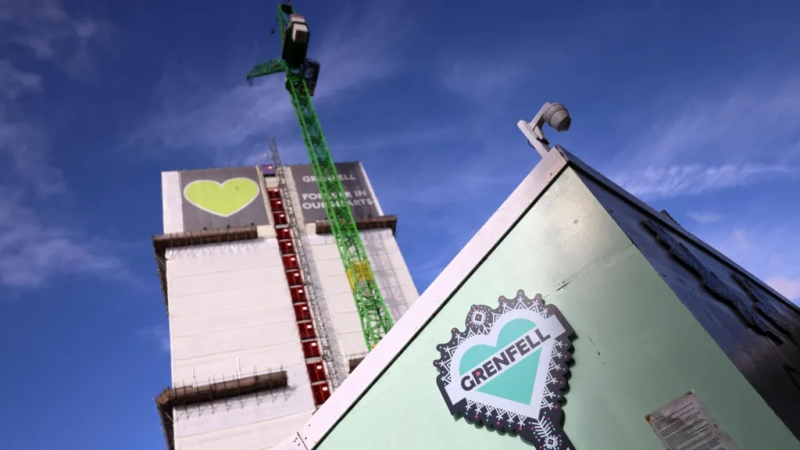
Grenfell Tower has stood covered in protective wrapping bearing a green heart and the words Grenfell forever in our hearts. Dismantling work began in September and is expected to be completed by late next year. The Grenfell Tower Memorial Commission, working alongside the Royal Institute of British Architects, selected architectural firm Freehaus to design the permanent memorial.
The legislative move comes alongside updates on the implementation of recommendations from the Grenfell Tower Inquiry. Reed confirmed that the government has accepted all 58 recommendations from the inquiry and aims to complete around 70 percent of them by the end of this year. He said several Phase 1 and Phase 2 recommendations have already been delivered, with the remainder scheduled for action during this Parliament.
In parallel, the government published a Construction Products Reform White Paper outlining plans for a new single construction regulator and changes to building product rules. Reed said the Building Safety Regulator would evolve to meet the inquiry’s recommendations and confirmed that a public consultation on the reforms has opened.
Further measures include new regulations requiring emergency evacuation plans for high rise residential buildings, set to take effect on 6 April. These are designed to ensure vulnerable residents have clear procedures in place in the event of a fire.
On cladding remediation, Reed told MPs that unsafe aluminium composite material cladding, the same type used on Grenfell Tower, has been removed or replaced on 91 percent of affected high rise residential and public buildings. Work at most remaining sites is under way.
The Metropolitan Police investigation into the disaster remains ongoing. Reed acknowledged that progress has been slow and painful for families awaiting justice, describing the inquiry and criminal investigation as among the most complex ever undertaken.