News
Britain Denies Pause in Chagos Islands Deal Ratification Amid US Concerns

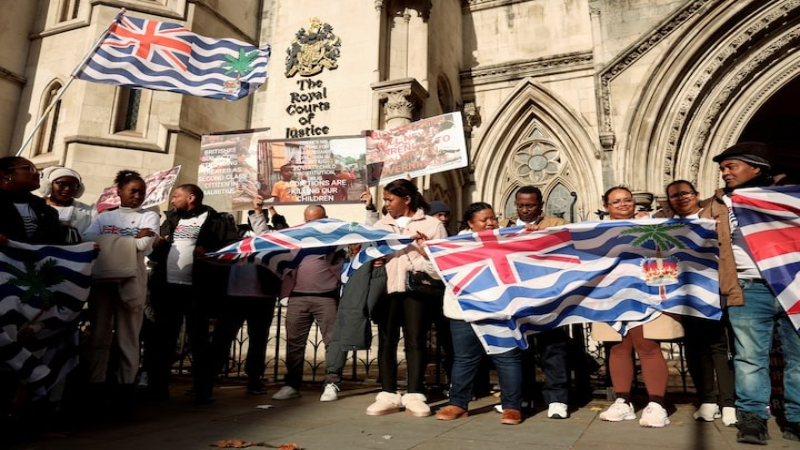
The British government has clarified that it has not paused the ratification of its agreement to transfer sovereignty of the Chagos Archipelago to Mauritius, despite earlier remarks suggesting a delay linked to discussions with the United States. The statement comes amid heightened political scrutiny over the future of the strategically significant Indian Ocean territory.
Confusion arose after a Foreign Office minister told Parliament that the ratification process had been paused pending further talks with Washington. However, a government spokesperson later corrected that position, stating that there was no formal pause and no deadline had ever been set for the legislative timetable. According to the spokesperson, discussions with the United States are ongoing and Britain has made clear it will not proceed without American support.
The Chagos Archipelago is home to Diego Garcia, a crucial UK US military base that plays a central role in security operations across the Middle East, Africa and the Indo Pacific region. Under the agreement reached last year by Prime Minister Keir Starmer, sovereignty of the islands would transfer to Mauritius while the United Kingdom would retain control of Diego Garcia through a 99 year lease arrangement. The structure is designed to safeguard continued US military access and operational capability.
The deal has drawn mixed reactions both domestically and internationally. Supporters argue that transferring sovereignty addresses long standing legal and diplomatic disputes, including rulings and advisory opinions that have questioned Britain’s administration of the territory. Critics, however, warn that any change in sovereignty could complicate defence arrangements and weaken Western strategic positioning in the region.
Recent criticism from US political figures has added further pressure. Concerns have been raised in Washington about whether the agreement adequately protects American security interests. While the British government insists that the deal preserves the status quo for military operations, sceptics argue that the optics of sovereignty transfer could introduce uncertainty.
The legislation required to ratify the agreement is currently before the House of Lords. Several peers have voiced objections and called for further scrutiny, focusing on national security implications, compensation arrangements and the rights of displaced Chagossians. A formal debate and vote have yet to be scheduled, leaving the timeline open ended.
Downing Street maintains that it is committed to transparent parliamentary process and continued coordination with allies. Officials stress that discussions with the United States are part of standard diplomatic engagement on defence matters rather than evidence of a policy reversal.
As the bill moves through Parliament, the government faces the task of balancing international legal considerations, alliance commitments and domestic political sensitivities. The coming weeks are expected to bring further debate as lawmakers assess whether the agreement achieves both diplomatic resolution and long term strategic stability.