Latest News
Wimbledon Expansion Faces Legal Challenge

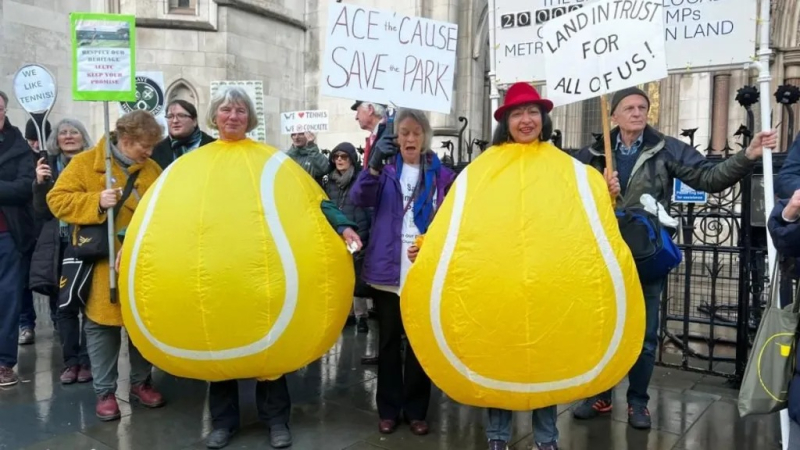
Plans to expand the Wimbledon tennis complex are facing renewed legal uncertainty after a High Court hearing examined whether a 150-year-old law restricts how part of the land can be used. The case centres on proposals by the All England Lawn Tennis Club to redevelop the former Wimbledon Park Golf Club site, which sits next to its existing grounds. The club wants to almost triple the size of its estate by building 38 additional tennis courts and an 8,000-seat stadium, enabling qualifying matches for the Wimbledon Championships to be staged on site. Campaign group Save Wimbledon Park argues that the land is protected by a statutory trust dating back to the Public Health Act 1875, which would limit its use to public walks and pleasure grounds. Protesters gathered outside the Royal Courts of Justice as the case was heard, highlighting strong local opposition.
At the heart of the dispute is whether the former golf course land was ever subject to the same legal protections as the surrounding public park. Lawyers for Save Wimbledon Park say the trust remained in force despite changes in ownership over decades, including when the land passed to the local authority in the 1960s and when it was sold to the All England Club in 1993. They argue that development on the scale proposed would restrict public enjoyment and openness of the space. Barristers representing the club strongly disagree, telling the court that the golf course was always treated as private land leased to a private club and never laid out or used as a public park. They maintain that even if a trust once existed, it did not survive the later sale, and that recognising one now would represent a major shift in the land’s legal status.
The club’s legal team has pointed to historical documents asserting that the local authority was free to dispose of the land without restriction. They argue that the golf course remained distinct from the publicly accessible Wimbledon Park created in the early twentieth century, despite being part of the same wider area. Campaigners, however, say the evidence does not support such a clear divide and that different recreational uses do not negate public land protections. They claim the site remains an open space in character and should continue to be safeguarded for the general public benefit rather than large scale commercial development. This difference in interpretation has become central to the court’s consideration of whether the expansion can lawfully proceed.
The expansion scheme has already received planning approval from the Greater London Authority, but it has faced sustained scrutiny since being announced. Save Wimbledon Park previously failed in a legal challenge against the planning decision, making this the second attempt to block the project through the courts. The current hearing is expected to conclude later this month, with a ruling that could have significant implications for the future of the Wimbledon site and for how historic land protections are applied across London. Until a decision is reached, uncertainty remains over whether one of the capital’s most high profile sporting venues can move forward with its ambitious redevelopment plans.