Latest News
London School Hides a Musical Time Capsule

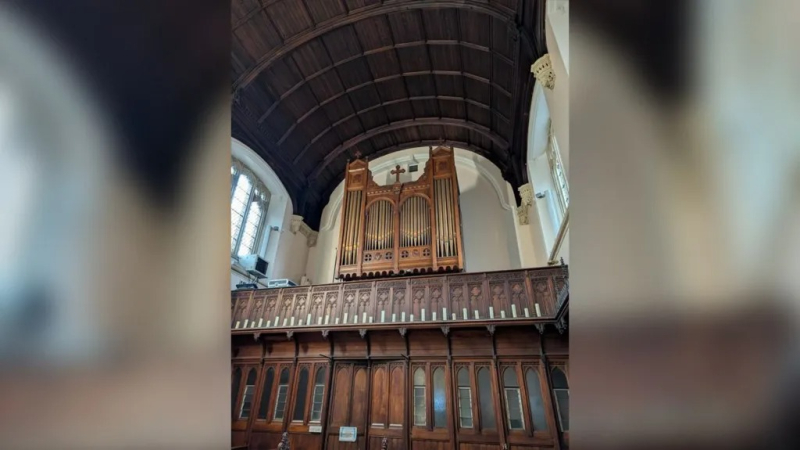
Tucked high inside a west London school chapel, an aging pipe organ has quietly outlived wars, political crackdowns and more than a century of assumptions about where it came from. Staff and students at Sacred Heart High School in Hammersmith recently learned that the instrument towering above their chapel was never meant to be there at all. Long believed to be original to the building, it turned out to be a rare European survivor that arrived in London under cover of secrecy in the early twentieth century. The revelation came after an expert inspection uncovered French markings that did not belong in an English chapel, prompting research that traced the organ back to Paris and to a period when religious institutions were being aggressively dismantled by the French state.
The instrument was built more than 160 years ago by Belgian craftsman Hippolyte Loret and originally installed in a Parisian school chapel run by the Society of the Sacred Heart. As anti-religious laws tightened in France, convents were closed and assets targeted for seizure. Faced with the likely loss of the organ, Mother Mabel Digby quietly arranged for it to be dismantled and transported to London in 1904. The move was less an act of preservation and more one of defiance, ensuring that the craftsmanship and spiritual value of the instrument survived even as its original home did not. Once rebuilt in Hammersmith, the organ slipped into the background, its extraordinary journey largely forgotten as generations passed beneath its pipes.
The scale of what was hidden in plain sight only became clear when an organ specialist was invited to assess its condition. The discovery that it may be the only surviving Loret organ in the UK instantly shifted its status from school fixture to cultural artifact. What had been a silent witness to assemblies and services is now recognised as one of the rarest instruments of its kind in Europe. That recognition also brings responsibility. Time has taken its toll, and restoring the organ to full working order will require careful dismantling, specialist repair and a substantial financial commitment that far exceeds normal school maintenance.
The school has launched a fundraising campaign with a target of more than a quarter of a million pounds, hoping to return the organ to playing condition and open it up for recitals and concerts. Beyond the mechanics, the project has become a story about continuity, resilience and quiet acts of preservation. In a city obsessed with reinvention, the organ stands as a reminder that some of London’s most remarkable stories are not newly built but patiently waiting to be noticed, suspended above everyday life until someone looks up.