Business
A New Birmingham–Manchester Rail Link Returns to the Political Agenda

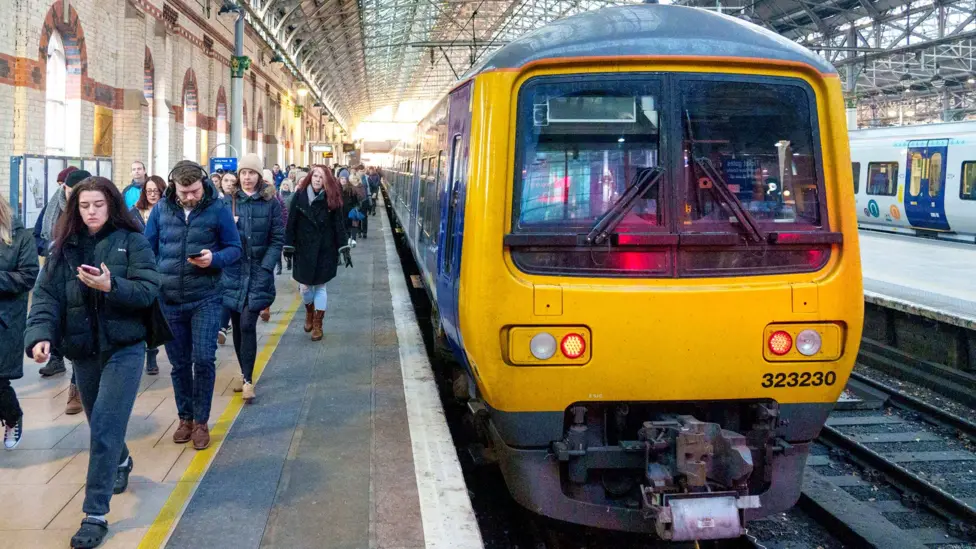
A long delayed connection back in focus
The UK government is preparing to signal renewed intent to improve rail connectivity between Birmingham and Manchester, two of England’s most important economic centres. According to reports from BBC, ministers are expected to outline plans for a new rail link, reviving a connection that had once been central to national transport ambitions. While the announcement is expected to be short on detail, it marks a symbolic shift in how future rail investment is being framed.
The shadow of HS2 still looms large
Any discussion of a Birmingham–Manchester rail route inevitably brings back memories of HS2, the high speed rail scheme that originally promised to transform travel between London, the Midlands and the North. The Birmingham to Manchester leg was a cornerstone of that vision before it was dropped under the government led by Rishi Sunak. Its cancellation was widely seen as a retreat from long term infrastructure planning and left major northern cities questioning the government’s commitment to regional connectivity.
Northern Powerhouse Rail takes priority
Alongside the proposed Birmingham–Manchester link, the government is also expected to confirm progress on Northern Powerhouse Rail, a long discussed plan aimed at strengthening east west connections across northern England. NPR is designed to improve travel between cities such as Manchester Leeds and Sheffield, addressing bottlenecks that have long held back regional growth. Officials are expected to position the Birmingham–Manchester project as a later phase to follow once NPR is delivered.
A vision pushed far into the future
Despite the renewed political language expectations for immediate action remain low. Current indications suggest the Birmingham–Manchester route would only be developed after Northern Powerhouse Rail is completed. Given the scale complexity and funding challenges of major rail projects this places the new link potentially decades away. For businesses commuters and local leaders this raises familiar concerns about long term promises that struggle to translate into near term improvements.
Why the link still matters economically
Even as a distant prospect the idea of reconnecting Birmingham and Manchester carries economic significance. Both cities serve as anchors for wider regional economies and stronger rail links could support labour mobility investment flows and productivity growth. Faster and more reliable travel would also help rebalance the UK economy by reducing dependence on London centric transport networks. The proposal therefore speaks to broader debates about regional inequality and national growth strategy.
Political signalling versus delivery
The announcement is likely to be interpreted as much as a political signal as a concrete plan. After years of criticism over cancelled projects and delayed upgrades the government faces pressure to demonstrate long term commitment to infrastructure outside the capital. However without clear timelines funding mechanisms or routes the risk remains that the proposal will be seen as aspirational rather than actionable.
A cautious response from the regions
Local leaders in the Midlands and the North are expected to welcome renewed discussion while remaining cautious. Past experience has shown that rail ambitions can shift quickly with changing political priorities. For now the proposed Birmingham–Manchester link represents a return of rhetoric rather than a guaranteed transformation.
Waiting for substance
The renewed focus on connecting Birmingham and Manchester suggests recognition of unfinished business in UK transport policy. Whether this recognition evolves into delivery will depend on sustained political will long term funding and consistent planning. Until then the idea remains a reminder of how infrastructure ambition in Britain often stretches further into the future than the rails themselves.