Politics
London Homicides Fall to 11 Year Low What the Numbers Reveal About the City’s Safety Shift

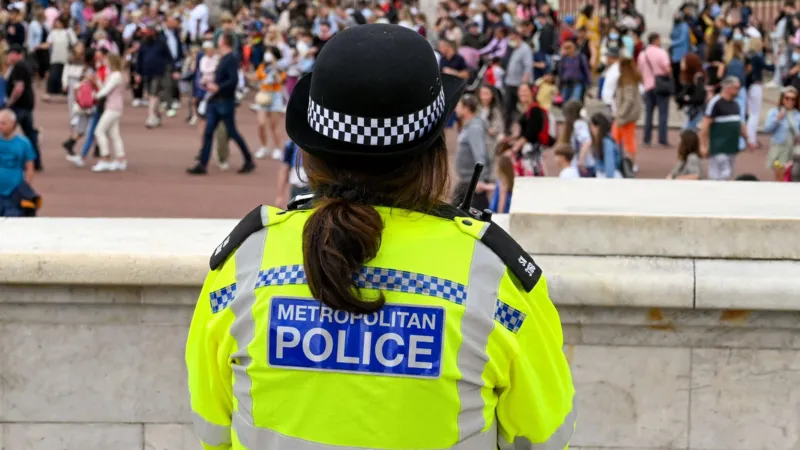
London has recorded its lowest number of homicides in more than a decade, a milestone that offers a rare moment of reassurance in debates about public safety in major cities. New figures released by the Metropolitan Police show that 97 homicides were recorded across the capital in 2025, the lowest annual total since 2014. While no loss of life is ever acceptable, the data suggests a meaningful shift in long term violence trends in one of Europe’s largest urban centres.
The headline figures and why they matter
According to the Metropolitan Police, the homicide rate in London now stands at 1.1 per 100,000 people. This places London below several comparable global cities often cited in crime discussions. For context, the rate is significantly lower than New York City at 2.8, Berlin at 3.2 and even Milan at 1.6.
These comparisons are important because London is frequently portrayed as becoming more dangerous. The data challenges that narrative, showing that when measured consistently, the capital compares favourably with other major international cities.
A decade long decline rather than a single year anomaly
The police have stressed that the fall is not the result of a single exceptional year but reflects a broader downward trend since the mid 2010s. After peaks in serious violence during previous years, particularly around knife crime concerns, sustained reductions suggest structural changes rather than temporary fluctuations.
This longer term perspective matters because crime statistics can be volatile year to year. A decade low points to more durable progress, even if individual boroughs still experience uneven outcomes.
What factors may be driving the reduction
Several factors appear to be contributing to the decline. Targeted policing strategies focused on high risk individuals and locations have played a role, alongside improved intelligence sharing and early intervention programmes. Youth violence prevention initiatives, including mentoring and community engagement, are widely seen as critical components.
At the same time, broader social trends cannot be ignored. Changes in nightlife patterns, technology driven surveillance, and shifts in drug markets may also influence violent crime levels. No single policy explains the drop, but a combination of enforcement and prevention appears to be making an impact.
The limits of celebration
Despite the positive headline, police and policymakers are cautious about declaring victory. Ninety seven homicides still represent ninety seven lives lost, families affected and communities scarred. Certain groups, particularly young men in deprived areas, remain disproportionately affected by serious violence.
There is also concern that economic pressures, including cost of living challenges, could reverse progress if support services are cut or social tensions rise. Crime trends are sensitive to wider conditions, and gains can be fragile.
How London compares internationally
The international comparison has attracted attention because it reframes the conversation around urban safety. London’s homicide rate is now lower than many peer cities often considered safer in public perception. This does not mean London has solved violence, but it does suggest that policy approaches are delivering relative success.
Such comparisons are also politically significant, as they influence investment, tourism and international reputation. Perception often lags reality, and crime narratives can persist long after data shifts.
Implications for policing and public trust
For the Metropolitan Police, the figures offer evidence that recent strategies are working, but also place pressure on the force to sustain results. Public trust depends not only on statistics, but on visible safety in neighbourhoods and fair treatment across communities.
Maintaining the downward trend will likely require continued funding, data led policing and strong partnerships with local authorities, schools and social services.
A cautiously positive signal for the capital
London’s lowest homicide total in eleven years is not a reason for complacency, but it is a meaningful signal. It suggests that complex urban violence can be reduced with consistent effort, long term planning and community involvement.
As debates over crime and policing continue, the figures provide an important reminder. Headlines about fear and disorder do not always align with reality, and progress, when it comes, deserves to be acknowledged alongside the work still to be done.