Tech
Would You Trust a Robot With Your Dishwasher The Reality of the New Domestic Bots

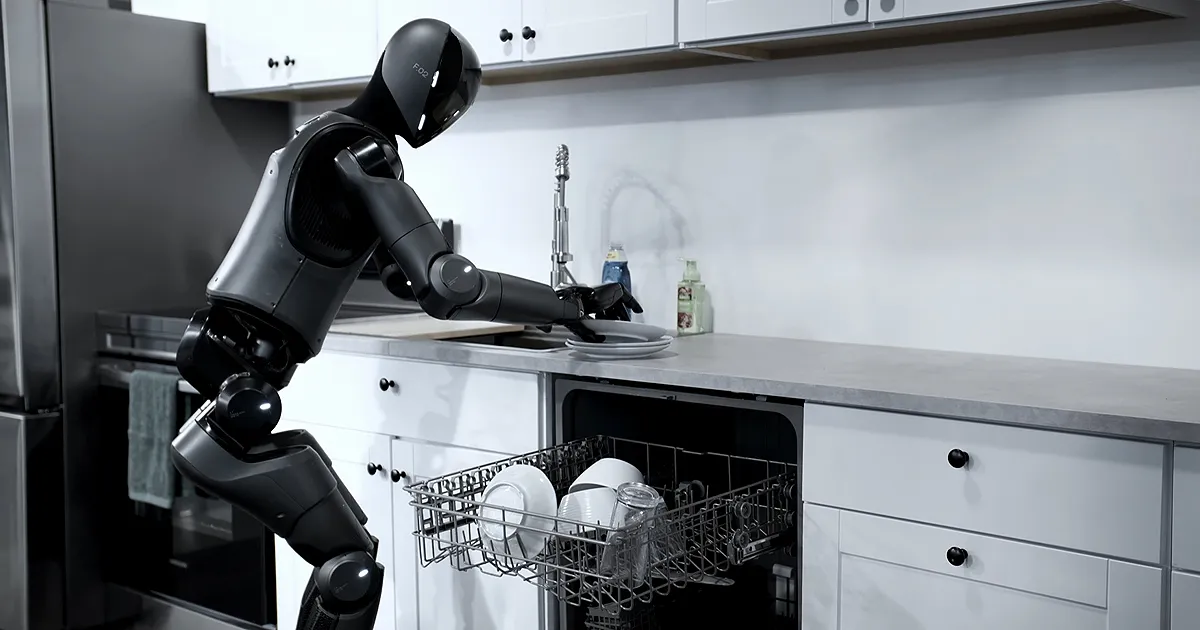
For decades, the idea of a helpful robot quietly taking care of household chores belonged firmly to science fiction. From cartoons to futuristic films, the robot butler was always just around the corner but never quite real. That is beginning to change. Thanks to rapid advances in artificial intelligence, a new generation of domestic robots is moving from research labs into real homes, promising to handle everyday tasks such as loading dishwashers, folding laundry and tidying living spaces.
From novelty gadgets to multi purpose machines
Earlier household robots were highly specialised. Robot vacuum cleaners succeeded because they focused on a single task in a controlled environment. What is different now is ambition. New domestic robots such as Eggie, Neo, Isaac and Memo are being designed as multi purpose assistants capable of understanding complex instructions and adapting to unpredictable home layouts.
This leap is driven by progress in machine learning, computer vision and large scale data training. Instead of being programmed step by step, these robots learn by observing human behaviour, analysing thousands of task demonstrations and refining their movements through trial and error.
Training robots like humans learn
In research labs and startup hubs across Silicon Valley, engineers are teaching robots to interact with the messy reality of human homes. Loading a dishwasher, for example, sounds simple but requires recognising different objects, judging orientation, handling fragile items and adapting when things are not where the robot expects them to be.
Developers use simulation environments combined with real world testing. Robots practice millions of virtual repetitions before attempting tasks in physical kitchens. Sensors and cameras allow them to detect resistance, adjust grip strength and avoid collisions. The goal is not perfection, but reliability good enough to coexist safely with humans.
Big promises meet everyday reality
The creators of these domestic robots are enthusiastic. They talk about freeing people from mundane chores, improving quality of life and offering support for ageing populations. In controlled demonstrations, robots can already perform impressive sequences of actions, from picking up clutter to stacking plates.
Yet there is a gap between lab success and household trust. Homes are chaotic. Pets move unexpectedly, children leave objects on the floor and kitchens vary wildly in layout. A robot that performs well in a demo may struggle when faced with a half open drawer or an unfamiliar brand of dishwasher.
Trust, safety and emotional comfort
Beyond technical ability lies a more human question. Would people feel comfortable letting a robot handle their belongings unsupervised. Trust is built not only on performance but on predictability. A single broken plate or flooded kitchen could undermine confidence quickly.
There is also the emotional dimension. Robots that move autonomously in personal spaces challenge deeply ingrained ideas about privacy and control. Designers are increasingly aware that appearance, movement style and even sound matter. A robot that looks calm and communicates its intentions clearly is more likely to be accepted than one that moves silently and unpredictably.
Who will adopt first
Early adopters are likely to be tech enthusiasts, busy professionals and households already comfortable with smart home devices. Care settings may follow, where robots can assist with repetitive tasks while human caregivers focus on emotional support.
Widespread adoption will depend on cost, reliability and clear value. Consumers will not tolerate constant supervision or complex maintenance. The promise must translate into genuine time saved, not just technological novelty.
A glimpse of domestic life ahead
The arrival of multi purpose domestic robots marks a turning point. These machines are no longer toys or single function tools. They are early versions of something that could become as normal as dishwashers themselves.
Whether you would trust one to load your dishwasher today is a fair question. For now, most people would watch closely. But as the technology matures quietly in the background, the idea of sharing a home with a robot may soon feel less strange and more practical.