Business
Trump’s Credit Card Rate Cap Proposal Rattles Banks and Payment Giants

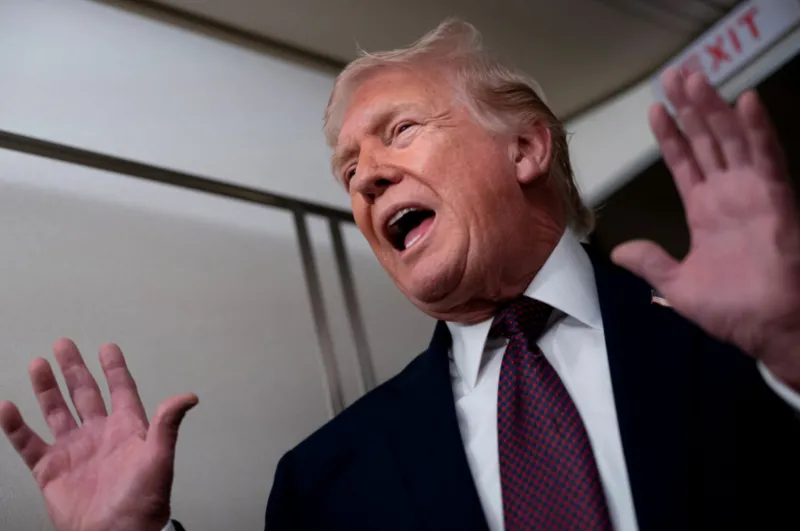
Financial markets reacted sharply after US President Donald Trump floated the idea of capping credit card interest rates, a move that immediately weighed on bank and payment company shares. The proposal, announced via a social media post rather than a formal policy channel, has introduced fresh uncertainty into an already sensitive sector that sits at the intersection of consumer finance, regulation and political messaging.
What Trump is proposing and why it matters
In a post published on Truth Social, Trump called for credit card interest rates to be capped at 10 percent for one year starting from January 20. While the statement was brief and lacked detail, its implications were significant. Credit card lending is one of the most profitable segments of consumer banking, particularly in the United States, where variable interest rates can exceed 20 percent for many borrowers.
By proposing a temporary cap, Trump positioned the idea as consumer friendly relief at a time when households remain under pressure from high borrowing costs. However, the absence of clarity on how such a cap would be implemented or enforced immediately raised questions among investors and legal experts.
Immediate market reaction across banking stocks
Markets responded swiftly. Shares in major US credit card firms fell in early trading, reflecting concerns that even the discussion of rate caps could reshape profit expectations. American Express, Visa and Mastercard all came under pressure as investors reassessed regulatory risk in the payments ecosystem.
The impact was not limited to the United States. In London, shares in Barclays fell 1.9 percent by the close of trading. The UK lender has a sizeable credit card business in the US, making it particularly exposed to any policy shift affecting American consumer lending.
Why investors are taking the threat seriously
Even without a detailed plan, Trump’s comments matter because they tap into broader political sentiment. Credit card interest rates are an emotive issue for voters, and calls for caps or tighter regulation have surfaced repeatedly during periods of economic stress.
Investors understand that policy ideas do not need to be fully formed to influence markets. The risk lies not only in whether a cap is implemented, but in how the debate itself could shift regulatory expectations, increase scrutiny and compress margins over time.
Legal and practical challenges ahead
Capping credit card interest rates would face significant legal and practical hurdles. Credit card pricing is shaped by a complex mix of federal law, state regulations and contractual agreements. Introducing a nationwide cap would likely require legislative backing or regulatory intervention, neither of which Trump addressed.
There is also the question of unintended consequences. Banks could respond by tightening credit access, reducing rewards or introducing new fees to offset lost interest income. Such outcomes could disproportionately affect lower income consumers, complicating the political appeal of the proposal.
Broader implications for the financial sector
The episode highlights how sensitive financial stocks are to political risk, particularly in areas tied directly to household finances. Credit cards are both a profit engine and a social pressure point, making them a frequent target for policy debate.
For banks and payment networks, the challenge is navigating an environment where political messaging can move markets even in the absence of concrete action. For investors, the message is clear. Regulatory risk is no longer confined to formal policy announcements.
A signal rather than a policy shift for now
At this stage, Trump’s proposal remains a signal rather than a defined policy. Yet the market reaction shows how quickly sentiment can turn when profitability appears vulnerable. Whether the idea gains traction or fades will depend on political momentum, legal feasibility and economic conditions in the months ahead.
In the meantime, bank and card issuer shares may remain sensitive to further commentary, reinforcing the growing influence of political narratives on financial market behaviour.