
News
He Once Criticised Leaders Who Clung to Power. Now Museveni Seeks a Seventh Term

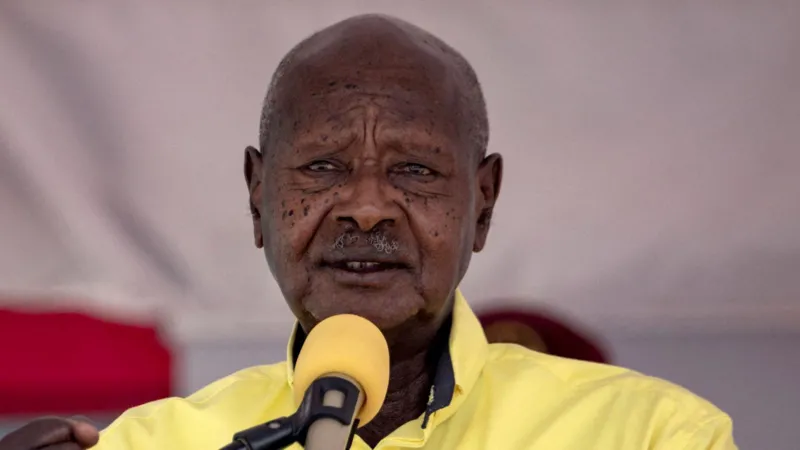
For most Ugandans under the age of 40, politics has meant just one name at the top of the state. Yoweri Museveni has ruled Uganda since 1986, when he seized power after a prolonged armed uprising. Nearly four decades later, and now aged 81, Museveni is once again positioning himself for another presidential run, this time aiming for a seventh term.
Museveni’s long rule stands in contrast to earlier rhetoric that once earned him praise across Africa. In his early years, he was known for criticising African leaders who overstayed their time in office, arguing that entrenched leadership stifled democracy and development. Those comments now sit uneasily alongside his own political trajectory.
Uganda’s population is one of the youngest in the world, with more than three quarters of citizens under 40. For this generation, Museveni’s leadership is not a chapter in history but the only reality they have known. Schools, infrastructure, the army and the political system itself have all developed under his watch, making his presence deeply embedded in the country’s institutions.
Supporters credit Museveni with bringing stability after years of chaos and violence. When he took power in 1986, Uganda was emerging from a period marked by coups, civil war and economic collapse. Under his leadership, the country experienced relative peace, expanded access to education and healthcare, and steady economic growth. For many older Ugandans, these achievements remain a powerful reason to back his continued rule.
Critics, however, argue that this stability has come at a cost. Opposition figures and civil society groups say Museveni has gradually tightened his grip on power by weakening independent institutions, changing the constitution and limiting political competition. Presidential term limits were removed in 2005, and age limits were scrapped in 2017, clearing the way for Museveni to remain in office indefinitely.
Museveni has been unapologetic about these changes. After winning his fifth election, he dismissed the idea of limits altogether, telling BBC, “We don’t believe in presidential term limits.” To his supporters, this reflected confidence and continuity. To his critics, it signalled an abandonment of democratic norms he once championed.
Opposition parties argue that elections are increasingly tilted in favour of the incumbent, citing the use of state resources, restrictions on campaigning and the heavy presence of security forces. High profile challengers have faced arrests, court cases and, in some instances, violence. These patterns, critics say, make meaningful political change through the ballot box increasingly difficult.
The debate over a seventh term also exposes a generational divide. Younger Ugandans, many facing unemployment and rising living costs, are more likely to question whether long term rule still serves the country’s future. While they may acknowledge past achievements, they are increasingly vocal about corruption, lack of accountability and limited political space.
Museveni, for his part, continues to frame his leadership as essential for stability and national unity. He presents himself as a guarantor against disorder, arguing that abrupt change could undo decades of progress. His message resonates with those who remember Uganda’s turbulent past and fear a return to instability.
As Uganda approaches another election cycle, the contrast between Museveni’s earlier criticism of power hoarding and his current ambitions has become a focal point of national debate. Whether his longevity is seen as a source of strength or a barrier to renewal will shape not only the next vote, but the country’s political direction for years to come.



