News
UK Military Chief Warns Britain Is Not Fully Prepared for Potential Conflict

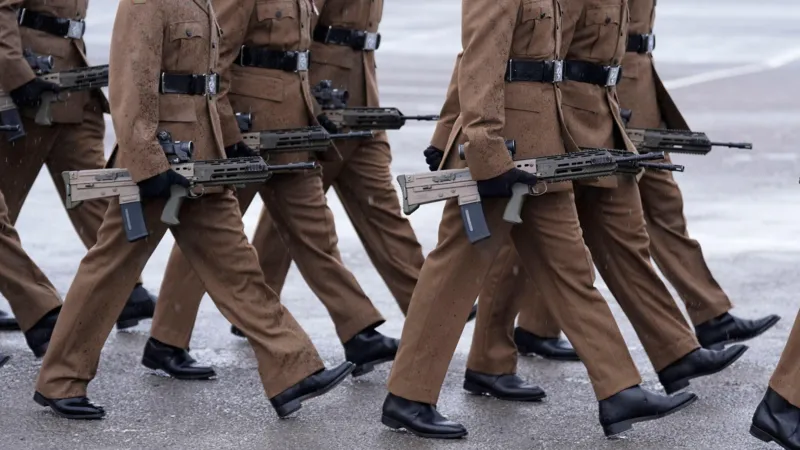
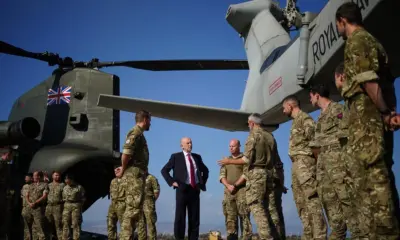
The head of the UK’s armed forces has warned that Britain is not as prepared as it needs to be for the possibility of a full scale conflict, raising fresh questions about defence readiness and long term military investment. Sir Richard Knighton said the country faces growing security challenges and must adapt faster to an increasingly unstable global environment.
Speaking publicly this week, Sir Richard said the UK is “not as ready as we need to be for the kind of full scale conflict we might face”. While he stopped short of directly addressing reports of funding gaps, his comments have intensified debate over whether current defence plans are sufficient to meet future threats.
Sir Richard, who serves as Chief of the Defence Staff, made the remarks amid mounting scrutiny of government defence spending. Recent media reports have suggested that the Ministry of Defence believes it will require an additional £28 billion over the next four years to cover projected costs. Those reports said the shortfall has forced officials to revisit and rewrite parts of the government’s defence investment strategy.
The UK has faced increasing pressure to modernise its armed forces as conflicts abroad, particularly in Europe and the Middle East, have reshaped security thinking. Military planners argue that warfare is evolving rapidly, with cyber capabilities, drones, space assets and long range precision weapons now playing a central role alongside traditional forces.
Sir Richard emphasised that preparedness is not only about the size of the defence budget, but also about how resources are allocated. He said the armed forces must ensure they are structured, trained and equipped for the realities of modern warfare, which can escalate quickly and span multiple domains. However, he acknowledged that readiness ultimately depends on sustained investment and political choices.
The reported £28 billion funding gap has become politically sensitive. Government ministers have not publicly confirmed the figure, but have acknowledged that defence costs are rising due to inflation, equipment delays and the need to replenish stockpiles. The UK has also committed significant military support to allies in recent years, placing additional strain on existing resources.
Opposition figures have seized on Sir Richard’s comments as evidence that defence has been underfunded. They argue that repeated warnings from military leaders highlight a mismatch between strategic ambitions and available resources. Some have called for a clearer long term funding commitment to avoid what they describe as cycles of short term fixes and delayed procurement.
The government maintains that defence remains a priority and points to recent increases in spending, as well as plans to reach Nato targets. Officials argue that investment decisions must balance national security with pressures on public finances, including healthcare, infrastructure and social services.
Security analysts say Sir Richard’s warning reflects a broader shift in tone among Western military leaders. As geopolitical tensions rise and the risk of large scale conflict appears less remote than in previous decades, armed forces are increasingly vocal about readiness gaps. They warn that rebuilding capabilities after years of underinvestment can take time, even with additional funding.
For the UK, the debate comes at a moment when strategic assumptions are being reassessed. The focus is no longer solely on limited overseas operations, but on the possibility of sustained, high intensity conflict involving advanced adversaries.
Sir Richard did not outline specific solutions, but his message was clear. Without realistic planning, sufficient resources and political resolve, Britain risks falling short of the level of preparedness demanded by the current security landscape. His comments are likely to fuel further debate in Westminster as the government finalises its defence spending plans for the years ahead.