
News
When will Nasa’s Artemis II launch and who is on the historic Moon mission crew?

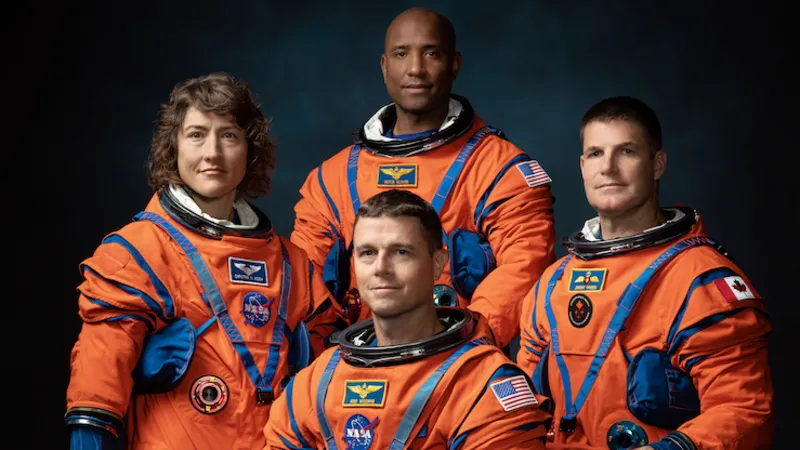
Nasa is preparing to launch its first crewed Moon mission in more than half a century, with the Artemis II mission potentially lifting off as early as the first week of February, marking a major milestone in humanity’s return to deep space exploration.
The mission is part of Nasa’s broader Artemis programme, which aims to return humans to the Moon and eventually establish a sustained presence there. Artemis II will be the first crewed flight of the programme and the first time astronauts travel beyond low Earth orbit since the Apollo 17 mission in 1972.
While no exact launch date has been finalised, Nasa officials have said that early February remains a realistic window, pending final technical checks and weather conditions. The spacecraft will launch from Kennedy Space Center in Florida aboard the Space Launch System rocket, the most powerful launch vehicle ever built.
Artemis II is not designed to land on the Moon. Instead, the mission will last about 10 days and send the crew on a highly elliptical trajectory around the Moon and back to Earth. At its furthest point, the spacecraft will travel farther from Earth than any human has ever been, surpassing the distance reached during the Apollo missions.
The mission’s primary goal is to test critical systems with astronauts on board, including life support, navigation, propulsion and communications. It will also validate the performance of the Orion spacecraft in deep space, ensuring it can safely support future lunar landings.
The four member Artemis II crew represents a mix of experience and historic firsts. Commanding the mission is Reid Wiseman, a veteran astronaut and former US Navy test pilot. Serving as pilot is Victor Glover, who previously flew aboard the International Space Station and will become the first Black astronaut to travel to the Moon’s vicinity.
The mission specialists include Christina Koch, who holds the record for the longest single spaceflight by a woman and will be the first woman to journey to lunar distance. Completing the crew is Jeremy Hansen from the Canadian Space Agency, making him the first non American astronaut to take part in a crewed Moon mission.
Together, the crew will conduct a series of tests and demonstrations during the flight, including manual spacecraft operations and evaluations of Orion’s heat shield during its high speed re entry into Earth’s atmosphere. These tests are considered essential before Nasa attempts a lunar landing with Artemis III.
The Artemis programme is also closely tied to Nasa’s long term ambitions beyond the Moon. Lessons learned from Artemis II will feed into plans for building a lunar Gateway station and preparing for eventual crewed missions to Mars.
Public interest in the mission has been high, driven by the historic nature of the flight and the diversity of the crew. Nasa has described Artemis II as a bridge between past and future, reconnecting with the legacy of Apollo while laying the groundwork for a new era of exploration.
If all goes according to plan, Artemis II will mark the first time in generations that humans venture into deep space, bringing the Moon back within reach and setting the stage for the next giant leap in human exploration.



