
News
Reza Pahlavi emerges in protest chants as Iranians revisit monarchy debate

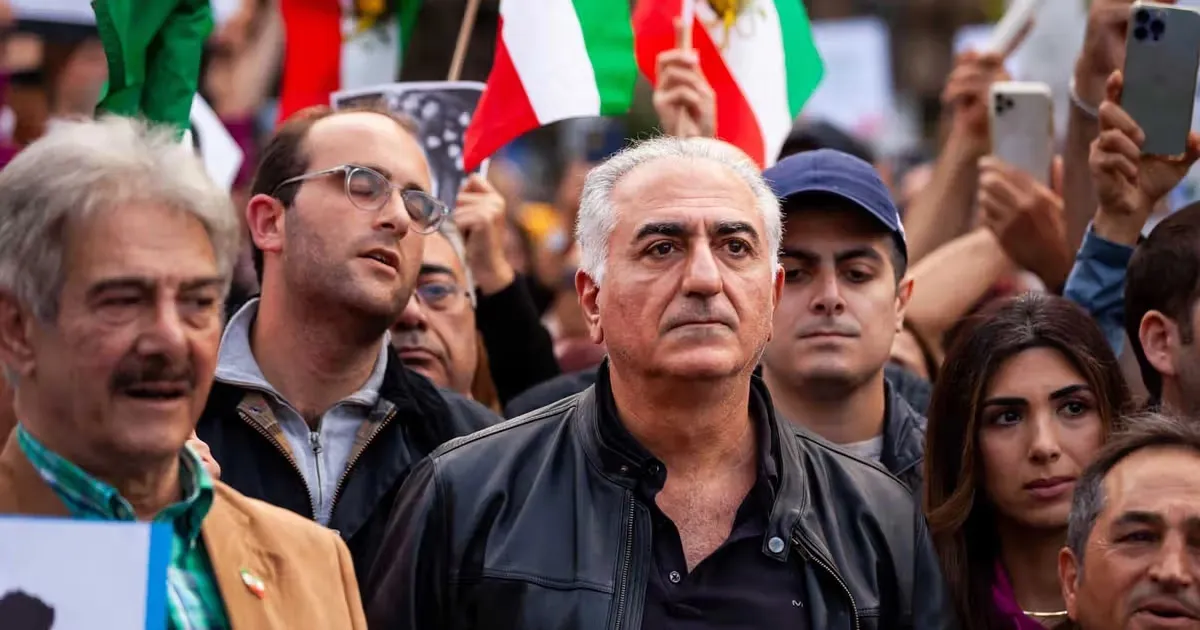
As anti government protests spread across Iran, a familiar name from the country’s past has re entered public discourse. Reza Pahlavi, the exiled son of Iran’s last shah, has been invoked by demonstrators calling for political change, reviving debate over monarchy, exile leadership and the future direction of the protest movement.
Chants referencing Pahlavi have been heard in several cities, reflecting frustration with the current political system and a desire among some protesters for an alternative symbol of national leadership. While the demonstrations are largely driven by economic hardship, political repression and demands for accountability, the appearance of royalist slogans highlights the diversity of views within the movement.
Reza Pahlavi was born into Iran’s ruling family and groomed from birth to inherit the Peacock Throne. His life changed dramatically in 1979, when mass protests and political upheaval culminated in the Islamic Revolution. At the time, Pahlavi was in the United States undergoing fighter pilot training, watching events unfold from afar as his father’s rule collapsed.
His father, Mohammad Reza Shah Pahlavi, had ruled Iran for decades with strong backing from Western powers. As the revolution gained momentum, the shah fled the country, struggling to secure long term refuge before eventually dying of cancer in exile in Egypt. The monarchy was abolished, and Iran became an Islamic republic under clerical leadership.
Since then, Reza Pahlavi has lived in exile, largely in the United States, positioning himself as a proponent of secular democracy rather than a restoration of absolute monarchy. He has consistently said that Iran’s future should be decided by its people through a referendum, arguing that he does not seek power for himself but wants to help facilitate a peaceful transition.
In recent days, Pahlavi has publicly urged Iranians to take to the streets, framing the protests as a historic opportunity to challenge authoritarian rule. His calls have been widely circulated on social media, particularly among Iranians abroad, where monarchist sentiment tends to be stronger.
Inside Iran, however, his support is harder to measure. While some demonstrators see Pahlavi as a unifying national figure untarnished by the current system, others remain deeply sceptical of the monarchy due to memories of repression, inequality and foreign influence under his father’s reign. For many younger protesters, the shah era is distant history, overshadowed by present day grievances rather than nostalgia.
Analysts say the chants reflect less a coordinated royalist movement and more a symbolic rejection of the status quo. In moments of upheaval, protest movements often reach for familiar names that represent alternatives, even if those figures do not command majority support.
Iran’s authorities have seized on the royalist angle to discredit the protests, portraying them as foreign backed attempts to restore a discredited past. State media frequently links Pahlavi to Western governments, a narrative aimed at undermining the legitimacy of demonstrators.
Despite the attention, most protest organisers and activists stress that the movement lacks a single leader. It encompasses a wide spectrum of political views, united more by opposition to the current system than agreement on what should replace it.
Whether Reza Pahlavi’s prominence grows or fades will depend on how the protests evolve. For now, his reappearance in chants underscores the depth of Iran’s political uncertainty and the unresolved questions about leadership, identity and governance that resurface whenever the country enters a moment of crisis.



