News
Trump’s warning hangs over Iran as protests test Tehran’s restraint

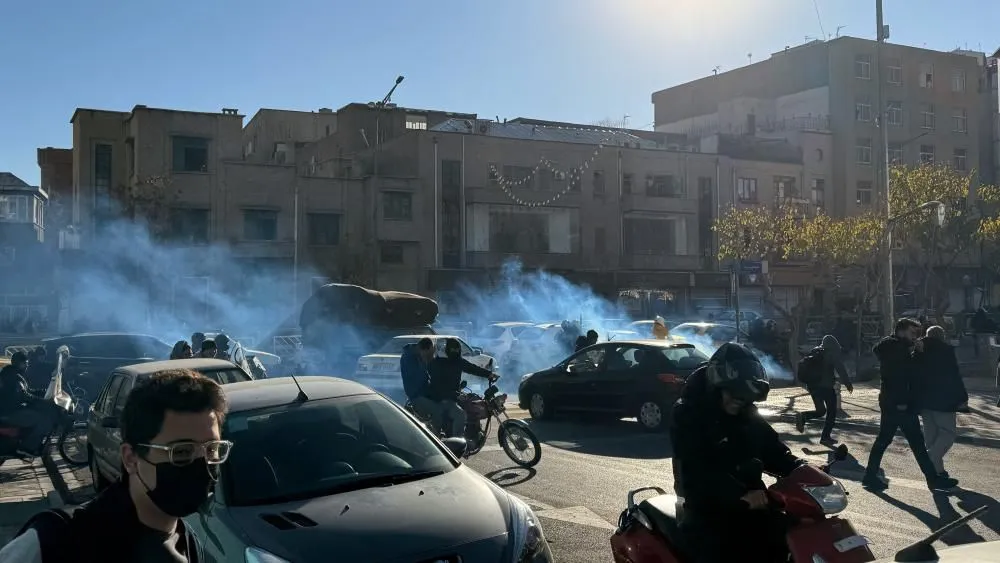
Iran has witnessed its largest wave of anti government protests in decades, with demonstrations spreading across dozens of districts in Tehran and the wider metropolitan area, home to nearly 16 million people. The scale and coordination of the unrest have raised fresh questions about how the authorities will respond, particularly after warnings from the United States signalled that Tehran’s actions are being closely watched.
For several hours on Thursday night, security forces appeared unusually restrained. In areas where crowds swelled into the thousands, police units and riot forces were largely absent or kept their distance, allowing protesters to chant slogans and occupy major streets with limited interference. The relative calm surprised many residents accustomed to swift crackdowns during past unrest.
The reasons for the restraint remain unclear. Some analysts believe the authorities were testing whether the protests would lose momentum on their own, while others suggest security commanders were seeking to avoid images of violence that could further inflame public anger or draw international condemnation. The pause also raised speculation about divisions within the state over how aggressively to act.
The demonstrations were driven by a mix of economic frustration, political grievances and anger over rising living costs. Protesters voiced opposition to corruption, unemployment and what they see as a lack of accountability among Iran’s leadership. The breadth of participation, cutting across age groups and neighbourhoods, has amplified concerns inside the establishment about the depth of public discontent.
Hovering over Tehran’s calculations is a warning from Donald Trump, who has publicly criticised Iran’s handling of protests and signalled that Washington could respond if authorities resort to widespread violence. While the exact nature of any response remains vague, the message has added an external layer of pressure at a moment when Iran’s leadership is weighing its options.
Iran’s rulers have long framed domestic unrest as being encouraged by foreign powers, particularly the United States. State media have already accused outside actors of exploiting economic hardship to destabilise the country. At the same time, officials are keenly aware that a heavy handed response could strengthen that narrative internationally and deepen Iran’s isolation.
Tehran itself has been at the heart of the protests. Demonstrations rippled through central districts as well as outlying neighbourhoods, disrupting traffic and daily life. Videos circulating on social media showed crowds chanting late into the night, with occasional skirmishes but fewer signs of the mass arrests seen during previous protest movements.
By early Friday, security forces began to reappear in greater numbers, suggesting that restraint may have been temporary. Observers noted a gradual tightening of control, with checkpoints set up and plainclothes officers moving into key areas. Whether this marks the start of a broader crackdown or a calibrated show of force remains uncertain.
Iran’s leadership faces a difficult balancing act. Allowing protests to continue risks emboldening demonstrators and spreading unrest to other cities. Crushing them too forcefully could provoke wider resistance at home and harsher reactions abroad, particularly from Washington and its allies.
The situation also highlights the limits of external pressure. While Trump’s warning looms large in public discourse, Iran’s response will ultimately be shaped by internal calculations about regime stability rather than foreign rhetoric alone. Past experience suggests that Tehran prioritises survival and control, even at the cost of international criticism.
As protests continue to ebb and flow, the coming days will be critical. Whether the authorities choose sustained restraint, selective repression or a full scale crackdown will shape not only the fate of the demonstrations but also Iran’s relations with the outside world. For now, uncertainty prevails on Tehran’s streets, as both protesters and the state test how far each side is willing to go.