News
Trump threatens further strikes in Nigeria amid dispute over Christian killings

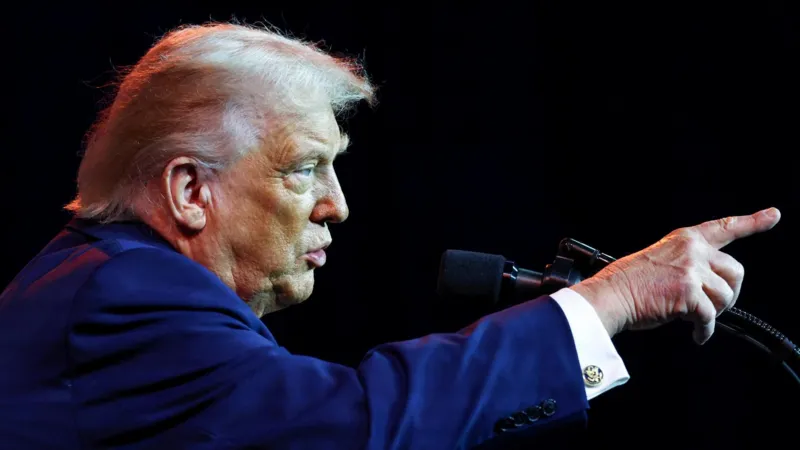
US President Donald Trump has warned that the United States could carry out additional airstrikes in Nigeria if attacks against Christians continue, intensifying an already sensitive debate over security, religion and foreign military intervention in Africa’s most populous nation.
In remarks made during a wide ranging interview, Trump said recent US airstrikes in northern Nigeria were not necessarily a one off operation. He suggested further military action remained on the table if violence against Christians persisted, framing the issue as a moral and security concern that justified repeated intervention.
The comments refer to US airstrikes carried out on Christmas Day in Nigeria’s northern Sokoto state, where American forces targeted Islamist militant groups operating in remote areas. The strikes were publicly acknowledged by Washington as aimed at armed groups accused of carrying out attacks on civilian communities.
Trump said he would prefer such action to be limited, but warned that continued killings could prompt further strikes. His remarks signalled a more assertive posture toward Nigeria, linking religiously framed violence directly to US military responses.
The Nigerian government has strongly rejected the implication that Christians are being singled out or inadequately protected. Officials in Abuja said the country faces a complex security crisis in which victims come from all religious and ethnic backgrounds. Government representatives stressed that Muslims, Christians and people of no faith have all suffered from attacks by extremist groups and criminal gangs.
Nigeria has for years battled multiple security threats, including Islamist insurgents in the northeast, armed banditry in the northwest and communal violence in central regions. While some attacks have targeted churches or Christian communities, others have struck mosques, markets and villages regardless of religious identity.
Officials said portraying the violence solely through a religious lens risks oversimplifying the conflict and undermining domestic efforts to address its root causes. They also warned that external military action without close coordination could complicate counterterrorism operations and inflame public opinion.
The exchange highlights growing tensions between Washington and Abuja over how Nigeria’s security challenges are framed internationally. While the United States has provided intelligence and security assistance to Nigeria in the past, direct strikes mark a significant escalation and raise questions about sovereignty and precedent.
Analysts note that Trump’s language reflects a broader shift toward openly linking US military force to the protection of religious groups abroad. Critics argue that such framing risks inflaming sectarian divisions and may encourage extremist narratives that portray conflicts as religious wars rather than political or socio economic struggles.
Supporters of the tougher stance say decisive action sends a clear signal to militant groups and pressures governments to act more forcefully. They argue that repeated attacks on civilians, regardless of motive, demand strong international responses.
In Nigeria, reactions have been mixed. Some Christian leaders welcomed international attention to attacks on their communities, while others cautioned that foreign strikes could lead to retaliation and further instability. Muslim leaders echoed government calls for unity, stressing that extremist violence harms all Nigerians.
Regional observers also expressed concern that repeated US strikes could draw Nigeria deeper into global power rivalries, particularly as other external actors expand their presence across Africa’s security landscape.
For now, Nigerian authorities say they remain committed to addressing insecurity through domestic military operations, regional cooperation and dialogue. They reiterated that protecting civilians of all backgrounds is a national priority and rejected claims of religious bias in security policy.
Trump’s warning, however, suggests that Nigeria’s internal conflict may increasingly intersect with US foreign policy decisions. Whether further strikes occur will depend not only on developments on the ground, but also on how Washington continues to frame Nigeria’s violence in the months ahead.