
News
US film stars Meagan Good and Jonathan Majors set to receive Guinea citizenship after ancestry discovery

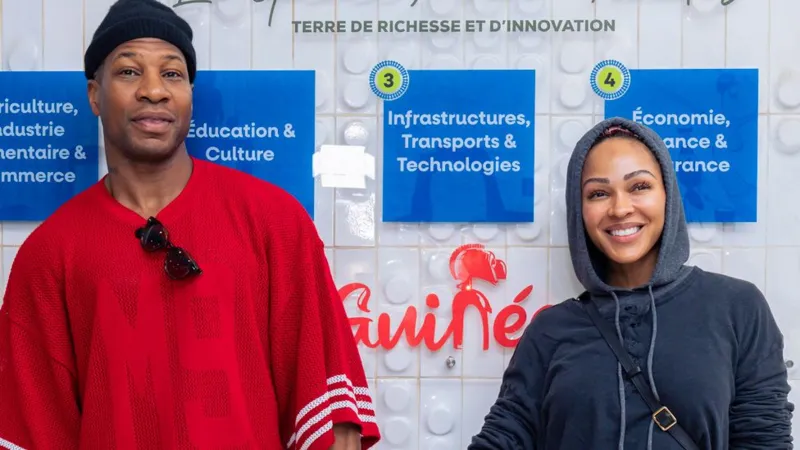
American film stars Meagan Good and Jonathan Majors are set to become citizens of Guinea after tracing their ancestral roots to the West African nation through DNA testing, marking a symbolic homecoming tied to a growing movement among members of the African diaspora.
The husband and wife travelled to Guinea this week ahead of a citizenship ceremony organised by the country’s Ministry of Culture. The initiative is part of broader efforts across West Africa to reconnect people of African descent with their historical origins and encourage cultural, social and economic ties with the continent.
Good, known for her roles in romantic comedies and dramas, said the visit carried deep personal meaning. She described the trip as an emotional milestone and noted that it was her first time setting foot in Guinea. She said she felt a strong sense of belonging and gratitude for the opportunity to connect with a place linked to her family history.
Majors, who has starred in major Hollywood productions, echoed that sentiment, saying he was eager to meet local communities and experience daily life alongside his wife. He described the journey as more than a ceremonial visit, framing it as a chance to understand culture, history and shared identity beyond what could be learned from books or tests.
The citizenship process follows DNA analysis that indicated ancestral links to Guinea, one of several West African countries that were heavily affected by the transatlantic slave trade. For many African Americans, such tests have become a way to recover fragments of family history that were erased or obscured over generations.
Guinean officials have welcomed the couple’s decision, presenting it as an example of how cultural diplomacy can strengthen ties between Africa and its global diaspora. The Ministry of Culture said the ceremony reflects Guinea’s openness to people seeking to reconnect with their roots and contribute to the country’s future.
Similar programmes have gained prominence across the region in recent years. Countries such as Ghana and Sierra Leone have introduced initiatives offering residency or citizenship to descendants of enslaved Africans, often alongside campaigns encouraging investment, tourism and cultural exchange. These efforts blend historical recognition with modern economic and diplomatic goals.
For Guinea, hosting high profile figures brings international attention to its own cultural heritage and history. Officials say the presence of well known artists can help reshape global perceptions of the country and highlight opportunities beyond traditional narratives focused on poverty or instability.
Cultural scholars note that such citizenship ceremonies carry both symbolic and practical significance. While they do not erase the trauma of displacement and slavery, they offer a form of recognition and belonging that many descendants of the diaspora find meaningful. They also raise questions about identity, nationality and what it means to return to a homeland generations after separation.
Good and Majors have not yet detailed whether they plan to engage in long term projects in Guinea, but officials hinted that cultural and creative collaborations could follow. Film, education and community initiatives are among the areas often discussed when diaspora figures formalise ties with African nations.
The couple’s visit comes at a time when conversations about heritage, identity and global Black history are increasingly visible in popular culture. DNA testing, once a niche tool, has become mainstream, allowing millions to explore ancestral connections that were previously inaccessible.
As they prepare to receive Guinean citizenship, Good and Majors said their focus remains on learning, listening and building genuine connections. Their journey reflects a broader search for roots shared by many across the African diaspora, where personal discovery intersects with history, culture and the possibility of renewed bonds across the Atlantic.



