News
UK Competition Watchdog Launches Full Probe Into Kingsmill Owner’s Planned Takeover of Hovis

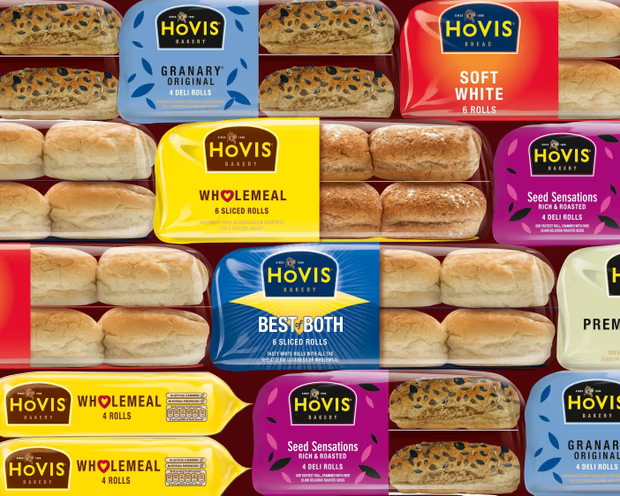
The UK’s competition regulator has opened a full investigation into plans by the owner of Kingsmill to take over rival bread brand Hovis, raising the prospect of significant regulatory hurdles for the deal as concerns grow about reduced competition in the grocery sector.
The Competition and Markets Authority said it has begun an in depth review of the proposed acquisition by Associated British Foods, which owns Allied Bakeries, the producer of Kingsmill bread. The watchdog will examine whether the takeover could substantially lessen competition in the UK bread market, potentially leading to higher prices, reduced choice or lower quality for consumers.
The decision to move to a full phase two investigation indicates that the CMA believes the deal raises serious competition concerns that could not be resolved at an initial review stage. Kingsmill and Hovis are two of the most recognisable names in the UK packaged bread market, supplying supermarkets nationwide and competing closely on price, promotions and shelf space.
If approved, the merger would bring two major bread producers under the same ownership at a time when food prices remain a sensitive political and economic issue. Regulators are expected to scrutinise how much market power the combined business would hold, particularly in negotiations with supermarkets and wholesalers.
Associated British Foods said it will cooperate fully with the CMA’s investigation. The company has argued that the bread sector remains highly competitive, with pressure from own brand supermarket products and other independent bakeries limiting any single firm’s influence. However, critics say the loss of head to head rivalry between Kingsmill and Hovis could weaken competitive dynamics.
The regulatory move comes as Associated British Foods also issued a profit warning, citing challenging trading conditions. The group, which also owns fashion retailer Primark, said consumer caution and higher costs were weighing on parts of its business. The warning has added pressure on the company as it seeks to reassure investors about its strategy and long term outlook.
Analysts say the timing is awkward for ABF, as prolonged regulatory uncertainty could delay potential efficiencies or restructuring plans linked to the bread business. A phase two CMA investigation can take several months and may result in remedies being imposed, such as the sale of brands, factories or contracts, or even an outright block on the deal.
The UK bread market has already undergone significant consolidation over the past two decades, with rising production costs, tight margins and intense competition from supermarkets’ own label products squeezing traditional brands. Any further consolidation is therefore likely to face close scrutiny from regulators.
Consumer groups have welcomed the CMA’s decision, arguing that bread is a staple product and that competition plays a vital role in keeping prices affordable. They say recent years have shown how quickly food price rises can affect household budgets, particularly for lower income families.
The CMA said it will now gather detailed evidence from the companies involved, supermarkets, suppliers and consumers before reaching a provisional conclusion. A final decision is expected later this year.
The outcome of the review will be closely watched across the food industry. It will not only determine the future of the Kingsmill Hovis deal but also signal how tough the UK competition regime is likely to be on consolidation moves in essential consumer goods sectors.