
News
Spain’s Catholic Church Reaches Agreement With Government on Abuse Compensation

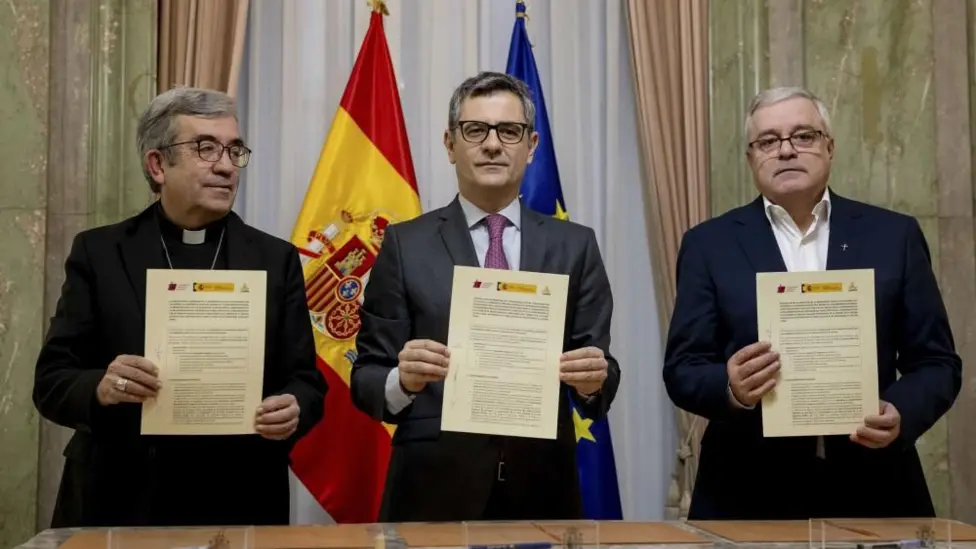
Spain’s Roman Catholic Church has reached an agreement with the government to compensate victims of sexual abuse committed by members of the clergy, marking a significant step in addressing a long standing and deeply sensitive issue that has affected thousands of people over several decades.
Under the agreement, the Catholic Church in Spain and the Spain’s government will work together on a compensation system aimed at victims who are unable to pursue justice through the courts. These include cases where the alleged abuse occurred too long ago for legal action under existing statutes of limitation or where the accused individual has since died.
Government officials said the state will take responsibility for managing and processing compensation claims, while coordinating closely with the Church. The arrangement is intended to provide a structured and credible pathway for victims who have previously felt excluded from recognition or redress. Authorities stressed that the process is designed to be victim focused, ensuring that survivors are treated with dignity and fairness.
The agreement follows years of criticism directed at Church leadership over its handling of abuse allegations. Victims’ groups and advocacy organisations have accused religious authorities of failing to respond adequately, particularly in older cases where institutional silence or inaction compounded the harm suffered. Public pressure intensified after independent investigations highlighted the scale of abuse and the lack of consistent accountability.
Church representatives acknowledged the suffering of victims and said the agreement reflects a commitment to taking responsibility for past failures. They described the deal as an effort to move toward reconciliation, though they also emphasised that financial compensation alone cannot undo the damage caused. The Church said it would cooperate fully with the government led mechanism and contribute resources to support the scheme.
One of the key features of the deal is its focus on cases that fall outside the criminal justice system. Many victims have been unable to seek legal remedies because the abuse took place decades ago, when reporting mechanisms were weak or non existent. Others were blocked by the death of alleged perpetrators, leaving them without a clear legal route. The new framework aims to close that gap.
Details on compensation amounts have not yet been finalised, but officials said payments will be assessed on a case by case basis. Factors such as the severity of abuse, its duration and the long term impact on the victim’s life are expected to be taken into account. The government said transparency and consistency would be central to the process.
Victims’ organisations have welcomed the agreement cautiously. Some described it as a long overdue recognition of institutional responsibility, while others warned that its success would depend on implementation. They called for clear timelines, independent oversight and psychological support alongside financial compensation.
The move places Spain among a growing number of countries seeking alternative justice mechanisms for historical abuse cases linked to religious institutions. Similar approaches have been adopted elsewhere as governments grapple with how to respond to allegations that predate modern safeguarding standards.
For Spain, the agreement represents an attempt to balance accountability, compassion and legal reality. While it does not replace criminal prosecution where it remains possible, officials say it offers a measure of acknowledgement to victims who have waited years, sometimes decades, to be heard.
As the compensation scheme takes shape, both the government and the Church will face close scrutiny. Survivors and the wider public will be watching to see whether the promises made translate into meaningful redress and a lasting commitment to preventing abuse in the future.



