Politics
UK Confronts a New Age of American Uncertainty

Two crises shaping a single dilemma
The UK and its European partners are finding themselves tested by a rapidly shifting relationship with the United States. Two issues dominating headlines at the same time illustrate the scale of the challenge. One is the ongoing war in Ukraine. The other is renewed attention on Greenland. At first glance, the two seem unrelated, but together they reveal how Europe is struggling to anchor Washington into long term commitments amid a climate of political volatility.
Ukraine and the limits of reassurance
Ukraine remains the clearest test of Western unity and resolve. European governments, including the United Kingdom, continue to frame support for Kyiv as essential to continental security. Yet in Washington, scepticism is growing about the scale and duration of American involvement. Questions about burden sharing, military spending, and strategic priorities are no longer confined to the political fringes. For European capitals, this uncertainty makes long term planning difficult, especially when US backing has been central to deterrence strategies for decades.
Greenland and strategic anxiety
Greenland’s re emergence in geopolitical debate highlights another dimension of American unpredictability. The territory’s strategic location and resources have long attracted US interest, but recent rhetoric has revived European unease about how Washington pursues its objectives. For Europe, Greenland is not only a security concern but also a reminder that American strategic thinking can shift abruptly, sometimes bypassing traditional diplomatic sensitivities. This complicates efforts to build trust and shared purpose across the Atlantic.
Washington’s changing view of Europe
Underlying both cases is a deeper scepticism within the US political system about Europe itself. Many in Washington question Europe’s willingness to invest sufficiently in its own defence and doubt its relevance in a world increasingly shaped by competition with China. This outlook is not new, but it has become sharper and more openly expressed. European leaders sense that appeals to shared values are no longer enough to guarantee American engagement.
Trump’s enduring unpredictability
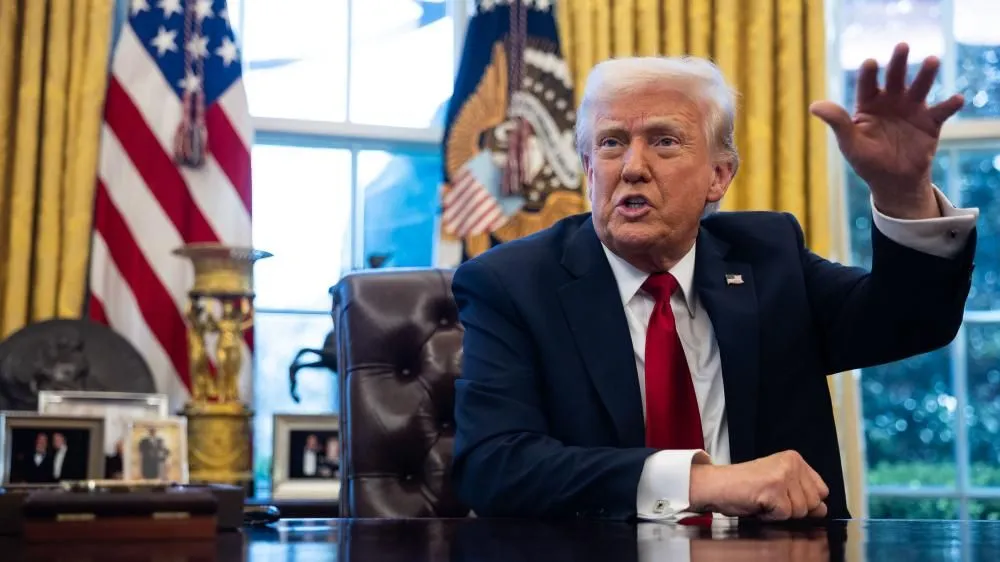
The return of Donald Trump to the centre of global politics has intensified these concerns. His approach to foreign policy is defined by transaction, disruption, and surprise. Allies struggle to anticipate his priorities or rely on continuity from one decision to the next. The simultaneous prominence of Ukraine and Greenland in political debate reflects this head spinning unpredictability, where long standing assumptions can be overturned with little warning.
Europe’s uneven response
Europe has responded with mixed success. Some countries are increasing defence spending and exploring deeper cooperation outside traditional US led frameworks. Others remain cautious, constrained by domestic politics or economic pressures. The result is an uneven landscape, where ambition to act more independently exists alongside continued reliance on American power. For the UK, navigating this balance is particularly complex as it seeks to remain influential in both European and transatlantic circles.
The UK’s strategic balancing act
British policymakers face a delicate task. They must reassure Washington of the UK’s reliability while also preparing for scenarios in which US support is less predictable. This means strengthening ties with European partners without appearing to drift away from the transatlantic relationship. It also requires honest conversations about defence capacity, diplomacy, and the limits of influence in a more fragmented world.
A future defined by uncertainty
The parallel focus on Ukraine and Greenland is not a coincidence but a signal of a broader shift. The era of assumed American constancy is fading, replaced by a more volatile and transactional relationship. For the UK and Europe, the challenge is not simply managing one unpredictable presidency, but adapting to a long term reality in which US engagement cannot be taken for granted. How successfully they respond will shape the continent’s security and diplomacy for years to come.