News
Rare Mountain Gorilla Twins Born in Africa’s Oldest National Park

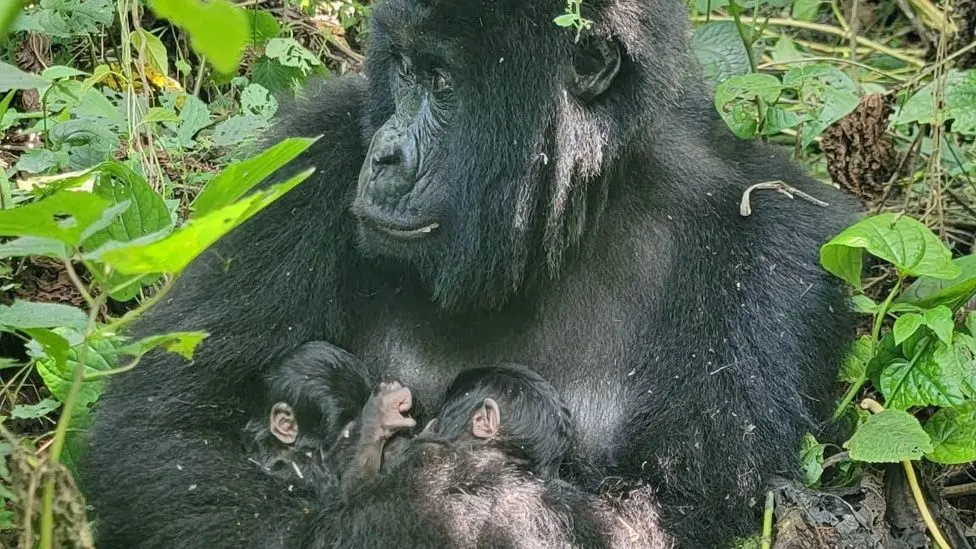
Conservationists in eastern Democratic Republic of Congo are celebrating the rare birth of twin mountain gorillas in Virunga National Park, a landmark moment for one of the world’s most endangered species.
The twins were discovered by community trackers in Virunga National Park, Africa’s oldest national park, after they spotted a 22 year old female gorilla named Mafuko cradling her two newborn sons. Park authorities said both the mother and the infants appeared healthy and calm, an encouraging sign given the fragility of twin births among mountain gorillas.
Twin births among mountain gorillas are extremely uncommon and are estimated to represent only around one percent of all births within the species. While exact figures are difficult to confirm due to the small population size and challenging monitoring conditions, conservation experts say each successful twin birth is considered exceptional.
Mountain gorillas are classified as endangered, with fewer than 1,100 individuals remaining in the wild. They are found only in two regions of central Africa, one of which includes the volcanic mountains of eastern DR Congo. Every new birth is closely watched by conservation teams, as population growth remains slow and vulnerable to disruption.
Virunga National Park was established a century ago specifically to protect mountain gorillas and their habitat. Covering a vast area of forests, volcanoes and savannah, the park plays a critical role in safeguarding biodiversity in the region. However, it is also located in an area affected by long running armed conflict, which has posed persistent risks to both wildlife and conservation staff.
Park officials said the successful birth of the twins is a testament to years of sustained conservation work, including anti poaching patrols, community engagement and veterinary monitoring. Rangers and trackers often operate under difficult and sometimes dangerous conditions to protect gorilla families from threats ranging from illegal hunting to habitat encroachment.
Twin gorillas face additional challenges in their early months. Mothers must provide enough care and nutrition for two infants, which can be physically demanding. In the past, twin births have sometimes resulted in the loss of one infant, making the apparent health of both newborns particularly significant.
Veterinary teams at Virunga are monitoring Mafuko and her offspring closely, though human intervention is kept to a minimum to avoid stress or disruption. Experts say the coming weeks will be critical as the infants adjust and strengthen.
The birth has been welcomed by conservation groups as a rare positive story from a region more often associated with instability. Wildlife experts say such events help maintain global attention on the importance of protecting fragile ecosystems even in conflict affected areas.
Virunga has become a symbol of both resilience and vulnerability. Over the years, dozens of park rangers have lost their lives protecting wildlife, and funding pressures remain constant. Despite this, the park has continued to demonstrate measurable success in gorilla conservation, with slow but steady population growth.
Local communities also play a vital role. Many trackers involved in monitoring gorilla families come from nearby villages and are trained to balance conservation with community livelihoods. Their discovery of the twins highlights the importance of local stewardship in protecting endangered species.
For conservationists, the birth of Mafuko’s twins is more than a biological rarity. It represents hope that, even under difficult circumstances, sustained protection efforts can make a tangible difference. As the gorilla population continues its fragile recovery, moments like this underscore what is at stake and why long term commitment to conservation remains essential.