News
Canada’s Prime Minister Mark Carney to Visit China for High Stakes Trade Talks

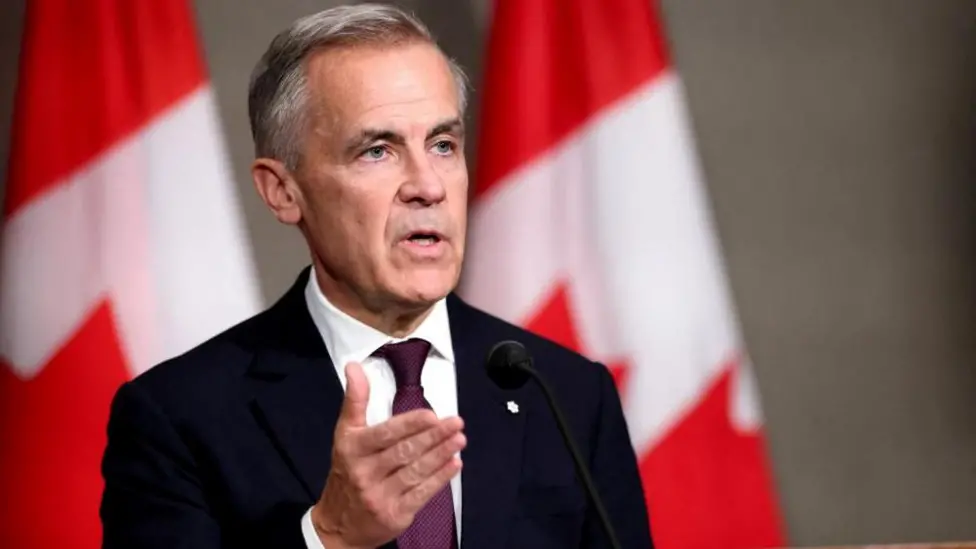
Canadian Prime Minister Mark Carney is set to visit China next week in a move that signals a major shift in Ottawa’s foreign and economic policy. The trip, scheduled from 13 to 17 January, will mark the first visit by a Canadian prime minister to China in nearly a decade and is being closely watched by global markets and diplomatic observers.
Carney is expected to travel to Beijing for meetings with senior Chinese officials, including discussions on trade, energy cooperation, agriculture and international security. His office said the visit is intended to stabilise relations and explore areas of mutual interest at a time of growing uncertainty in global trade.
The visit comes as Canada seeks to diversify its economic partnerships beyond the United States, which remains its largest export market. With trade relations with Washington facing renewed unpredictability under US President Donald Trump, Ottawa has been looking to reduce its reliance on a single market and strengthen ties elsewhere.
Carney was formally invited to China following a meeting with Chinese President Xi Jinping on the sidelines of an international gathering in South Korea in October. That encounter laid the groundwork for the upcoming trip and is widely seen as a diplomatic opening after years of strained relations.
Canada and China have been locked in a trade dispute since 2024, marked by escalating tariffs and political tensions. In October of that year, Canada imposed a 100 percent tariff on Chinese electric vehicles, mirroring similar measures taken by the United States and the European Union. Ottawa cited concerns over market distortion and state subsidies.
Later in the same month, Canada introduced a 25 percent tariff on Chinese steel and aluminium, further souring relations. Beijing criticised the moves as protectionist and warned of retaliatory measures, raising fears of a prolonged trade standoff between the two countries.
Carney’s visit is being described by officials as an attempt to reset the relationship without abandoning Canada’s core economic and security interests. While no immediate tariff rollbacks are expected, the talks are likely to focus on reducing friction, reopening communication channels and identifying sectors where cooperation remains possible.
Energy and agriculture are expected to feature prominently in the discussions. Canada is a major exporter of agricultural products, and access to Chinese markets is seen as vital for farmers facing volatile global demand. Energy cooperation, particularly around transition technologies and emissions reduction, may also offer common ground despite broader geopolitical tensions.
International security is another sensitive topic on the agenda. Canada has raised concerns in the past about regional stability, cyber security and human rights, issues that have often complicated its dealings with Beijing. Analysts say Carney will need to balance engagement with firmness to avoid domestic political backlash.
The trip represents a notable departure from the more cautious approach taken by previous Canadian governments. Supporters argue that engagement is necessary in a multipolar world where economic influence is increasingly fragmented. Critics, however, warn that rapprochement could undermine Canada’s alignment with its traditional allies.
For Beijing, the visit offers an opportunity to signal openness to dialogue with Western economies at a time when relations with several major partners remain tense. For Ottawa, it is a calculated effort to expand economic options and assert a more independent foreign policy.
As Carney prepares for the visit, expectations are being carefully managed. While a dramatic breakthrough is unlikely, even incremental progress could mark the beginning of a new phase in Canada China relations after years of confrontation.