News
Nigeria Court Grants Bail to Former Justice Minister in $6 Million Corruption Case

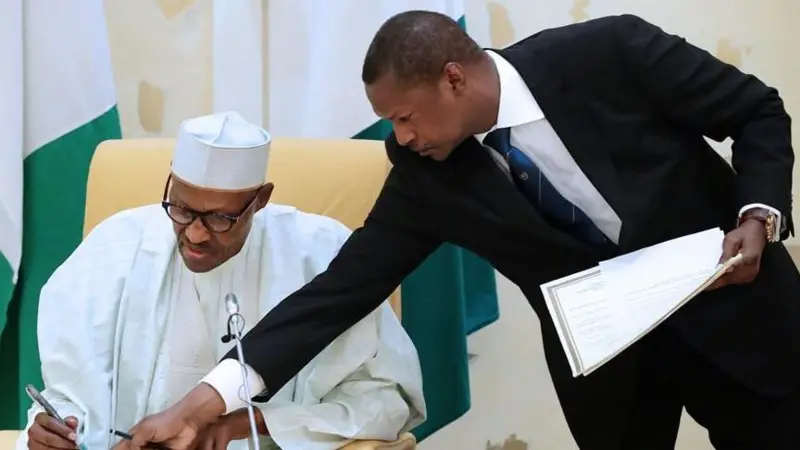
A Nigerian court has granted bail to former attorney general and justice minister Abubakar Malami, along with his wife and son, in a high profile corruption case involving alleged money laundering and abuse of office. The decision marks a significant development in one of the most closely watched legal proceedings involving a senior figure from the previous administration.
Malami, 58, served as Nigeria’s attorney general and minister of justice throughout the eight year presidency of Muhammadu Buhari from 2015 to 2023. He was widely regarded as one of the most powerful officials in the government, playing a central role in legal policy, high level prosecutions and international negotiations.
Prosecutors allege that Malami faces 16 counts of money laundering and abuse of office involving a total of 8.7 billion naira, equivalent to about six million US dollars. The charges were filed last month, and Malami had been in custody since 30 December after authorities argued that his release could interfere with ongoing investigations.
The court ruled that bail would be granted under strict conditions, including financial guarantees and restrictions on travel. While full details of the bail terms were not immediately disclosed, the judge said the defendants were entitled to bail under Nigerian law, as the charges are not capital offences.
Malami has denied all allegations against him. His legal team maintains that the charges are politically motivated and insist that the former minister conducted his duties in line with the law. Lawyers representing his wife and son have also rejected the accusations, arguing that their inclusion in the case is unjustified.
The prosecution contends that Malami used his position to facilitate illicit financial transactions and launder public funds through family members and associated entities. Investigators say the case forms part of a broader anti corruption drive aimed at holding former officials accountable for alleged abuses committed while in office.
The case has attracted significant public attention in Nigeria, where corruption remains a highly sensitive political issue. Successive governments have pledged to tackle graft, yet critics often accuse authorities of selective enforcement and slow judicial processes.
Malami’s tenure as justice minister was itself marked by controversy. While he was a key figure in Buhari’s anti corruption agenda, he was also criticised by civil society groups for decisions that were seen as shielding powerful allies or weakening accountability mechanisms. Supporters, however, argue that he defended the rule of law in a politically charged environment.
Analysts say the granting of bail reflects Nigeria’s legal norms rather than a judgment on the merits of the case. Under Nigerian law, bail is generally favoured unless prosecutors can demonstrate a clear risk of flight or obstruction of justice. The court’s decision does not affect the substance of the charges, which will be tested during trial.
The outcome of the case could have broader implications for Nigeria’s political landscape. A conviction would mark one of the most significant corruption cases involving a former cabinet minister, while an acquittal would fuel debate about the effectiveness and impartiality of the country’s anti graft institutions.
For now, Malami and his family are expected to remain under legal supervision as proceedings continue. The court has scheduled further hearings, and prosecutors say they are prepared to present extensive documentary and financial evidence.
As Nigeria grapples with economic challenges and public demands for accountability, the case underscores the ongoing tension between political power and the justice system. Whether it results in a landmark ruling or another protracted legal battle, it has already become a defining test of Nigeria’s commitment to tackling high level corruption.