Tech
Nvidia pushes deeper into self-driving cars with new AI platform

Nvidia expands AI ambitions beyond software
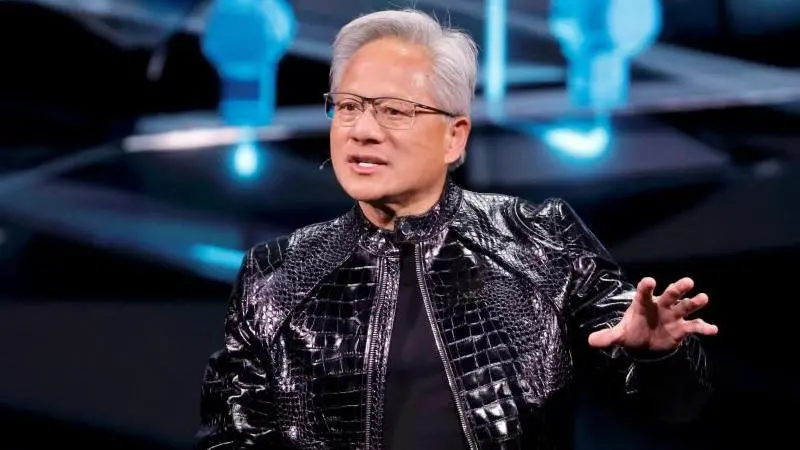
Nvidia has unveiled a new technology platform designed to accelerate the development of self-driving cars, signalling a major push to embed artificial intelligence into more physical products. The announcement was made at the Consumer Electronics Show, where Nvidia has increasingly used the stage to demonstrate how its chips and software can power entire industries rather than just data centres.
The new system, called Alpamayo, is aimed at giving autonomous vehicles a form of reasoning ability. Nvidia chief executive Jensen Huang said the platform would help cars understand and respond to complex real world situations, moving beyond basic pattern recognition toward more human like decision making.
What Alpamayo is designed to do
According to Nvidia, Alpamayo allows autonomous vehicles to think through rare and unpredictable scenarios that are difficult to program using traditional methods. These include unusual road layouts, unexpected pedestrian behaviour, and complex traffic interactions. Huang said the system enables vehicles to reason about their surroundings, drive safely in challenging environments, and even explain why certain driving decisions were made.
This focus on explainability is particularly significant as regulators and consumers demand greater transparency from autonomous systems. Being able to justify decisions could help build trust in self-driving technology and support regulatory approval in markets where safety concerns remain high.
Partnership with Mercedes signals commercial intent
Nvidia also revealed it is working with Mercedes-Benz to produce a driverless car powered by the Alpamayo platform. Huang said the vehicle is expected to launch in the United States in the coming months, with Europe and Asia to follow later. While details about the model and level of autonomy were limited, the announcement suggests Nvidia is moving from experimental demonstrations toward real consumer facing products.
The collaboration reflects a broader trend of carmakers partnering with technology firms to manage the complexity of autonomous systems. Rather than building everything in house, manufacturers are increasingly relying on specialist chip and AI providers to deliver the computing power and software expertise required.
From data centres to the physical world
Nvidia’s chips have been central to the global AI boom, powering everything from large language models to image generation tools. Much of the public attention has focused on software applications such as ChatGPT, but Nvidia has made clear it wants AI to extend far beyond screens and servers.
Autonomous vehicles represent one of the most visible opportunities to bring AI into the physical world. Success in this area could open doors to other sectors, including robotics, industrial automation, and smart infrastructure. By positioning Alpamayo as a reasoning platform rather than just a driving aid, Nvidia is aiming to differentiate itself in an increasingly crowded field.
Challenges still facing autonomous driving
Despite rapid progress, fully autonomous driving remains one of the hardest problems in artificial intelligence. Edge cases, unpredictable human behaviour, and varying road conditions continue to challenge developers. Accidents involving self-driving systems have also heightened scrutiny from regulators and the public.
Nvidia argues that advances in reasoning and simulation can help overcome these obstacles. By training systems to handle rare events and justify their actions, the company believes autonomous vehicles can become safer and more reliable over time. Whether this vision translates into widespread adoption will depend on real world performance as much as technological ambition.
A strategic bet on AI everywhere
The launch of Alpamayo underscores Nvidia’s broader strategy to ensure its technology sits at the heart of the next wave of AI driven products. As competition intensifies among chipmakers and software firms, embedding AI into vehicles offers Nvidia a chance to secure long term relevance beyond the current software boom.
If successful, the platform could mark an important step toward making autonomous driving a practical reality, while reinforcing Nvidia’s position as a foundational player in the AI powered future.