
Tech
Hyundai plans humanoid robots for factories as automation accelerates

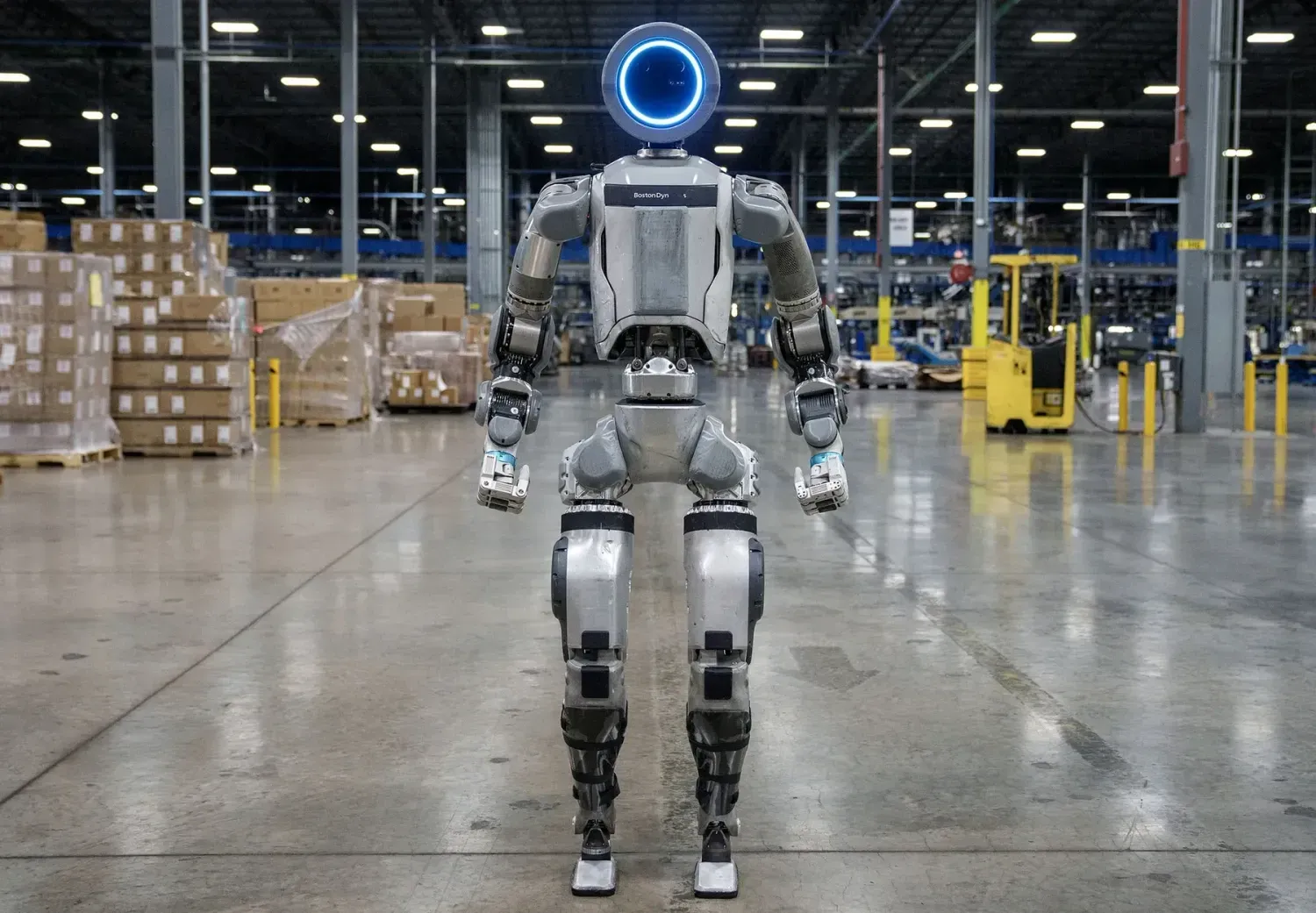
Hyundai Motor Group has announced plans to introduce human like robots into its factories from 2028, marking a significant step in the global race to automate industrial labour. The move reflects growing interest among major manufacturers in humanoid robotics as a way to improve efficiency, address labour shortages, and reshape how factories operate. Hyundai’s announcement places it alongside some of the world’s biggest technology and manufacturing firms experimenting with similar systems.
The company revealed its plans during the Consumer Electronics Show in Las Vegas, where it showcased Atlas, a humanoid robot developed by Boston Dynamics. The demonstration highlighted how far robotics technology has advanced, with machines now capable of walking, lifting, and performing tasks once considered uniquely human.
What Atlas brings to the factory floor
Atlas is designed to move in ways that closely resemble human motion, allowing it to operate in environments built for people rather than machines. Unlike traditional industrial robots that are fixed in place and perform repetitive tasks, humanoid robots can potentially handle a wider range of duties. These include carrying parts, navigating complex factory layouts, and assisting with tasks that require flexibility and balance.
Hyundai says it plans to integrate Atlas across its global manufacturing network. This includes facilities in Asia, Europe, and the United States. One of the locations mentioned is a plant in the US state of Georgia, which drew attention in 2025 after being linked to a large scale immigration raid. The company has not suggested the robots are a direct response to that incident, but analysts note that labour availability and workforce stability are increasingly shaping automation strategies.
Why manufacturers are embracing humanoid robots
The push toward humanoid robots reflects broader pressures facing the manufacturing sector. Ageing populations, tighter immigration rules, and rising labour costs have made it harder for companies to recruit and retain workers for physically demanding roles. At the same time, advances in artificial intelligence and robotics have made machines more adaptable and cost effective.
Hyundai is not alone in this shift. Amazon, Tesla, and BYD have all signalled plans to explore humanoid robots in warehouses, factories, or logistics operations. Supporters argue that these systems can improve safety by taking on dangerous tasks and allow human workers to focus on higher value roles.
Concerns about jobs and workplace change
Despite the optimism, the rise of humanoid robots has reignited concerns about job displacement. Labour groups worry that widespread adoption could reduce demand for manual workers, particularly in regions heavily dependent on manufacturing employment. There are also questions about how workers will be retrained and how companies will manage the transition without widening inequality.
Hyundai has emphasised that its long term goal is collaboration rather than replacement. Executives say humanoid robots are intended to work alongside people, supporting productivity rather than eliminating jobs outright. Whether this balance can be maintained as the technology matures remains an open question.
A glimpse of the future of manufacturing
Hyundai’s timeline suggests that humanoid robots are moving from experimental showcases to practical tools. By targeting deployment from 2028, the company is signalling confidence that the technology will be reliable and scalable within a few years. If successful, the integration of Atlas could redefine factory work, blending human skills with robotic endurance.
As competition intensifies, the companies that master this transition may gain a significant advantage. Hyundai’s announcement offers a glimpse into a future where factories are no longer defined solely by human labour or traditional machinery, but by a new partnership between people and intelligent machines.



