Tech
DeepSeek The Chinese AI App That Has the World Talking

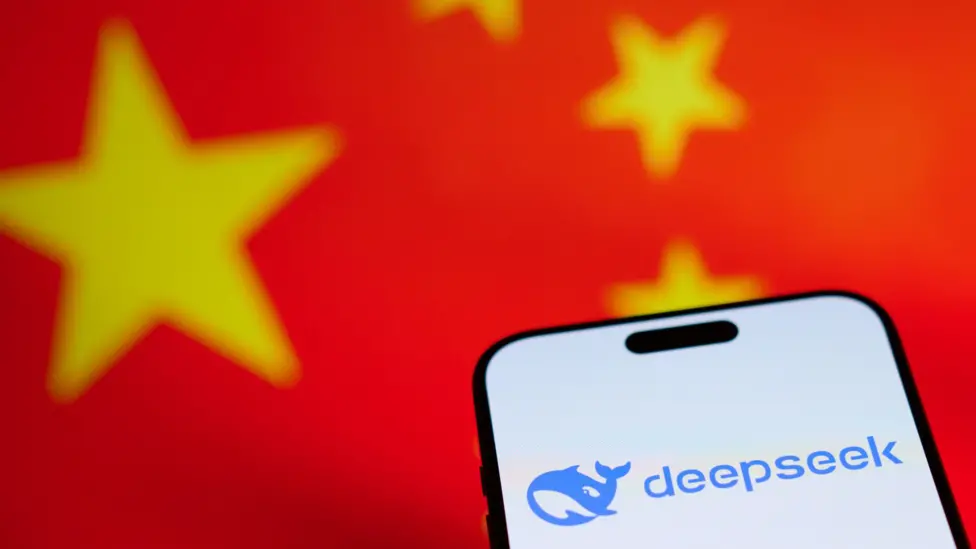
A sudden rise that caught global attention
A little known Chinese artificial intelligence startup has rapidly become one of the most talked about names in global technology. DeepSeek rose to prominence after its app surged to the top of international download charts, an achievement that few expected and many underestimated. Its sudden popularity did not just attract users, it sent shockwaves through financial markets and forced investors to reassess long held assumptions about who will lead the next phase of artificial intelligence development.
The attention intensified in January when DeepSeek released its latest model, R1. The company claimed the system could rival some of the most advanced AI models currently available, while costing significantly less to develop. That combination of capability and efficiency proved powerful enough to unsettle markets far beyond China.
Why DeepSeek R1 changed the conversation
DeepSeek R1 became the focal point of the debate because of what it represents. According to the company, the model delivers performance comparable to systems built by leading Western firms, including those developed by OpenAI. What made investors nervous was not just the claim of parity, but the assertion that DeepSeek achieved it at a fraction of the cost.
Lower development costs challenge the idea that only companies with massive budgets and access to the most advanced hardware can compete at the highest level. If true, it suggests that innovation in AI may be less dependent on sheer financial muscle and more on software efficiency, talent and strategic focus.
Market reaction and investor anxiety
The financial impact was immediate. The growing popularity of DeepSeek raised questions about demand for high end AI hardware, triggering a sharp reaction in US tech stocks. Shares in Nvidia fell heavily, wiping billions of dollars from its market value in a short period.
Investors appeared to be reacting to the possibility that cheaper, more efficient AI models could reduce reliance on the most expensive chips. Nvidia has been one of the biggest beneficiaries of the AI boom, so any suggestion that future models may require fewer resources naturally creates uncertainty around long term growth projections.
Challenging assumptions about AI dominance
For years, it has been widely assumed that American companies would dominate the artificial intelligence sector, thanks to their access to capital, talent and advanced semiconductor technology. DeepSeek’s emergence complicates that narrative. It highlights how quickly competitive advantages can shift in a field where innovation moves at extraordinary speed.
China has invested heavily in artificial intelligence research and talent development. DeepSeek’s success suggests that these investments are beginning to produce globally competitive results, even under conditions of restricted access to some advanced technologies.
What DeepSeek means for the global AI race
The broader significance of DeepSeek lies in what it signals about the future of the AI market. Competition is no longer limited to a small group of US based firms. Instead, it is becoming a genuinely global race where new players can emerge rapidly and disrupt expectations.
This increased competition could accelerate innovation and lower costs for users worldwide. At the same time, it may intensify geopolitical and economic tensions as governments view AI leadership as a strategic priority.
A turning point rather than an endpoint
DeepSeek’s rise does not mean established players are suddenly obsolete. Companies like OpenAI and Nvidia still possess deep expertise and vast resources. However, the episode serves as a reminder that dominance in artificial intelligence is not guaranteed.
As DeepSeek continues to attract attention, its real impact will be measured over time. What is already clear is that the global AI conversation has shifted. The world is no longer asking whether China can compete in advanced artificial intelligence, but how fast and how far that competition will go.