Politics
Ukraine Orders Evacuation of 3,000 Children as Russian Forces Push Forward in Eastern Regions

Forced evacuation ordered amid worsening security
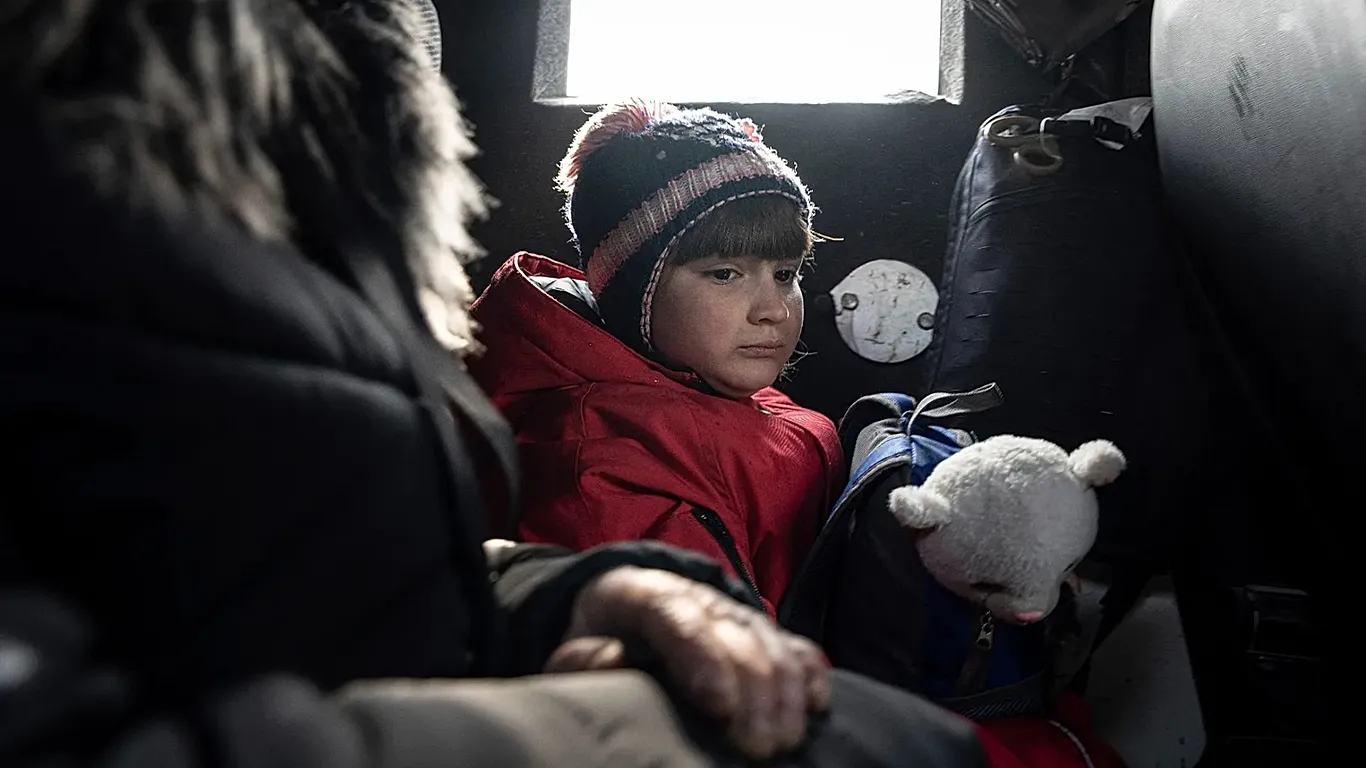
Ukraine has ordered the evacuation of more than 3,000 children and their parents from frontline areas in the Zaporizhzhia and Dnipropetrovsk regions as Russian forces continue to advance. The decision reflects a sharp deterioration in security conditions in settlements close to active combat zones, where authorities say civilian safety can no longer be guaranteed.
The order was announced by Oleksiy Kuleba, Ukraine’s restoration minister, who said the evacuation would affect families in 44 settlements across the two regions. In a message posted on Telegram, Kuleba described the move as a necessary response to the growing risks posed by ongoing fighting and the proximity of Russian troops.
Children prioritised as fighting nears communities
Ukrainian officials said children were prioritised due to their vulnerability in areas facing artillery fire, drone strikes, and ground assaults. Many of the affected settlements lie near supply routes and strategic positions that have seen intensified military activity in recent weeks.
Local administrations have been instructed to coordinate transport, temporary housing, and social services for evacuated families. Authorities stressed that while the evacuations are described as forced, the goal is protection rather than displacement, with efforts focused on relocating families to safer areas inside Ukraine.
For parents, the order presents a painful dilemma, forcing them to leave homes and livelihoods behind amid uncertainty over how long the relocation will last.
Russian advances reshape the battlefield
The evacuations come as Russian forces consolidate gains made over the past year. According to an analysis by Agence France-Presse, Russia’s territorial advances in 2025 were the largest recorded since 2022, underscoring a shift in battlefield momentum.
These gains have been achieved through incremental advances rather than sweeping breakthroughs, but they have steadily pushed front lines closer to populated areas. Ukrainian officials say this pattern increases the risk to civilians, as fighting moves from open terrain into towns and villages.
The situation in Zaporizhzhia and Dnipropetrovsk reflects this broader trend, with communities once considered relatively safe now facing direct threats.
Human cost of prolonged conflict
The evacuation highlights the mounting humanitarian toll of a war entering its fourth year. Families uprooted multiple times since 2022 face exhaustion and psychological strain, particularly children who have experienced repeated disruptions to education and social life.
Aid groups warn that prolonged displacement can have lasting effects on mental health and development. While Ukrainian authorities have expanded support programmes, resources remain stretched as evacuations and emergency responses continue across multiple regions.
For many families, relocation offers safety but little sense of stability, as the prospect of returning home remains uncertain.
Logistics and coordination challenges
Executing large scale evacuations under fire poses significant logistical challenges. Transport routes must be secured, shelters prepared, and medical and psychological support arranged. Officials said coordination with regional authorities and volunteer networks was critical in carrying out the operation.
The Ukrainian government has increasingly relied on local administrations and civil society groups to manage evacuations, reflecting both the scale of the task and the limits of centralised capacity during wartime.
Despite these challenges, authorities say evacuations remain one of the most effective tools for reducing civilian casualties when front lines shift.
International attention on civilian protection
The evacuations have drawn renewed attention to the protection of civilians under international humanitarian law. European officials and human rights organisations have repeatedly called for safeguarding non-combatants, particularly children, as fighting intensifies.
While diplomatic efforts continue, developments on the ground suggest that humanitarian measures will remain essential regardless of political negotiations. The movement of civilians away from combat zones has become a recurring feature of the conflict, reflecting its evolving and unpredictable nature.
A stark reminder of war’s reach
The forced evacuation of thousands of children underscores how deeply the conflict now penetrates everyday life in Ukraine. As military dynamics shift, civilians increasingly find themselves on the front line of strategic decisions.
For Ukrainian authorities, the priority remains clear. Protecting children and families, even through painful relocations, is seen as a necessary step in a war that continues to reshape communities far from the original battlefields.