News
Deadly Protests Spread Across Iran as Anger Over Living Costs Intensifies

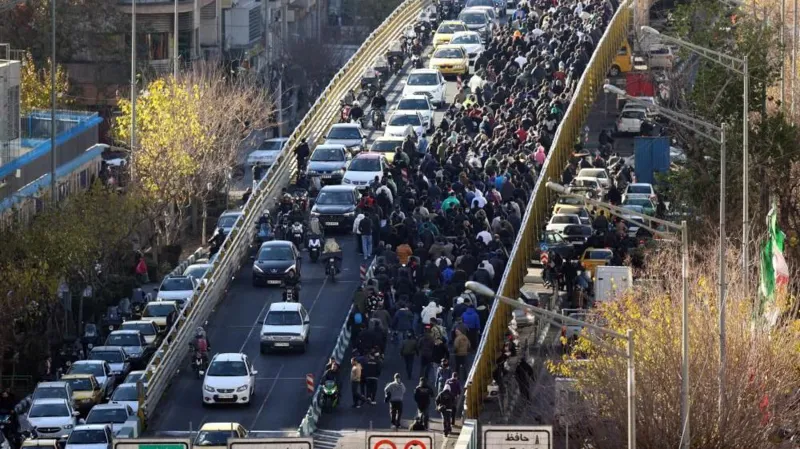
Unrest across Iran has intensified for a fifth consecutive day, with reports of deadly clashes between protesters and security forces as public anger over the rising cost of living continues to grow. Authorities and rights groups say multiple people have been killed in different parts of the country, deepening concerns over the direction of the crisis.
According to the semi official Fars News Agency and the human rights group Hengaw, at least two people died during confrontations in the city of Lordegan in south western Iran. These deaths reportedly occurred as security forces attempted to disperse crowds that had gathered to protest worsening economic conditions and sharp increases in prices of basic goods.
Fars also reported that three people were killed in the city of Azna and another in Kouhdasht, both located in western Iran. While official details remain limited, the reports suggest that protests in these areas escalated rapidly, with demonstrators clashing directly with police and other security units. Authorities have not released the identities of those killed, and independent verification remains difficult due to restrictions on media access.
Videos circulating on social media on Thursday showed scenes of chaos in several cities. Footage appeared to show cars set on fire and crowds running through streets as security forces moved in to restore control. In some clips, the sound of gunfire could be heard, though it was unclear whether live ammunition was being used. Internet disruptions in parts of the country have made it harder to confirm events on the ground.
The protests were initially sparked by frustration over inflation, unemployment and declining purchasing power. Iran has been struggling with a deep economic crisis driven by years of international sanctions, currency depreciation and internal economic mismanagement. For many families, the cost of food, housing and fuel has risen far faster than wages, leaving millions under severe financial strain.
As demonstrations have continued, some chants and slogans have gone beyond economic grievances. Protesters in several cities have reportedly called for an end to the rule of Iran’s supreme leader, Ali Khamenei. Others have voiced support for a return to monarchy, a rare and provocative demand in a country shaped by the nineteen seventy nine Islamic Revolution.
The Iranian government has previously blamed unrest on foreign interference and warned that it will not tolerate what it describes as violent disorder. Security forces have maintained a heavy presence in affected areas, and arrests are believed to be ongoing, although official figures have not been released.
Human rights groups say the lack of transparency makes it difficult to assess the true scale of casualties and detentions. They have urged authorities to exercise restraint and allow peaceful expression of dissent, warning that further violence could fuel wider instability.
As Iran faces mounting economic and political pressure, the continuation of deadly clashes suggests the unrest is entering a more dangerous phase. Whether the protests will subside or spread further remains uncertain, but the events of recent days underline the depth of frustration felt by many across the country.