
Sports
Controversial Call Reignites Debate Over Refereeing Standards

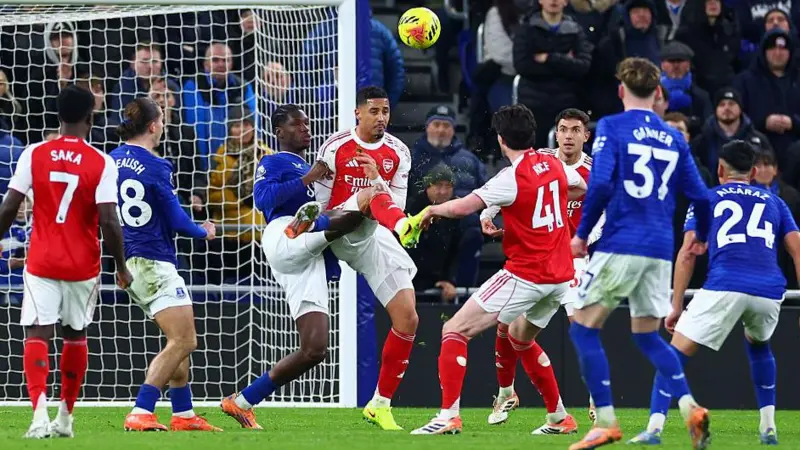
Everton’s narrow defeat to Arsenal in December has been thrust back into the spotlight after an official review concluded that the Merseyside club were wrongly denied a penalty. The verdict, delivered by the Premier League’s Key Match Incidents Panel, has renewed long standing debates about refereeing consistency, the role of VAR, and the fine margins that often define results at the highest level of English football.
The Incident That Changed the Match
The match in question took place on 20 December at Hill Dickinson Stadium, where Everton hosted Arsenal. Arsenal were leading 1-0 midway through the second half when a decisive moment unfolded inside the penalty area.
Everton striker Thierno Barry reached the ball first during a challenge with Arsenal defender William Saliba. As Barry attempted to control possession, his boot was clipped by Saliba, causing him to lose balance. Referee Sam Barrott waved play on, judging that no foul had been committed.
At the time, the decision drew frustration from Everton players and supporters, but play continued and Arsenal held on to secure the win.
Panel Verdict Contradicts On Field Decision
Following a post match review, the Premier League Key Match Incidents Panel ruled that Everton should have been awarded a penalty. The panel’s vote was split 3-2, highlighting just how finely balanced the decision was.
Despite the narrow margin, the conclusion was clear. The on field call to deny the penalty was deemed incorrect. According to the panel’s assessment, Barry had clearly played the ball first and was impeded by Saliba’s challenge, meeting the criteria for a foul inside the box.
Why the Decision Matters
While the ruling does not change the result, it carries significant implications. Everton lost the match 1-0, meaning a penalty could have altered the outcome entirely. For clubs battling for league position, such moments can have lasting consequences across a season.
This is particularly relevant in a league where margins between success and struggle are often measured in single points. Decisions like this can influence momentum, confidence, and even managerial stability.
VAR and the Consistency Question
The incident has once again raised questions about the effectiveness and consistency of VAR. While video technology exists to correct clear errors, subjective decisions still rely heavily on interpretation. In this case, VAR did not intervene to overturn the referee’s original judgment.
Critics argue that if an incident is later judged incorrect by an official panel, it raises concerns about why the error was not corrected in real time. Supporters of the current system counter that not every marginal call can be re refereed without disrupting the flow of the game.
Arsenal Perspective and Defensive Fine Margins
From Arsenal’s viewpoint, the panel’s decision is frustrating but not unexpected in the modern review process. Defenders are constantly operating on the edge of legality, particularly in crowded penalty areas. Saliba’s challenge was not reckless, but the contact was enough to tip the balance.
For top clubs, these moments underline how even disciplined defending can still be scrutinised after the fact, reinforcing the need for precision in every duel.
What This Means Going Forward
The Premier League regularly publishes panel findings to promote transparency, but these rulings also fuel debate among fans and pundits. Everton supporters see confirmation of injustice, while neutrals question whether such reviews meaningfully improve standards.
What remains clear is that refereeing decisions continue to shape narratives long after the final whistle. While the points cannot be returned, the verdict adds to growing pressure on officials and league authorities to refine decision making processes.
A Familiar Story in Modern Football
Everton’s denied penalty is another chapter in a familiar Premier League story. Fine margins, controversial calls, and post match rulings now form part of the weekly rhythm of the sport. As technology and scrutiny increase, so too does the spotlight on referees.
For Everton, the panel’s verdict offers validation but little consolation. For the wider league, it is another reminder that perfection in officiating remains elusive.



