Politics
Labour Challenges Conservative Over Legal Role for Sanctioned Oligarch

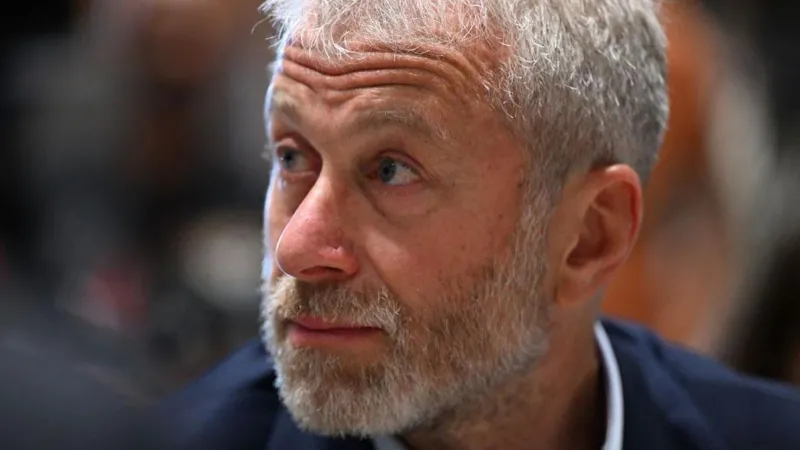
A political dispute has emerged in Westminster after Labour criticised a senior Conservative figure for continuing to represent a sanctioned Russian billionaire while holding a prominent party role. The row centres on Lord Wolfson, the Conservative shadow attorney general, who has acted as a lawyer for Roman Abramovich despite international sanctions imposed following Russia’s invasion of Ukraine.
Labour figures argue that the situation raises serious ethical and political concerns, particularly at a time when the UK government continues to emphasise its commitment to sanctions enforcement and national security.
Labour Raises Conflict of Interest Concerns
The criticism was led by Jake Richards, who described the arrangement as indefensible. He questioned how Lord Wolfson could remain on the Conservative frontbench while simultaneously representing an individual subject to UK and international sanctions.
According to Richards, the dual roles risk creating a conflict of interest and undermine public confidence in the political system. He argued that holding a senior legal role within a major political party carries responsibilities that extend beyond private professional work, particularly when sanctions policy is a matter of national importance.
Abramovich and the Sanctions Context
Roman Abramovich was sanctioned by the UK and other Western governments in response to Russia’s actions in Ukraine. Sanctions were designed to restrict the assets and financial activities of individuals seen as close to the Kremlin, aiming to apply economic pressure and signal political consequences.
Abramovich has consistently denied any close ties to President Vladimir Putin, and his legal representatives have sought to challenge aspects of the sanctions regime. While representing sanctioned individuals is lawful under UK rules, the political optics of such representation by a serving frontbench politician have become the focus of Labour’s criticism.
Conservative Response and Legal Boundaries
The Conservative Party has so far defended the principle that lawyers are entitled to represent clients within the bounds of the law, even in controversial cases. Supporters of Lord Wolfson argue that legal representation is a cornerstone of the justice system and that professional legal work should not automatically disqualify someone from political office.
They also note that sanctions regimes often involve complex legal questions, and access to legal advice is a fundamental right. From this perspective, Lord Wolfson’s actions are framed as professional rather than political.
Labour’s Broader Political Argument
For the Labour Party, the issue goes beyond legality and into the realm of public trust. Labour figures argue that political leaders must avoid situations that could be perceived as undermining the UK’s stance on sanctions and international accountability.
They point out that the government has urged businesses, institutions, and individuals to comply fully with sanctions, often at significant financial cost. Against that backdrop, they argue it is inconsistent for a senior opposition figure to profit from representing a sanctioned billionaire.
Ethics, Optics, and Public Confidence
The dispute highlights a recurring tension in British politics between professional backgrounds and political responsibility. Many politicians maintain careers in law, business, or consultancy, raising periodic questions about conflicts of interest and ethical standards.
In this case, critics argue that the optics are particularly sensitive. Sanctions against Russian elites have strong public support, and any perceived softening or contradiction risks eroding confidence in the political consensus around Ukraine.
A Debate Likely to Continue
There is no legal requirement for Lord Wolfson to step aside from his role, and no formal investigation has been announced. However, the political pressure is unlikely to dissipate quickly. As the UK approaches future elections, questions around integrity, accountability, and national values are expected to play an increasingly prominent role.
The row serves as a reminder that in modern politics, perception can be as powerful as legality. Whether the controversy leads to changes in party rules or remains a point scoring exercise, it has already sharpened the debate around ethics and responsibility at the highest levels of public life.