Business
Oil Prices Steady Amid Russia-Ukraine Tensions and Middle East Instability

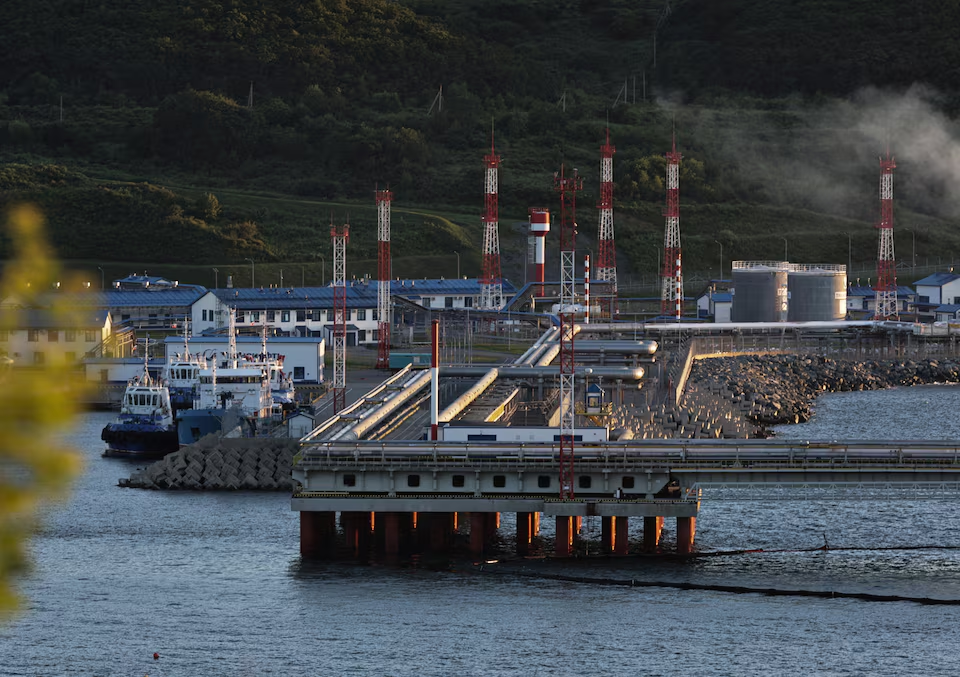
Oil prices remained relatively flat on Tuesday as investors grappled with fading hopes for a Russia-Ukraine peace agreement and escalating geopolitical tensions in the Middle East, particularly around Yemen. Market participants are carefully monitoring these developments while balancing concerns about global supply and demand.
Russia-Ukraine Peace Talks Stall
Efforts to reach a peace settlement between Russia and Ukraine have encountered significant setbacks, dampening optimism in energy markets. Any prolonged conflict can disrupt global oil supply chains, particularly from major producers in the region, and create volatility in international crude prices. Investors are closely watching diplomatic developments, as even minor shifts in negotiations could influence short-term oil market sentiment.
Middle East Tensions Add Pressure
Tensions in the Middle East, especially following Saudi airstrikes in Yemen, have further contributed to uncertainty in the oil market. The region is a critical hub for oil production and transportation, and disruptions can quickly impact global supply. While direct supply shortages have not yet materialized, geopolitical instability often prompts traders to adopt a cautious approach, keeping oil prices steady rather than allowing significant declines.
Supply and Demand Dynamics
Despite these geopolitical risks, the global oil market faces a potential oversupply that may limit price gains. Increased production from major oil-exporting countries, coupled with moderate demand growth, has created conditions that prevent sharp price spikes. Analysts note that while geopolitical events can influence short-term price movements, structural supply and demand factors will continue to play a major role in determining market trends.
The combination of steady production levels and cautious investor sentiment has led to choppy trading, with prices oscillating within a narrow range. This reflects a market balancing multiple competing factors, including potential supply disruptions, regional conflicts, and broader economic indicators influencing oil demand.
Market Outlook
Looking ahead, oil market participants will continue to monitor both geopolitical developments and production data. Any breakthroughs or setbacks in Russia-Ukraine negotiations, changes in Middle East stability, or unexpected shifts in global supply could lead to more pronounced price movements. Meanwhile, analysts expect that oversupply and cautious demand growth will keep prices relatively stable in the near term.
Investors are also keeping an eye on broader economic indicators such as global industrial activity, energy consumption trends, and currency fluctuations, all of which can impact oil prices. The interplay between geopolitical risk and market fundamentals suggests that oil prices may remain range-bound until clearer signals emerge.
Conclusion
Oil markets are navigating a complex landscape of geopolitical uncertainty and supply-demand dynamics. Fading hopes for a Russia-Ukraine peace deal, combined with rising tensions in Yemen, contribute to cautious investor behavior. At the same time, global oversupply conditions are preventing major price surges. As 2025 comes to a close, the oil market is likely to remain volatile but relatively stable, with traders closely watching developments that could disrupt the delicate balance between supply, demand, and geopolitical risk.