Business
Why Croatia’s Capital Is Competing to Host Europe’s Best Christmas Market

For much of Europe, Christmas markets are more than festive tradition. They are powerful economic engines that transform city centres into seasonal attractions, drawing millions of visitors each winter. For Zagreb, the capital of Croatia, the ambition to host Europe’s best Christmas market is part of a much bigger strategy to reshape the country’s tourism identity.
Zagreb’s Christmas market, branded as Advent in Zagreb, has already earned international recognition. It was voted Europe’s best Christmas market three years in a row, a rare achievement in a continent crowded with festive rivals from Vienna to Strasbourg. City officials and tourism leaders see that success not as a novelty, but as proof that winter tourism can play a central role in Croatia’s future.
For decades, Croatia’s tourism image has been dominated by summer scenes. The Adriatic coastline, historic coastal towns and island hopping holidays have made the country one of Europe’s most popular warm weather destinations. Tourism now accounts for more than a fifth of the national economy, but that dependence on summer travel has also exposed vulnerabilities, from overcrowding to seasonal employment.
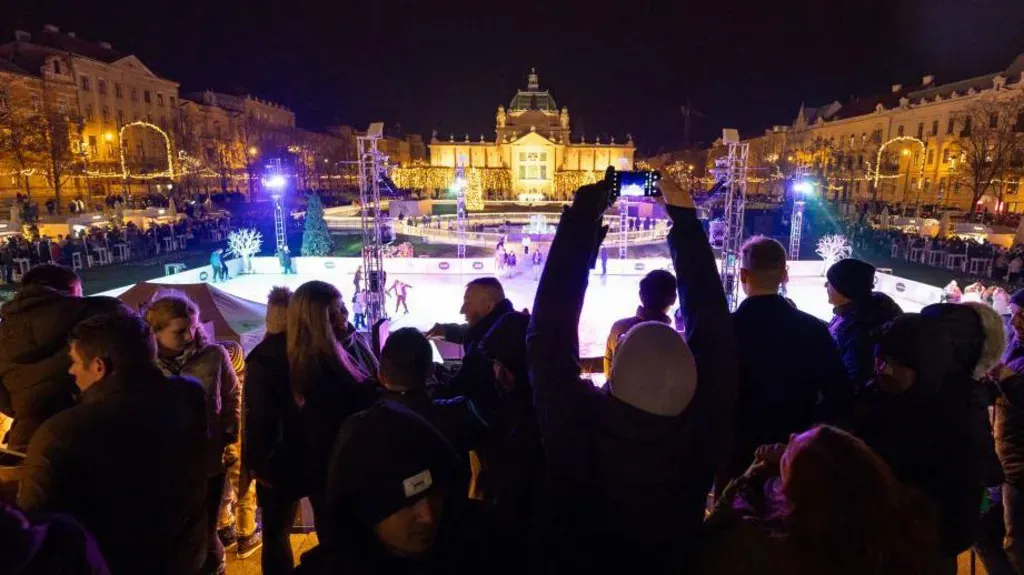
Zagreb’s Christmas market offers an alternative narrative. Each December, the city’s squares, parks and historic streets are transformed with festive stalls, lights, concerts and food vendors. Visitors arrive not for beaches, but for mulled wine, traditional pastries, ice skating and live performances set against a backdrop of Austro-Hungarian architecture.
Croatia’s Tourism Minister Tonci Glavina says the market reflects a broader transformation underway. He argues that Croatia is no longer positioning itself as a destination defined by sun and sea alone. Instead, the goal is to attract visitors throughout the year by promoting diverse experiences across the country.
Winter tourism plays a key role in that shift. Christmas markets create demand during months that were once considered off season. Hotels that might otherwise sit half empty fill up, restaurants extend opening hours, and seasonal jobs are created in the heart of winter. For cities like Zagreb, the economic boost is significant and more evenly distributed across the calendar.
There is also a branding advantage. Winning awards for Europe’s best Christmas market places Zagreb on travel itineraries that might previously have bypassed the city. Many visitors arrive for Advent and leave with a broader impression of Croatia as a cultural and urban destination, not just a beach holiday.
City planners have invested heavily in the experience. Rather than confining festivities to a single square, Zagreb spreads events across multiple neighbourhoods, encouraging exploration and reducing congestion. Each location offers a different theme, from classical music to street food, helping the market feel varied rather than repetitive.
The competition is intense. Across Europe, cities have realised that Christmas markets are a powerful draw, combining nostalgia, food culture and social media appeal. To stand out, Zagreb has focused on atmosphere as much as scale, emphasising walkability, local traditions and community involvement.
Sustainability is also part of the conversation. With summer tourism placing pressure on coastal regions, winter events help rebalance visitor flows. By attracting travellers during colder months, Croatia can reduce strain on infrastructure while maintaining strong tourism revenue.
The strategy carries risks. Over commercialisation could dilute the charm that made Zagreb’s market successful in the first place. Officials are aware that authenticity is central to its appeal. Maintaining quality, supporting local vendors and avoiding excessive crowding remain ongoing challenges.
There is also the question of longevity. Awards and rankings can shift quickly, and competition continues to evolve. For Zagreb, the aim is not simply to hold a title, but to embed winter tourism as a permanent feature of the city’s identity.
For visitors, the appeal is clear. Zagreb offers a festive experience without the overwhelming crowds found in some of Europe’s larger capitals. For Croatia, the market represents something more strategic: proof that the country can thrive as a year-round destination.
As Advent lights continue to glow across Zagreb each December, they illuminate a broader ambition. By competing to host Europe’s best Christmas market, Croatia’s capital is not just chasing seasonal accolades. It is redefining how the country presents itself to the world, one winter at a time.