Latest News
South London Food Hall Secures Future Until Late 2026 Despite Major Housing Redevelopment

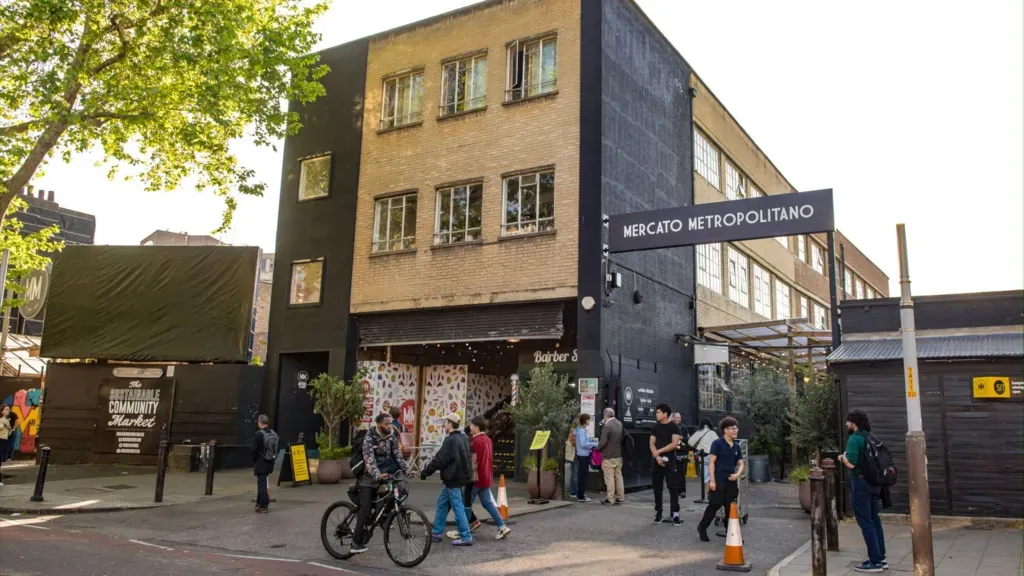
A popular south London food hall will continue trading until late 2026, despite long approved plans that will eventually see the site cleared to make way for a large scale housing development.
Mercato Metropolitano, located in Elephant & Castle, has been a fixture of the local food and social scene for nearly a decade. The market operates from a former paper making factory and is home to around 40 independent traders offering international street food, drinks and artisan products.
The Local Democracy Reporting Service confirmed that the food hall will remain open until the later part of 2026, providing a longer than expected reprieve for traders and visitors. The site is ultimately set to be demolished as part of the Borough Triangle redevelopment, a major housing scheme approved by Southwark Council earlier this year.
Plans for the redevelopment include the construction of almost 900 new homes across several tower blocks, with some buildings reaching up to 44 storeys. The project forms part of wider regeneration efforts in Elephant & Castle, an area that has undergone significant change over the past decade, with new residential towers, transport upgrades and commercial developments reshaping the neighbourhood.
While demolition of the existing structure remains part of the approved plans, developers have confirmed that Mercato Metropolitano will continue operating during the early phases of the scheme. A spokesperson for the market said the extended timeline would allow traders to continue serving the community while preparations for construction take place.
Under the current arrangement, a small number of traders will be temporarily relocated to nearby premises once construction begins. Market operators said they are working closely with traders to minimise disruption and ensure businesses can continue trading during the transition period.
Mercato Metropolitano first opened in 2016 and quickly became a cultural landmark, attracting residents, office workers and tourists. Beyond food, the venue has hosted live music, community events and social initiatives, positioning itself as more than just a dining destination. Supporters argue that its presence has helped soften the impact of rapid redevelopment in the area by providing a shared public space.
The confirmation that the food hall will remain open until late 2026 has been welcomed by many traders, who have faced uncertainty since redevelopment plans were first announced. Independent food businesses, in particular, have expressed concern about rising rents and the difficulty of relocating in central London.
Local residents have expressed mixed views. Some welcome the new homes, citing the ongoing housing shortage in the capital and the need for increased supply. Others worry that continued high rise development risks eroding the character of the area and displacing long established community spaces.
Southwark Council previously said the Borough Triangle scheme would deliver a significant number of affordable homes alongside public realm improvements. However, campaigners have questioned whether regeneration projects adequately protect existing businesses and cultural venues.
The delayed closure of Mercato Metropolitano highlights a broader tension playing out across London, where popular social spaces often occupy land earmarked for redevelopment. Temporary extensions and phased closures have become increasingly common as councils and developers attempt to balance growth with community continuity.
For now, traders and visitors can expect business as usual at the food hall for at least another year. Market operators said they hope the additional time will allow for clearer planning around relocation and future opportunities, whether within the new development or elsewhere in the capital.
As construction timelines move forward, the future of Mercato Metropolitano beyond 2026 remains uncertain. What is clear is that its continued operation offers a short term reprieve and a reminder of the role independent markets play in shaping London’s neighbourhoods during periods of rapid change.