
Entertainment
Remembering Perry Bamonte: A Quiet Architect of The Cure’s Sound

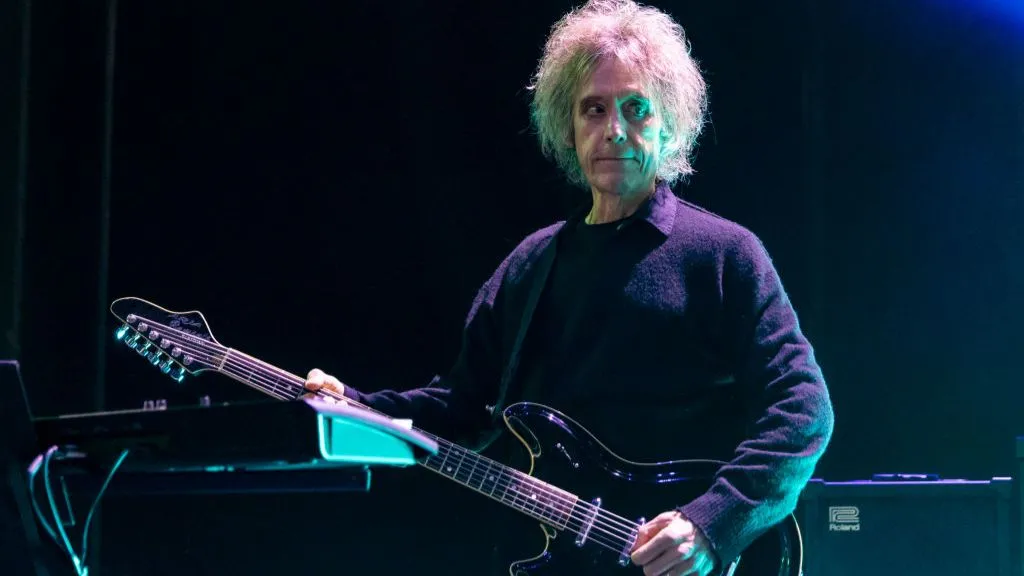
When news emerged of Perry Bamonte’s death at the age of 65, what struck me most was how many fans described him not as a frontman, but as a presence someone whose influence was felt more than loudly announced. In a band as emotionally expansive and visually iconic as The Cure, Bamonte represented something quieter: musical intuition, loyalty, and texture.
Bamonte’s contribution to The Cure’s story spans decades, even if his name was not always the one most closely associated with the band’s identity. Yet as I revisited his career, it became clear that his role was far from peripheral.
From Behind the Scenes to the Stage
Perry Bamonte’s journey with The Cure began not under the spotlight, but behind it. He joined the band’s road crew in the mid-1980s, working closely with a group already reshaping alternative music. That proximity mattered. It allowed him to absorb the band’s rhythms, moods and unspoken dynamics long before he officially became a member.
When he stepped into the band proper in the early 1990s, following a change in the line-up, it felt less like an arrival and more like a natural progression. Bamonte brought with him a deep understanding of The Cure’s sound not just how it should be played, but how it should feel.
As a guitarist and keyboard player, his work added layers rather than dominating the mix. I noticed that his style rarely demanded attention, yet it consistently enhanced atmosphere. That restraint became his signature.
Shaping Sound Through Subtlety
The Cure’s music has always thrived on emotional contrast light and dark, intimacy and grandeur. Bamonte’s musicianship fit seamlessly into that balance. He was known for textural playing, for sounds that hovered rather than struck.
What stood out to me while reflecting on his work was how essential that subtlety is to The Cure’s identity. Not every contribution needs to be overt to be vital. Bamonte helped build the spaces within the music the moments where emotion lingers.
Those who worked alongside him often described him as intuitive and deeply creative. That creativity wasn’t showy. It was patient, consistent, and responsive to the band as a whole.
A Return in Later Years
In 2022, Bamonte returned to The Cure’s live line-up, rejoining the band for performances that introduced him to a new generation of fans. For longtime followers, it felt like the return of a familiar voice — not one that shouted, but one that belonged.
Seeing him back on stage highlighted something important: The Cure’s story is not linear. It is shaped by departures and returns, by evolving roles, and by musicians who move in and out of focus without losing their significance.
Bamonte’s later performances carried a sense of continuity. He was not revisiting the past — he was extending it.
More Than a Musician
Beyond his technical skill, Bamonte was widely remembered for his temperament. Descriptions of him often emphasised warmth, quiet intensity and dedication. In an industry driven by visibility, his influence operated differently.
As I observed reactions from fans and fellow musicians, one theme kept appearing: gratitude. Not just for specific songs or performances, but for a presence that helped sustain something larger.
That kind of legacy is harder to measure, but no less real.
Loss and Legacy
Perry Bamonte’s death, following a short illness, marks the loss of a musician whose work was woven into the fabric of a band that has meant so much to so many. His contributions may not always have been foregrounded, but they were foundational.
In reflecting on his career, what stays with me is the idea that music history is not only shaped by icons at the centre, but by those who support, refine and deepen the sound. Bamonte was one of those figures.
His legacy lives not just in recordings and performances, but in the emotional landscapes The Cure created landscapes he helped shape quietly, patiently, and with care.



