Business
This Billionaire Tested China’s Limits and Lost His Freedom

A prison visit that reflected a broken era
On a cold morning in 2022, Raphael Wong and Figo Chan entered Stanley Prison to visit Jimmy Lai, the outspoken media tycoon who had been arrested two years earlier and was still awaiting trial. The meeting was quiet and heavily supervised, a stark contrast to the lively dinners and open conversations they once shared in the city they all loved.
Their reunion behind prison walls symbolized how dramatically life in Hong Kong had changed. What was once a city defined by open debate and political diversity had become a place where dissent carried severe consequences.
From dining tables to detention cells
Before prison visits replaced restaurant gatherings, Lai, Wong, and Chan would often meet over meals that reflected Hong Kong’s eclectic culture. Conversations flowed easily over dim sum, pizza, or claypot rice. They joked, exchanged gossip, and debated politics, fully aware that their views challenged the direction the city was heading.
These friendships were forged during a period when political engagement felt urgent and unavoidable. They were united by a belief that Hong Kong’s promised freedoms deserved to be defended. For Jimmy Lai, that belief was not abstract. It shaped his business, his public voice, and ultimately his fate.
The protests that changed everything
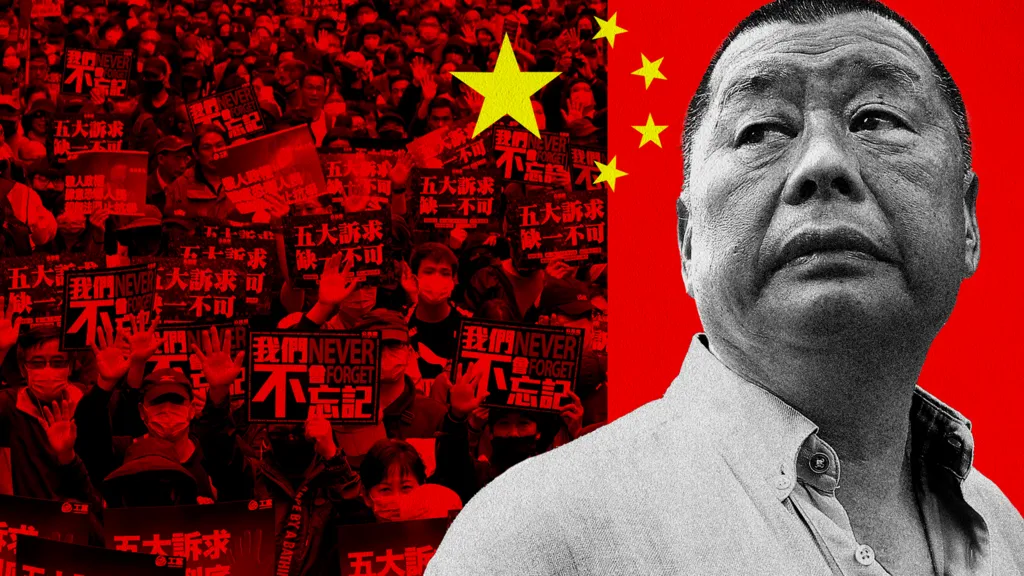
The turning point came in 2019, when massive demonstrations swept across Hong Kong. Hundreds of thousands of residents took to the streets demanding democratic reforms and protection of civil liberties. The protests were among the largest in the city’s history and drew global attention.
Jimmy Lai emerged as one of the most visible supporters of the movement. Through his media outlets and public statements, he openly criticized China and warned that Beijing’s growing influence threatened Hong Kong’s autonomy. His wealth and prominence made him a powerful symbol of resistance, but also an obvious target.
Arrest and the weight of national security charges
In 2020, authorities arrested Lai under the national security law imposed by Beijing. The charges accused him of colluding with foreign forces and endangering national security. For his supporters, the accusations represented a sweeping attempt to silence dissent. For the government, they were framed as necessary to restore order.
Since his arrest, Lai has spent years in detention, awaiting trial and facing the possibility of life imprisonment. His case has become one of the most closely watched legal battles in Hong Kong, cited by critics as evidence of shrinking freedoms and by officials as proof that no one stands above the law.
The personal cost of defiance
For those who knew him personally, Lai’s imprisonment carries a heavy emotional toll. Friends describe him as stubborn, principled, and fully aware of the risks he was taking. Even as warnings mounted, he refused to leave Hong Kong or soften his stance.
Wong and Chan, themselves veterans of the protest movement, have faced arrests and legal pressure of their own. Visiting Lai in prison forced them to confront the reality that challenging power in Hong Kong now comes with lasting consequences.
A symbol beyond one man
Jimmy Lai’s story extends beyond his personal fate. It reflects a broader transformation of Hong Kong’s political landscape. The city that once prided itself on free speech and rule of law now operates under stricter controls, with many activists jailed, exiled, or silenced.
International observers view Lai as a symbol of resistance, while Chinese authorities see him as a warning against foreign interference. Either way, his case underscores how far Hong Kong has moved from the freedoms that once defined it.
An uncertain future
As Lai remains behind bars, his friends continue to speak cautiously, aware that words themselves can carry risk. The dinners, debates, and laughter they once shared belong to another chapter in Hong Kong’s history.
Jimmy Lai tested the limits of power and paid for it with his freedom. Whether his sacrifice will shape Hong Kong’s future or fade into a cautionary tale remains uncertain. What is clear is that his story captures the cost of defiance in a city still struggling to define its identity.