
Latest News
US Bars DJI and Foreign Drones Over National Security Concerns

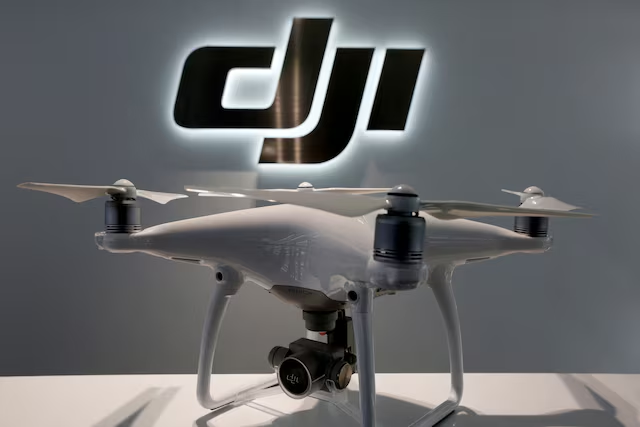
The U.S. Federal Communications Commission (FCC) has escalated its scrutiny of foreign drone manufacturers, adding China’s DJI and other overseas drone companies to its “Covered List” of firms deemed to pose unacceptable risks to national security. The move signals a significant tightening of regulations for drone imports and sales in the United States.
What the FCC Decision Means
Under the new designation, DJI and other foreign drone makers will no longer be able to obtain FCC approval for new models to be imported or sold in the U.S. This affects future product launches but does not impact existing drones that have already been authorized.
FCC officials emphasized that the Covered List is intended to protect U.S. communications networks and sensitive data from potential exploitation by foreign entities. While the current restrictions focus on approvals, they signal broader concerns about the role of drones in national security, especially in critical infrastructure, military, and commercial applications.
Background on DJI and Foreign Drone Concerns
DJI, headquartered in Shenzhen, China, is the world’s largest commercial drone manufacturer, dominating both consumer and professional markets. The U.S. government has repeatedly flagged DJI products over potential cybersecurity risks, citing concerns that sensitive data could be accessed or transmitted to foreign governments without authorization.
The decision aligns with previous U.S. actions targeting Chinese technology companies, including Huawei and ZTE, and reflects a broader strategy to limit foreign access to advanced technologies that could compromise national security. Other foreign-made drones added to the Covered List include models from various companies in China, Europe, and the Middle East.
Implications for U.S. Consumers and Businesses
For U.S. drone users, the FCC’s ruling primarily affects future purchases rather than existing devices. Consumers and commercial operators can continue using currently approved DJI drones, but they may face limited availability of new models in the coming years.
For businesses relying on drones for logistics, agriculture, construction, or aerial photography, the ruling may accelerate adoption of U.S.-made drones or approved foreign alternatives. Analysts predict this could spur investment in domestic drone manufacturing and innovation, reducing dependency on foreign suppliers.
National Security and Technology Policy Context
The FCC’s action is part of a broader U.S. national security approach that targets potential vulnerabilities in connected technologies. Drones are increasingly integrated with cloud systems, GPS, and real-time video networks, raising the stakes for cybersecurity. Regulators have highlighted concerns that foreign-made drones could be exploited for espionage, surveillance, or disruption of critical infrastructure.
Experts also note that the designation of DJI and other foreign drone companies may serve as a warning to other tech sectors, signaling that future scrutiny may extend beyond drones to other devices that transmit sensitive information internationally.
Looking Ahead
The FCC’s Covered List addition is unlikely to reduce the demand for drones in the U.S., but it will reshape the market landscape over the next few years. Domestic manufacturers may benefit from a policy-driven preference, while consumers will need to consider compliance, security, and availability when choosing drone models.
Regulators have stressed that the designation is about mitigating risk, not banning usage, meaning the focus remains on future product approvals rather than punishing existing users or companies.



