
Politics
Heavy Rains Devastate Gaza Refugee Camps, UN Warns of Growing Humanitarian Crisis

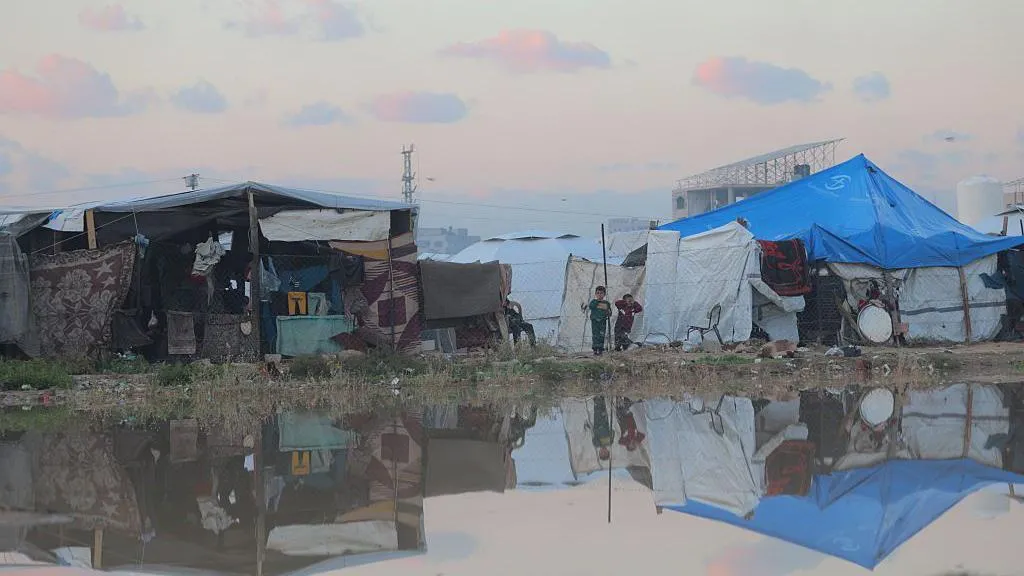
Heavy rains over the past week have worsened the already precarious conditions for displaced Palestinians in the Gaza Strip, with UN agencies warning of a mounting humanitarian crisis. According to reports, almost 55,000 families have been affected, with their makeshift shelters and belongings severely damaged by flooding and collapsing structures.
Jonathan Crickx, a UNICEF spokesman, described the situation as “horrendous,” noting that rainfall overnight had left up to 15cm (6 inches) of standing water in areas near his office. “Children living in tents and temporary shelters are exposed to wet and cold conditions, and the risk of hypothermia and waterborne illnesses is extremely high,” he said.
The extreme weather has already claimed lives. Gaza’s health ministry, run by Hamas, reported that one infant died from hypothermia, while at least 11 others were killed in building collapses caused by the severe rain. Emergency responders and humanitarian workers are struggling to reach the most vulnerable communities as floodwaters have cut off access to key roads and residential areas.
The flooding has not only destroyed shelters but also contaminated water supplies and ruined essential supplies, including blankets, clothing, and food. Many displaced families, who have been living in overcrowded camps since earlier conflicts, are now left without dry places to sleep and adequate protection from the cold and wet conditions.
UN officials emphasized the urgent need for international aid. Crickx warned that without immediate assistance, children are particularly at risk, with hypothermia, respiratory infections, and other illnesses likely to rise. He called on governments and organizations to provide emergency relief, including tents, warm clothing, and safe drinking water, to prevent further loss of life.
Local aid groups have echoed the call for urgent support, reporting that the distribution of humanitarian supplies has been hampered by damaged roads and overwhelmed logistics. “Every hour counts in these conditions,” said one volunteer working in the Nuseirat refugee camp, where tents and other structures were submerged in floodwater.
The situation highlights the vulnerability of Gaza’s displaced population, which numbers hundreds of thousands of people. Many families were already living in makeshift shelters following years of conflict and economic hardship. The current rains have intensified these challenges, leaving large numbers of people exposed to life-threatening conditions during winter storms.
UN agencies are coordinating emergency responses, but officials stress that resources are limited and immediate international assistance is needed. Aid organizations are appealing for rapid deployment of materials to strengthen shelters, provide medical support, and distribute essential supplies to prevent further fatalities.
As the rains continue, the risk to displaced families in Gaza remains critical. Humanitarian agencies warn that without swift intervention, the combined impact of flooding, freezing temperatures, and inadequate shelter could lead to a worsening humanitarian disaster.



