
Business
Germany Turns to the Rhine to Power a New Generation of Heat Pumps

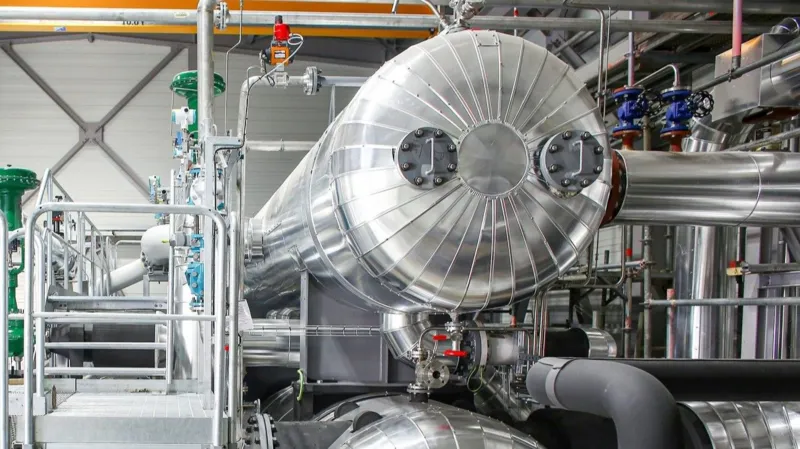
A River at the Center of a Heating Revolution
In the city of Mannheim, the River Rhine is set to play a surprising new role in Germany’s energy transition. Engineers are preparing to draw vast amounts of water from the river to supply one of the largest heat pump systems ever planned. The pipes involved are so large that an adult could walk through them standing upright. For project managers, the sheer scale of the infrastructure reflects both the ambition of the plan and the urgency of moving away from fossil fuel based heating.
How the System Will Work
The project will rely on two massive pipes, each around two meters in diameter, that will draw water directly from the Rhine. According to Felix Hack, project manager at MVV Environment, the system is designed to take in about ten thousand liters of river water every second. Heat will be extracted from the water, after which the cooled water will be returned to the river. The process does not consume the water itself, instead using it as a renewable heat source that can operate continuously.
Record Breaking Heat Pump Capacity
In October, MVV Energie, the parent company of MVV Environment, announced plans to construct two heat pump units, each with a capacity of 82.5 megawatts. If completed as planned, the installation could become one of the most powerful heat pump systems in the world. Combined, the two units would provide enough thermal energy to heat roughly forty thousand homes through Mannheim’s district heating network, a significant contribution to the city’s residential energy needs.
Replacing Coal With Cleaner Technology
The heat pump system is set to be built on the site of a former coal fired power plant that is undergoing conversion to cleaner technologies. This transformation reflects a broader shift underway across Germany, where aging fossil fuel infrastructure is being repurposed rather than abandoned. By using existing industrial sites and grid connections, energy companies can reduce costs and speed up the transition toward low carbon heating solutions.
Engineering Constraints Shape the Design
The size of the heat pump units was influenced not only by energy demand but also by practical engineering constraints. Transporting industrial machinery of this scale through a dense urban area presents logistical challenges. Streets in Mannheim may limit the size of components that can be moved by road. Engineers are also considering transporting parts by barge along the Rhine, although that option has not yet been finalized. These factors helped determine the final dimensions and capacity of the system.
District Heating as a Strategic Solution
District heating plays a central role in the project’s appeal. Rather than installing individual heat pumps in each building, the system will supply heat centrally and distribute it through an underground network. This approach is particularly effective in urban areas with high population density. It allows large scale equipment to operate more efficiently and makes it easier to integrate renewable and low carbon heat sources over time.
Environmental and Climate Implications
Large river based heat pumps are increasingly viewed as a key technology for reducing emissions from heating, which remains one of the most carbon intensive sectors in Europe. By harvesting low grade heat from natural water bodies, cities can cut reliance on gas and coal without sacrificing reliability. The Mannheim project demonstrates how natural resources can be used carefully and sustainably to meet modern energy needs.
A Signal of What Comes Next
The Rhine heat pump project highlights how Europe’s energy transition is moving beyond small scale solutions toward infrastructure that can support entire cities. While challenges remain in construction, regulation, and public acceptance, the project signals a future in which rivers, waste heat, and renewable electricity form the backbone of urban heating systems. For Mannheim, the shift represents not just a technical upgrade, but a long term investment in cleaner and more resilient energy.



