News
Ukraine Peace Talks Continue in Berlin as US Says Progress Has Been Made

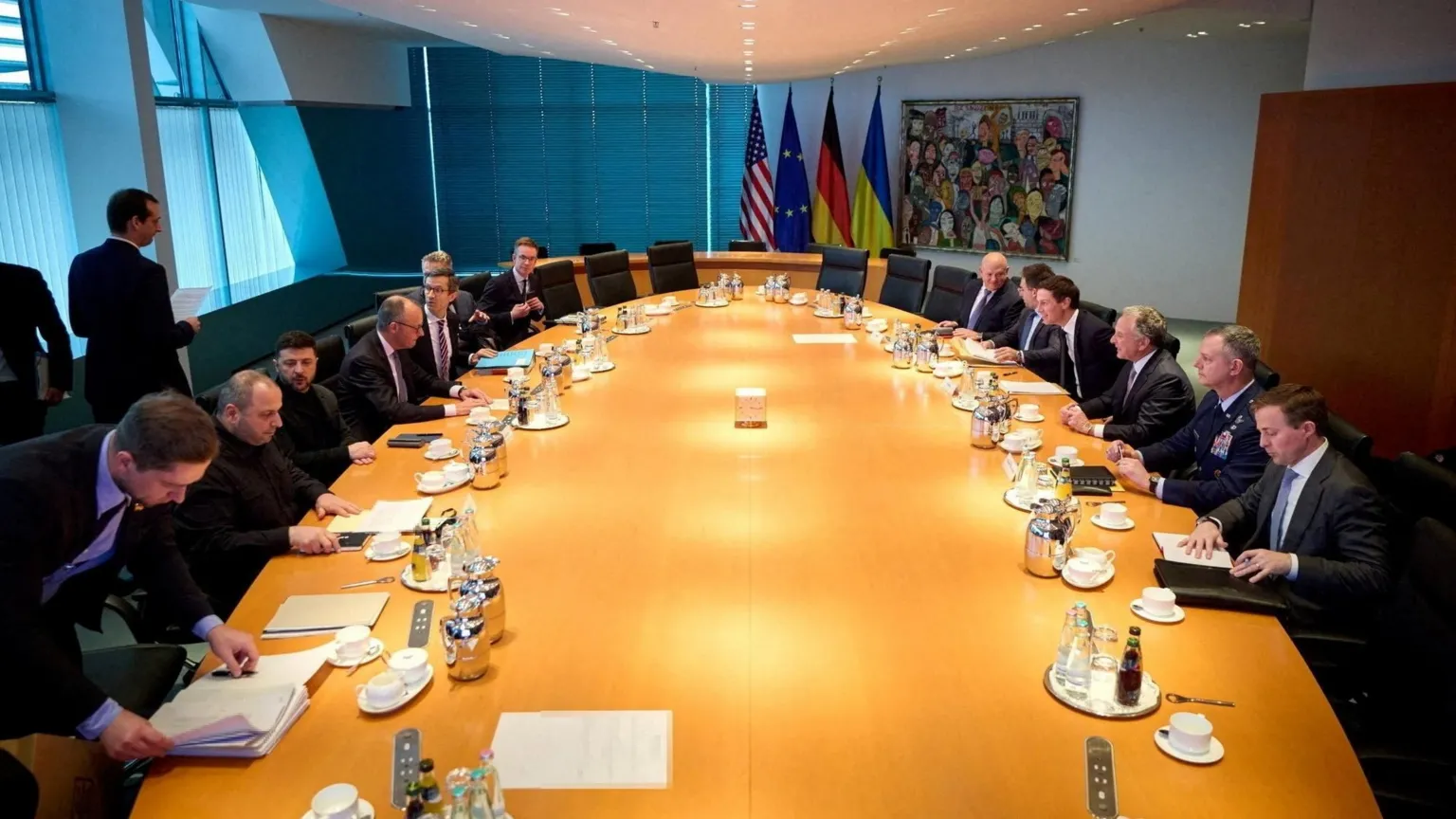
Diplomatic talks between Ukraine and the United States aimed at ending the war with Russia have entered a second day in Berlin, with Washington saying meaningful progress has been achieved in discussions with Ukrainian leaders.
Ukrainian President Volodymyr Zelensky and his chief negotiator Rustem Umerov held lengthy meetings on Sunday with US envoy Steve Witkoff and Jared Kushner, the son in law of former US President Donald Trump. The talks lasted around five hours and were also attended by German Chancellor Friedrich Merz, highlighting Europe’s growing role in efforts to broker a path toward peace.
Following the meeting, a US statement described the discussions as constructive and said significant progress had been made. The same group reconvened on Monday morning to continue working through unresolved issues and explore potential frameworks for a ceasefire and longer term security arrangements.
The talks come at a critical moment in the conflict, which has now dragged on for several years and inflicted heavy costs on Ukraine, Russia, and the wider international community. While details of the discussions have not been made public, officials involved have suggested that both sides are testing possible compromises that could lay the groundwork for ending the fighting.
Ahead of the renewed talks, Zelensky signalled a possible shift in Ukraine’s long standing position on Nato membership. He indicated that Kyiv could be willing to set aside its ambition to join the military alliance if it were offered strong and credible security guarantees by the United States and European partners. Such guarantees, he suggested, would need to be robust enough to deter future Russian aggression and ensure Ukraine’s long term safety.
Ukraine’s push to join Nato has been a central element of its foreign policy since Russia’s full scale invasion. However, Nato membership requires unanimous approval from all alliance members, and some governments have been cautious about extending membership to a country at war. Zelensky’s remarks appear to reflect a more pragmatic approach as diplomatic efforts intensify.
German Chancellor Friedrich Merz’s participation underscores Berlin’s involvement in shaping any potential settlement. Germany has been one of Ukraine’s key supporters in Europe, providing military aid, financial assistance, and political backing since the conflict began. Officials in Berlin have said a negotiated end to the war must respect Ukraine’s sovereignty and security needs.
The US role in the talks reflects Washington’s continued influence over the course of the conflict. While the US has supplied Ukraine with extensive military and economic support, American officials have also signalled growing interest in exploring diplomatic options to bring the war to a close. The involvement of figures close to Donald Trump has added an additional political dimension to the discussions, particularly as US domestic politics continue to shape foreign policy debates.
Despite the optimistic tone from Washington, major challenges remain. Any ceasefire or peace agreement would require acceptance by Russia, which has not publicly participated in the Berlin talks. Key issues such as territorial control, security arrangements, and the lifting or continuation of sanctions remain deeply contentious.
For now, the continuation of talks into a second day suggests that all parties see value in keeping diplomatic channels open. Whether the reported progress can translate into concrete steps toward a ceasefire remains uncertain, but the discussions mark one of the most serious efforts in recent months to explore an end to the war.